Mount Fuji From Satta, Sketched At 9 A.M. In Mid-January, 1881 — History & Analysis
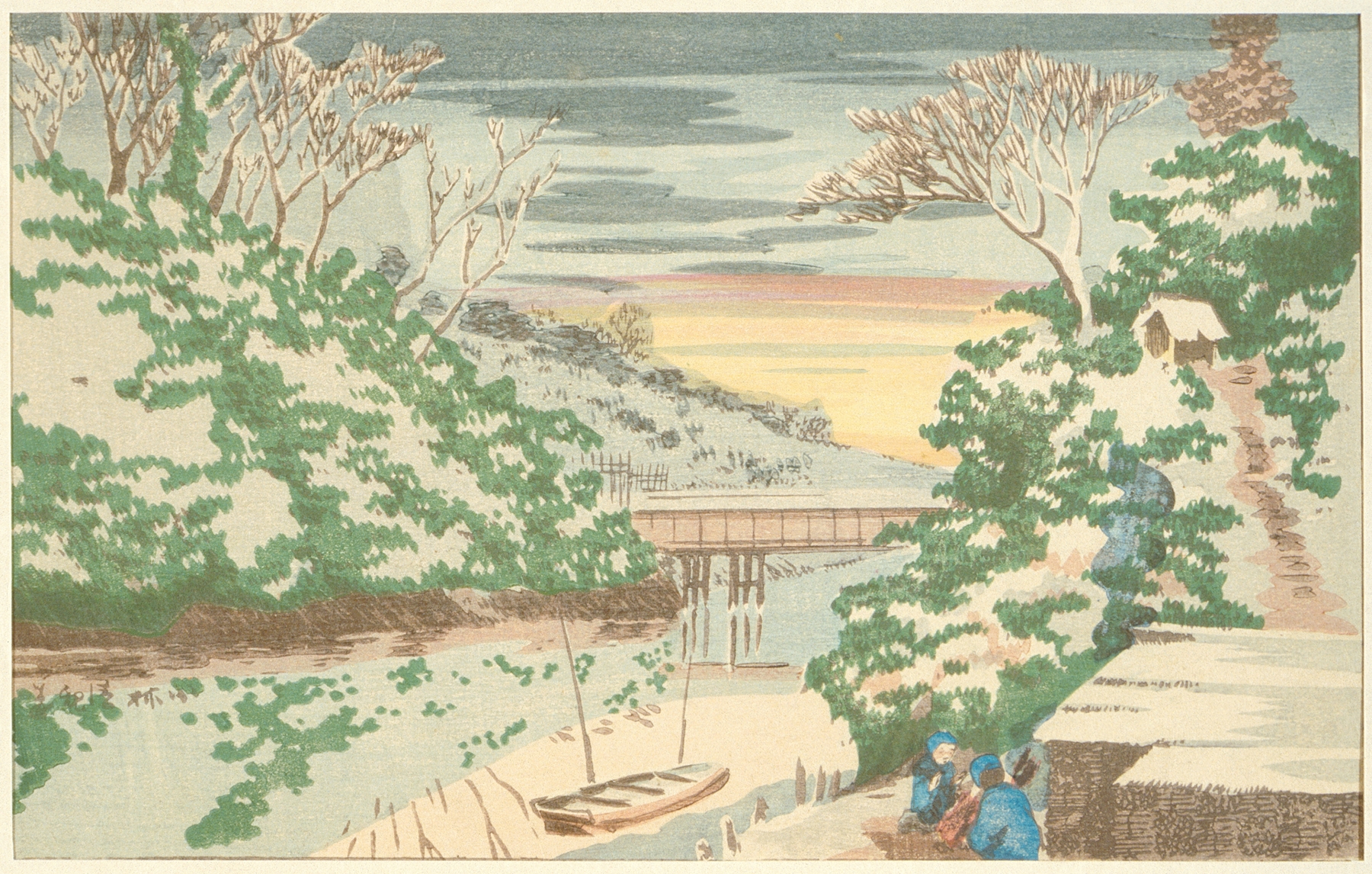
“Art reveals the soul when the world turns away.” In moments of quietude, beauty unveils itself, unfurling like the soft petals of a cherry blossom at dawn. Kobayashi Kiyochika captures this essence in a work that both transcends and reflects the natural world. Look to the horizon where Mount Fuji stands resolute, a majestic sentinel against a canvas of soft blues and whites. The meticulous brushwork conveys the mountain's gentle curves, while the delicate strokes of clouds dance around its peak, creating an ethereal atmosphere.
Kiyochika’s choice of muted tones instills a sense of calm, inviting the viewer to linger and absorb the tranquility of the scene. Delve deeper into this piece and observe the contrast between the stillness of the mountain and the transience of the clouds. The serene outline of Fuji contrasts sharply with the ephemeral wisps, emphasizing the passage of time and the impermanence of nature. Each stroke not only captures a moment but also evokes a profound emotional landscape, reminding us of our fleeting connection to beauty and the world around us.
In 1881, Kiyochika was deeply engaged with the Meiji Restoration's rapid modernization in Japan, which brought both excitement and anxiety. Working from his studio, he sought to preserve traditional aesthetics while embracing new artistic techniques. This painting reflects his desire to honor the timeless beauty of nature amidst the transformations of his era, a poignant reminder of the landscape’s enduring vitality in a changing world.