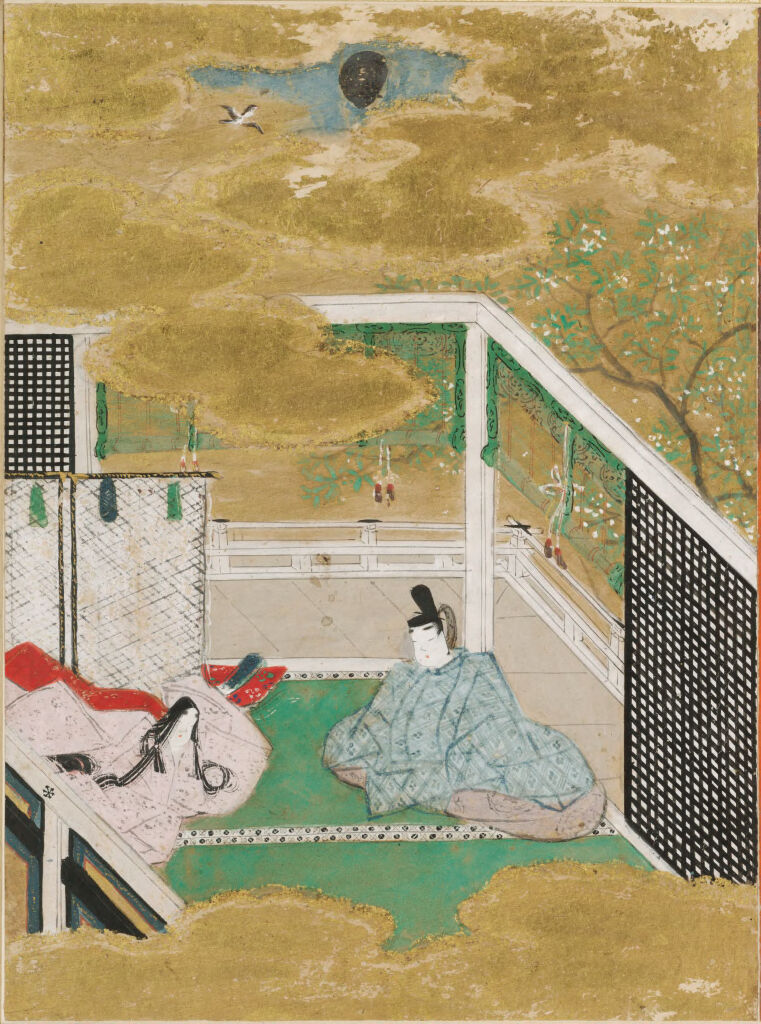
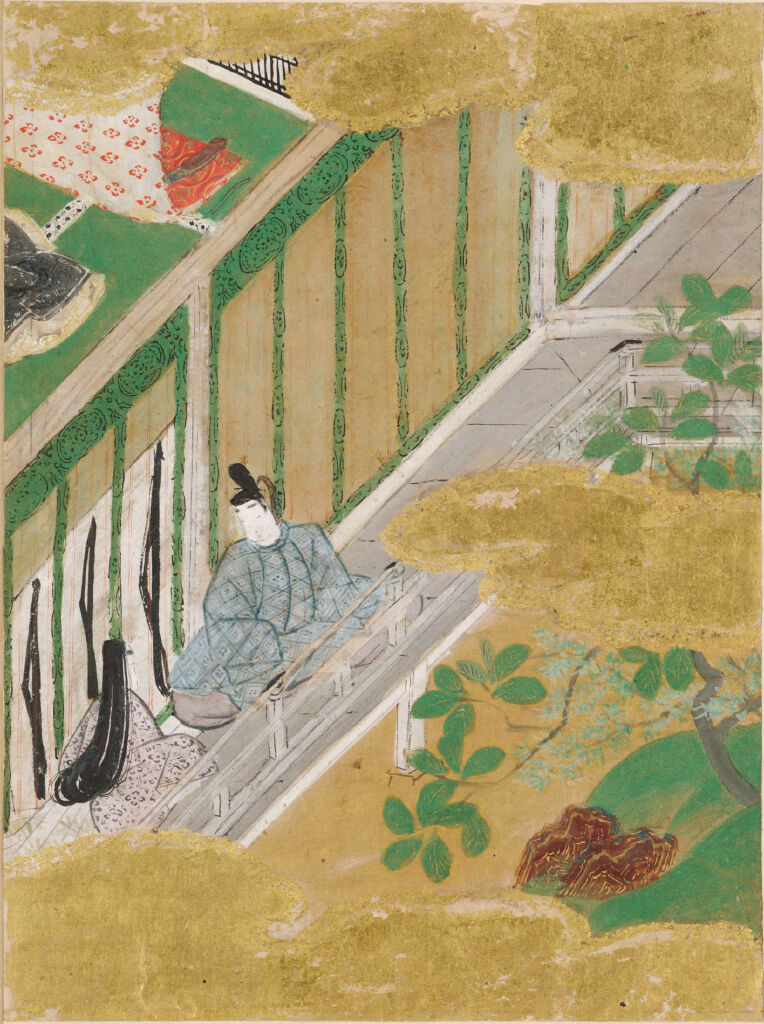
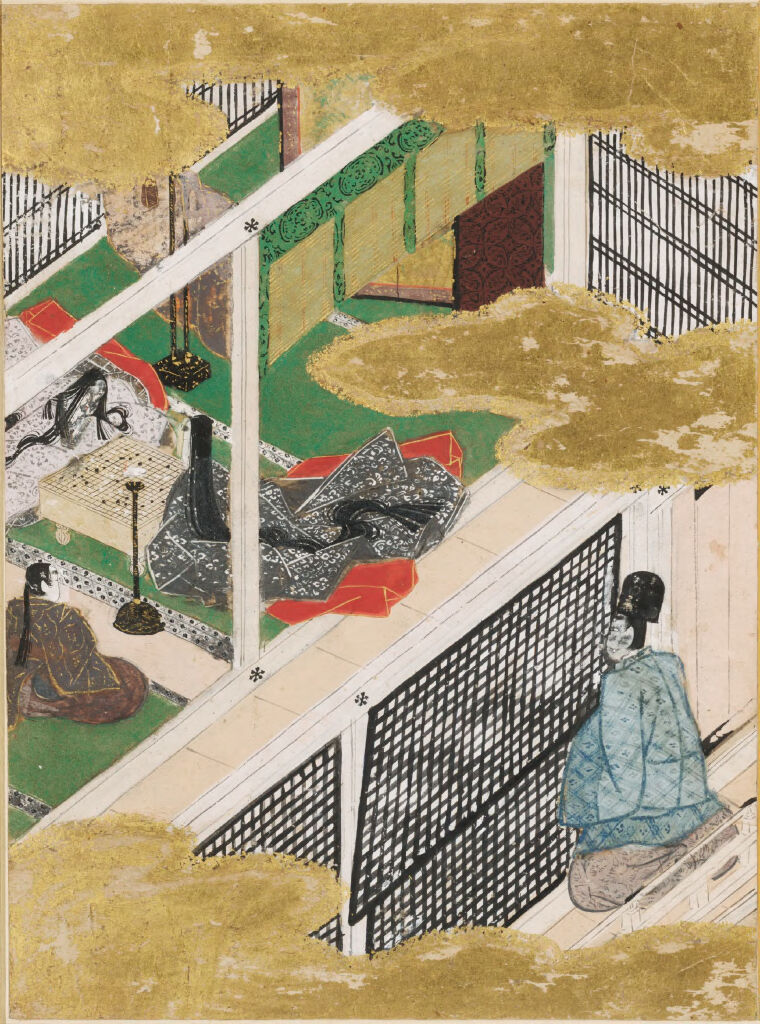
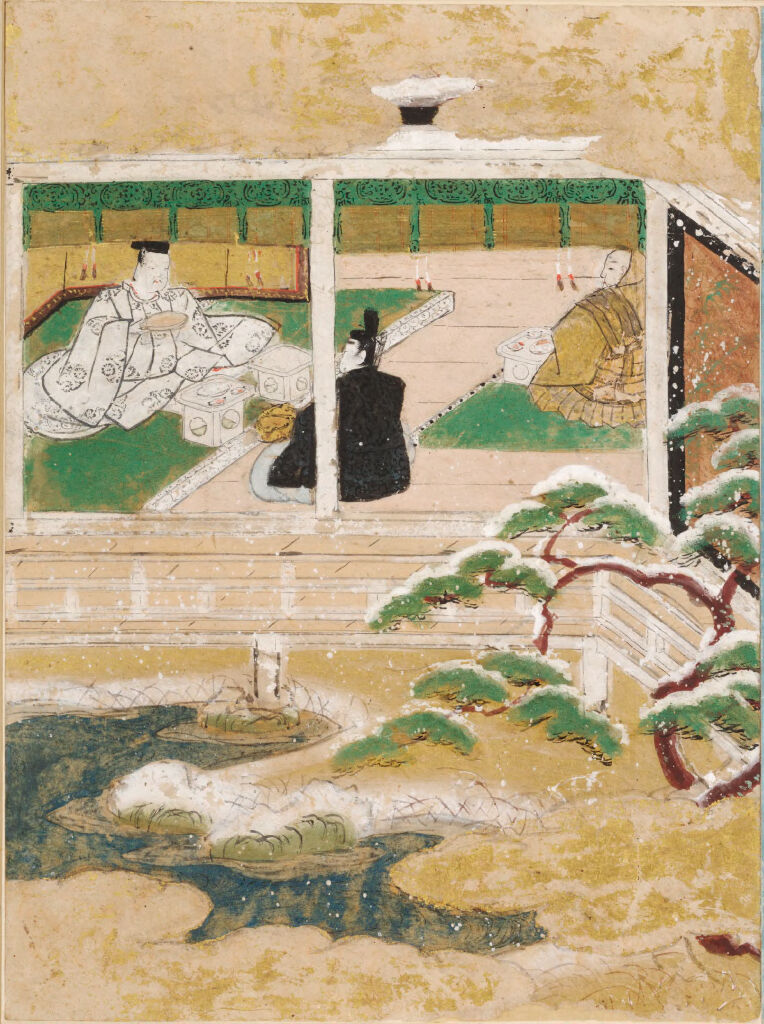
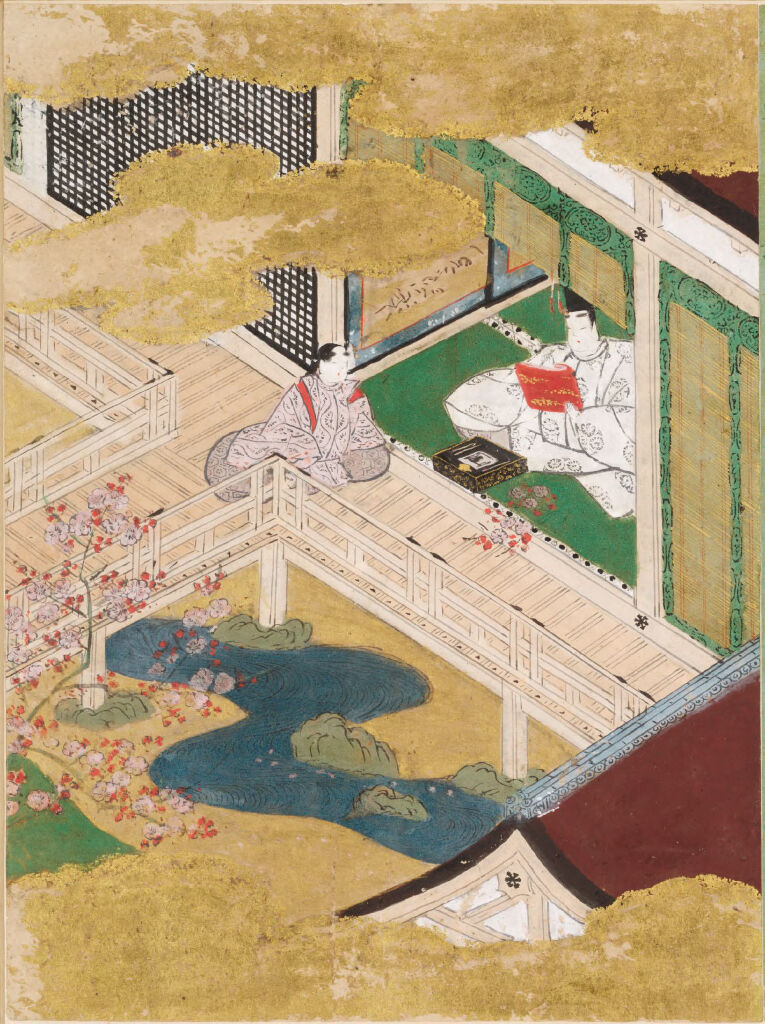
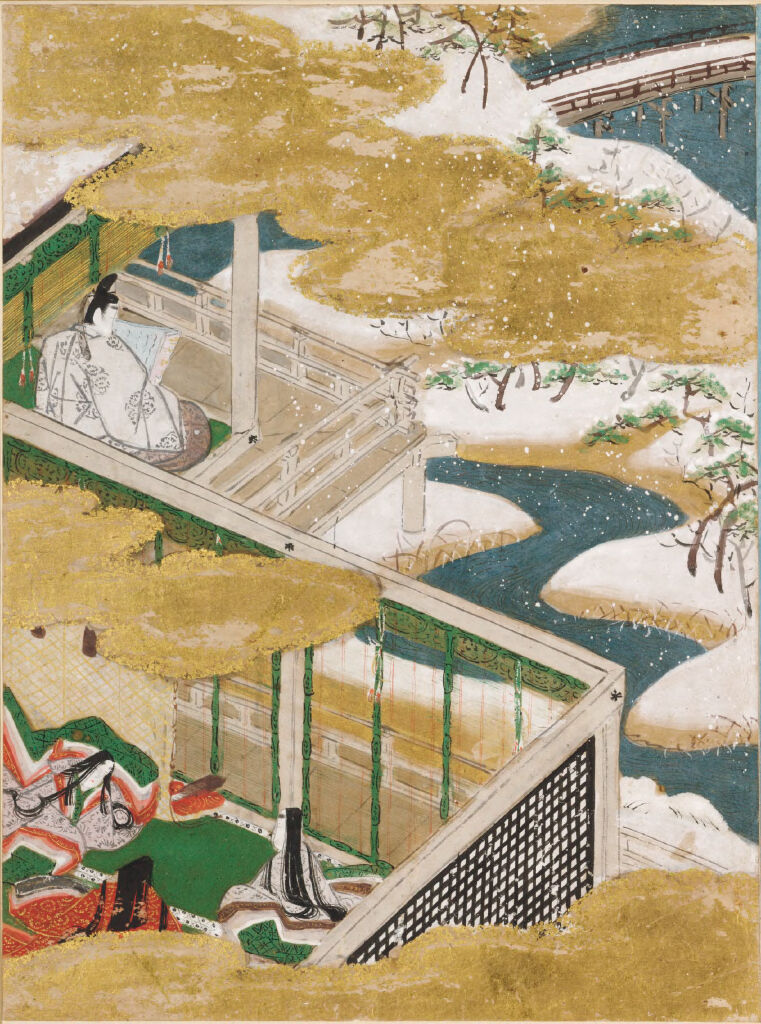
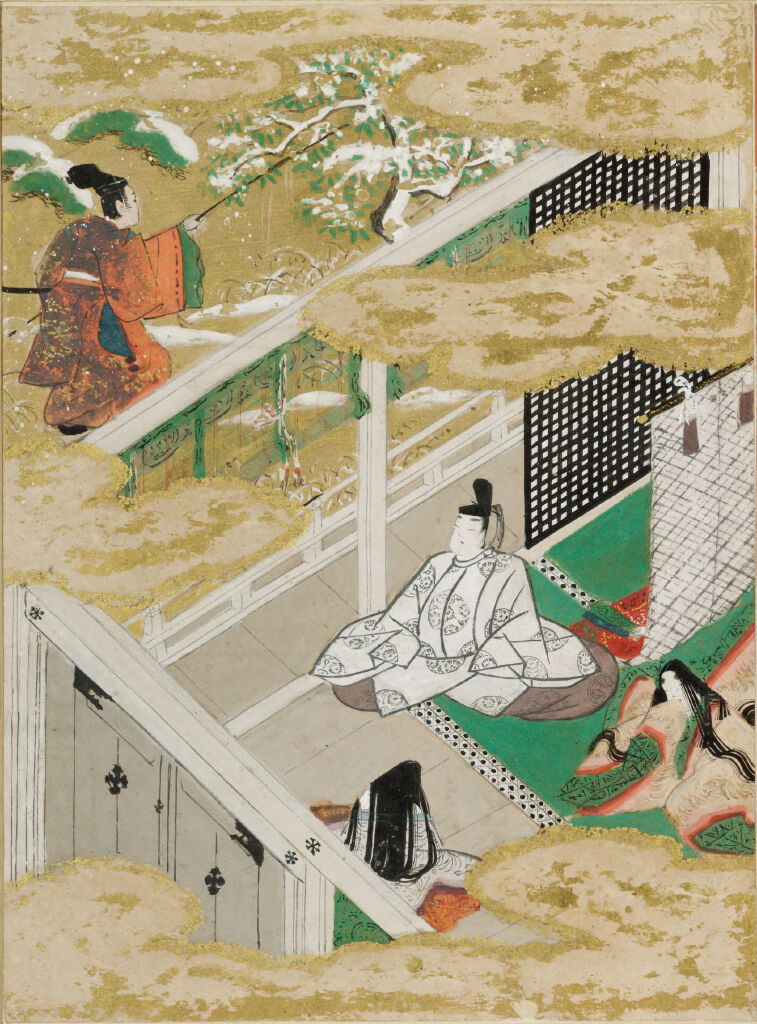
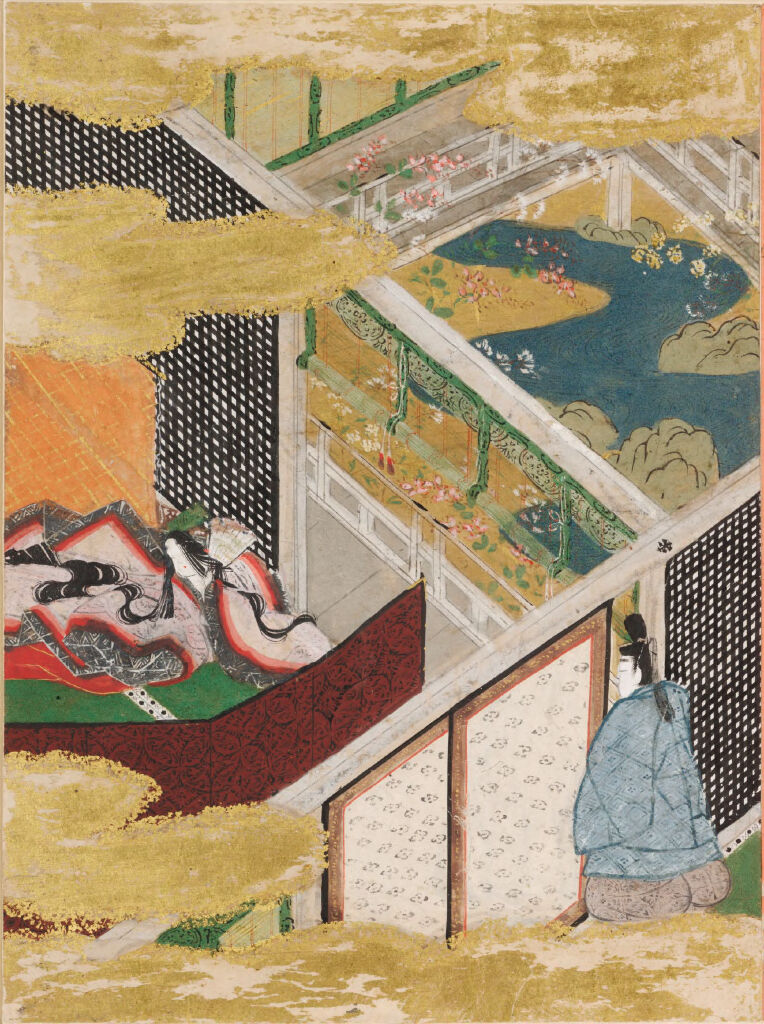
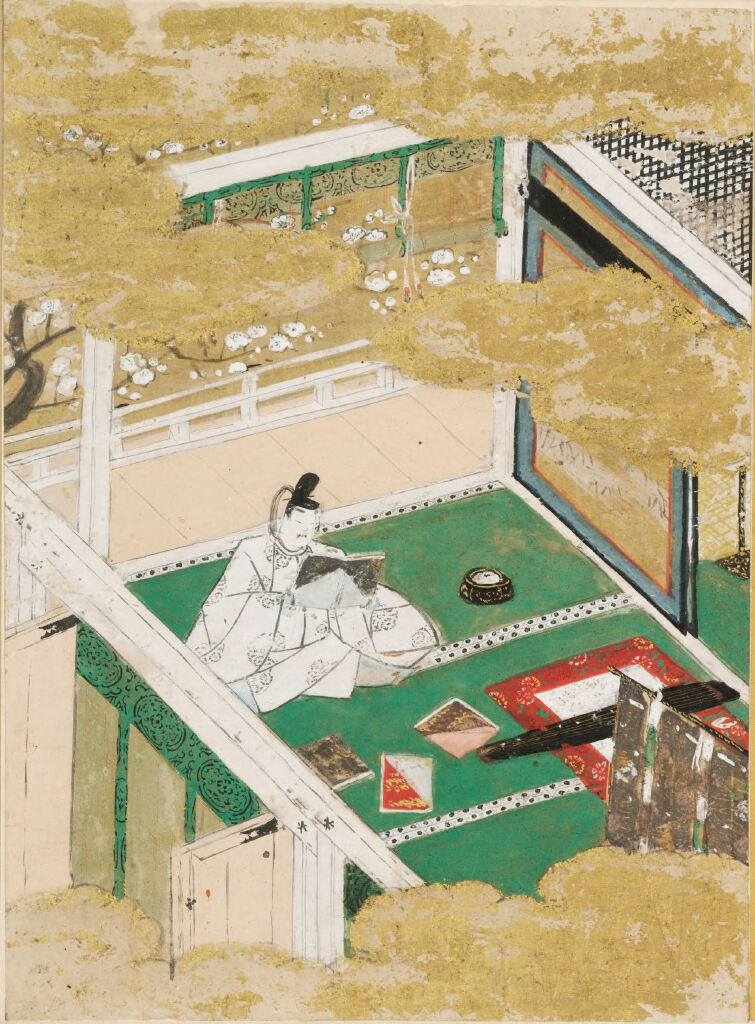
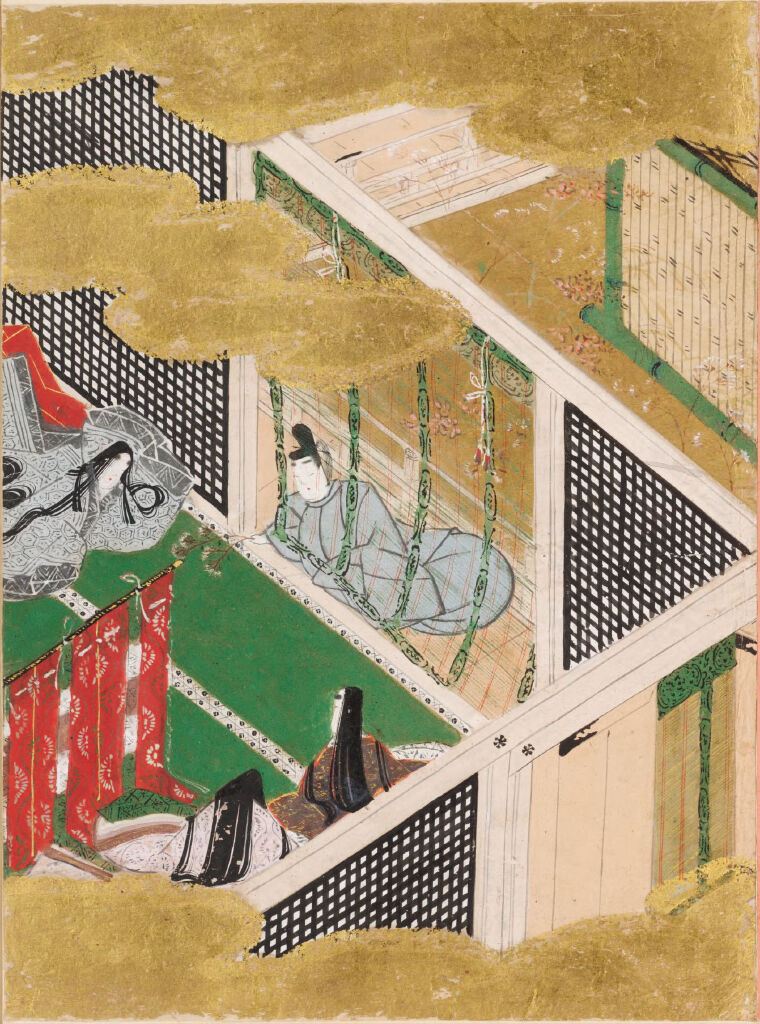
New Wisteria Leaves (Fuji no Uraba), Illustration to Chapter 33 of the Tale of Genji (Genji monogatari) — History & Analysis
“Sometimes beauty is just pain, disguised in gold.” In the delicate interplay of nature and emotion, the gentle wisteria leaves in New Wisteria Leaves awaken a profound sense of innocence lost and beauty entwined with melancholy. Look to the intricate patterns that dance across the surface, a mesmerizing blur of soft greens and delicate golds. Notice how the wisteria vines, tenderly rendered, twist and turn gracefully, evoking both growth and nostalgia. The gently shimmering colors are not merely ornamental; they envelop the viewer in a nostalgic embrace, enhancing the quiet elegance of the composition.
The meticulous brushwork reveals the artist's skilled hand, while the layered textures invite you to linger longer, exploring the depths of each leaf. This artwork captures fleeting moments, encapsulating the essence of the transient nature of beauty. The leaves symbolize innocence and renewal, yet their delicate presentation hints at vulnerability—a reminder that beauty often carries the weight of unspoken stories. In their graceful descent, the scattered petals evoke thoughts of longing and the impermanence of life, creating an emotional tension that resonates deeply within the viewer.
During the Muromachi period, Tosa Mitsunobu was a pivotal figure in the evolution of Japanese painting. Working in Kyoto between 1509 and 1510, he was influenced by the cultural appreciation of subtle beauty and the connection between humanity and nature. His artistry not only reflects the aesthetics of his time but also marks a significant chapter in the narrative of Japanese art, where the delicate balance of simplicity and emotional depth began to flourish.