Rain At Sanmaibashi In Hakone — History & Analysis
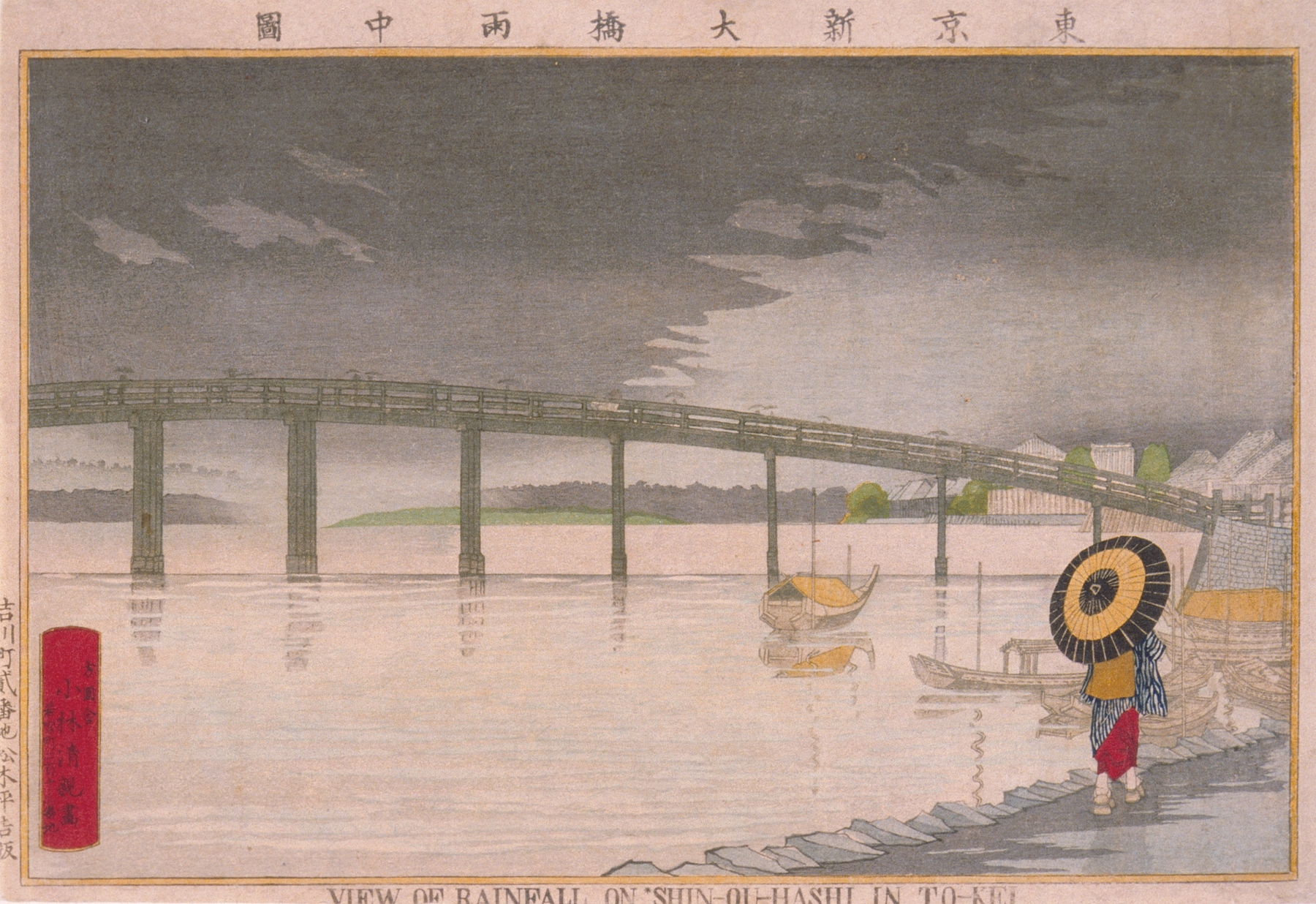
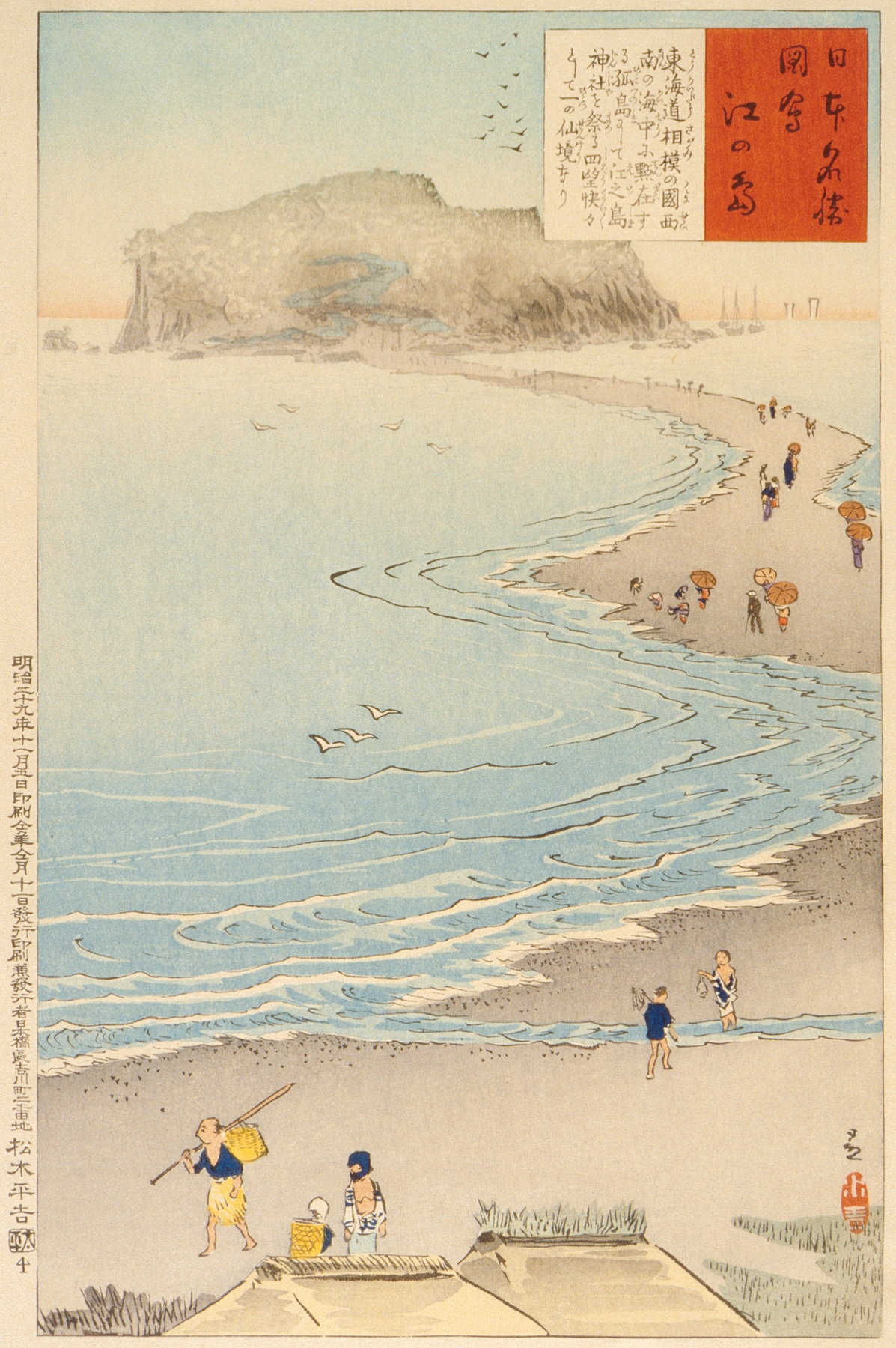
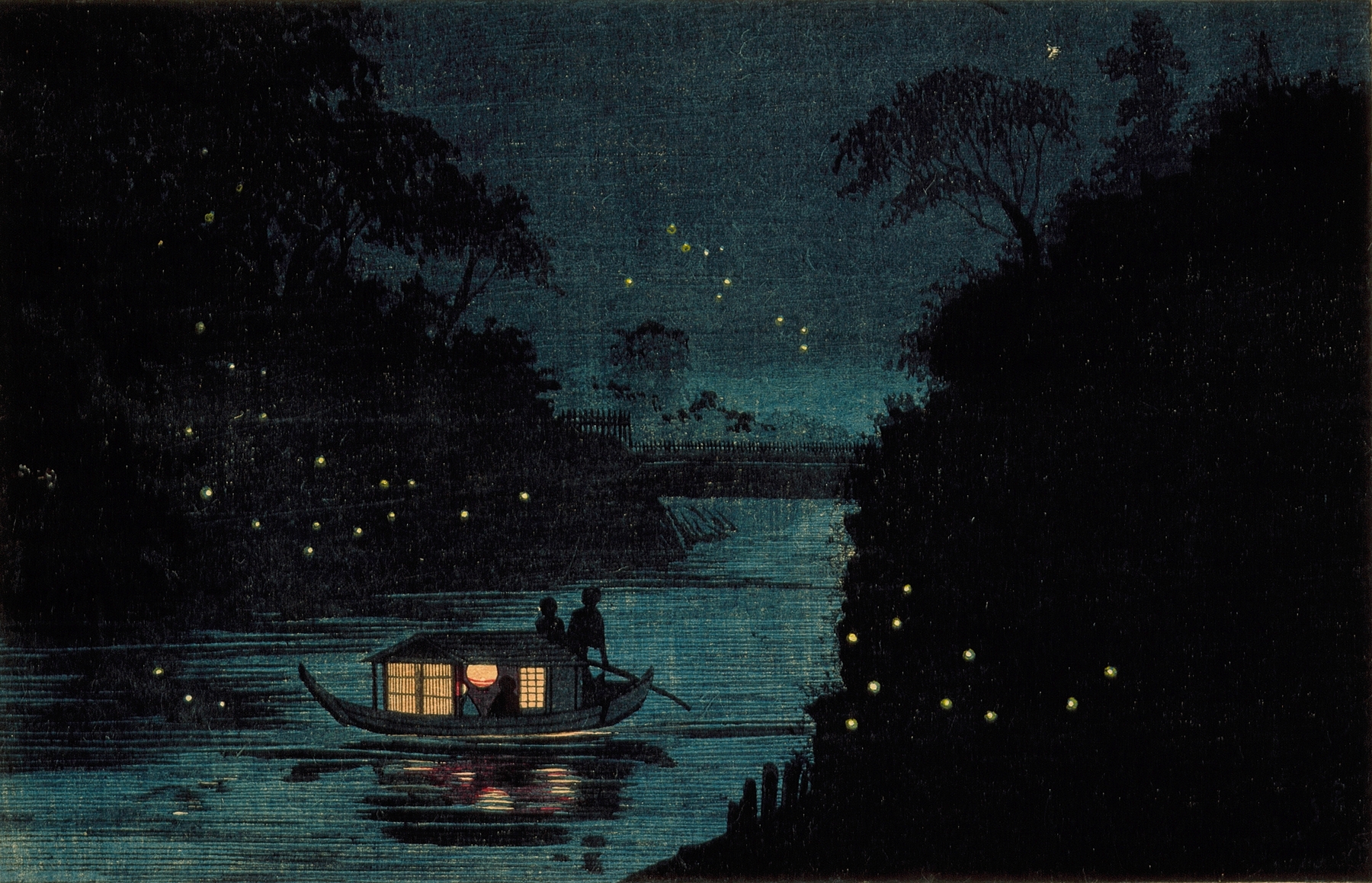
“Under the brush, chaos becomes grace.” In the hands of a master, even the desolation of a rainy day transforms into an evocative landscape, whispering secrets of solitude and reflection. Look closely at the foreground, where a lone figure, barely distinguishable, navigates the drenched streets under a delicate umbrella. The muted palette of blues and grays perfectly captures the melancholic ambiance, while light dances across the surface of the water, creating ripples that shimmer with subdued brilliance. Notice how Kiyochika employs soft, impressionistic strokes, blending colors to evoke the feeling of a heavy downpour, yet leaving space for the viewer’s imagination to fill in the gaps.
The emotional tension in this piece arises from the contrast between the isolation of the figure and the vastness of the landscape. The emptiness of the scene amplifies a sense of quiet introspection; the rain becomes a metaphor for cleansing, for reflection on one’s own heart. The almost ghostly quality of the figure suggests both presence and absence, inviting contemplation on loneliness amidst the beauty of nature.
Between 1880 and 1882, Kiyochika painted this piece in Japan, a time when the country was undergoing significant changes. The Meiji Restoration had just begun to reshape society, and traditional art forms were blending with new influences. This work reflects not only the artist's personal exploration of the shifting landscape but also a broader cultural dialogue, emphasizing the delicate balance between modernity and the remnants of the past.