Rocky Coast, Nova Scotia — History & Analysis
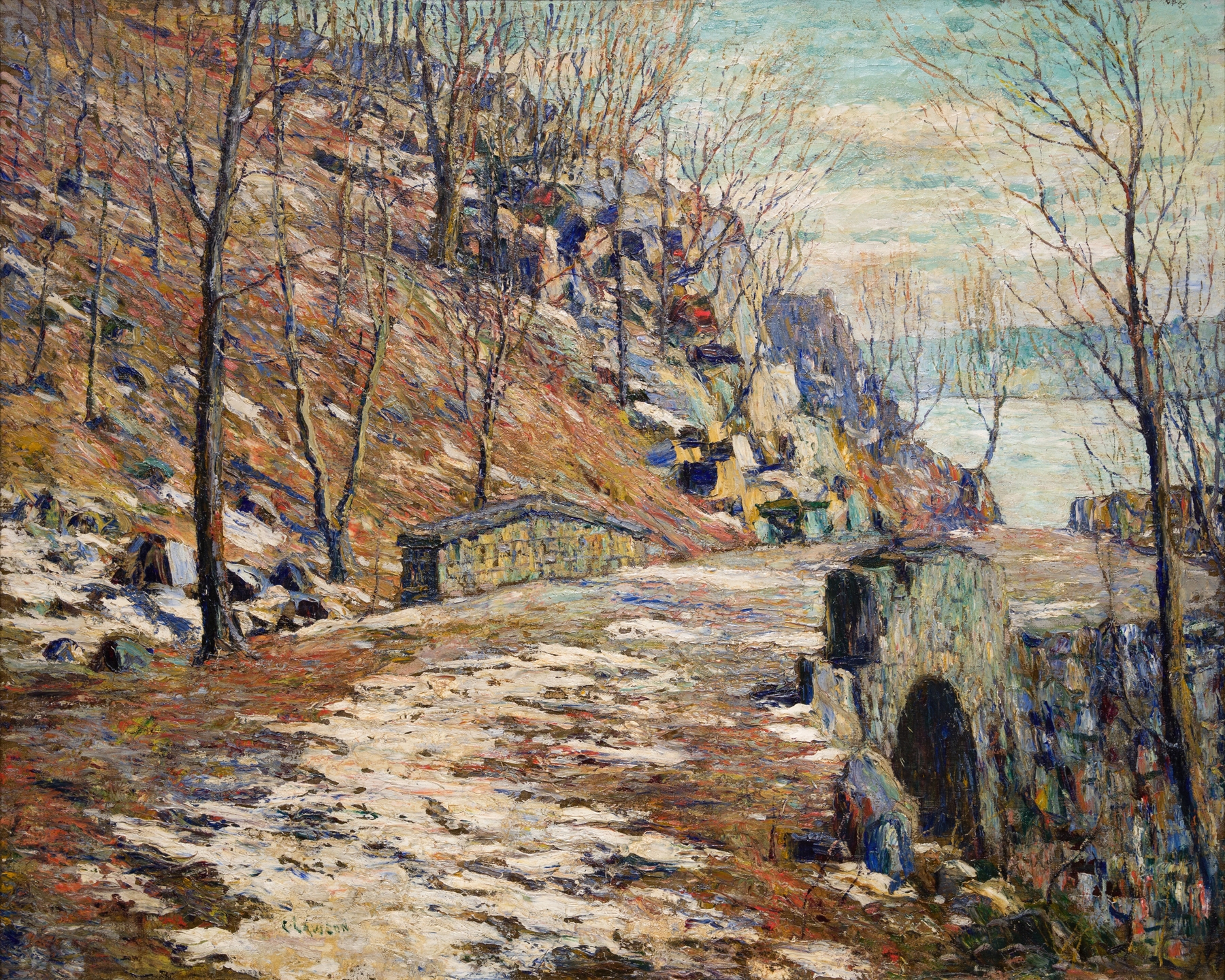
“To paint is to remember what time wants us to forget.” In a world suffocated by the speed of modernity, the canvas often holds truths that slip through our fingers too easily. Lawson’s work invites us to pause, reflect, and embrace the beauty of persistence amidst the relentless march of time. Look to the left at the vivid blues of the crashing waves, where foamy white crests dance upon granite rocks, their raw energy captured in a symphony of brushstrokes. Notice how the sun breaks through heavy clouds, illuminating patches of the rocky coastline and offering a stark contrast between light and shadow.
The rugged terrain is painted with textured layers, inviting the viewer to feel the wind and hear the distant roar of the sea. Beneath this vibrant surface lies a deeper narrative—one of resilience and solitude. The rocky coast stands as a symbol of endurance against nature's tempests, reflecting the inner turmoil of the artist's own era. This landscape, marked by both beauty and harshness, echoes the tension between mankind's fleeting existence and nature's timeless presence, urging a contemplation of our own place within this continuum.
In 1919, Lawson painted this piece amidst the aftermath of World War I, a time when artists sought new means of expression in a world forever altered by conflict. Living in New York City, he was influenced by the American Impressionists while grappling with the effects of the war on society and art. The tumultuous landscape he captured speaks to a moment in history where the search for truth and clarity became increasingly significant.