Schulmädchen im Walde — History & Analysis
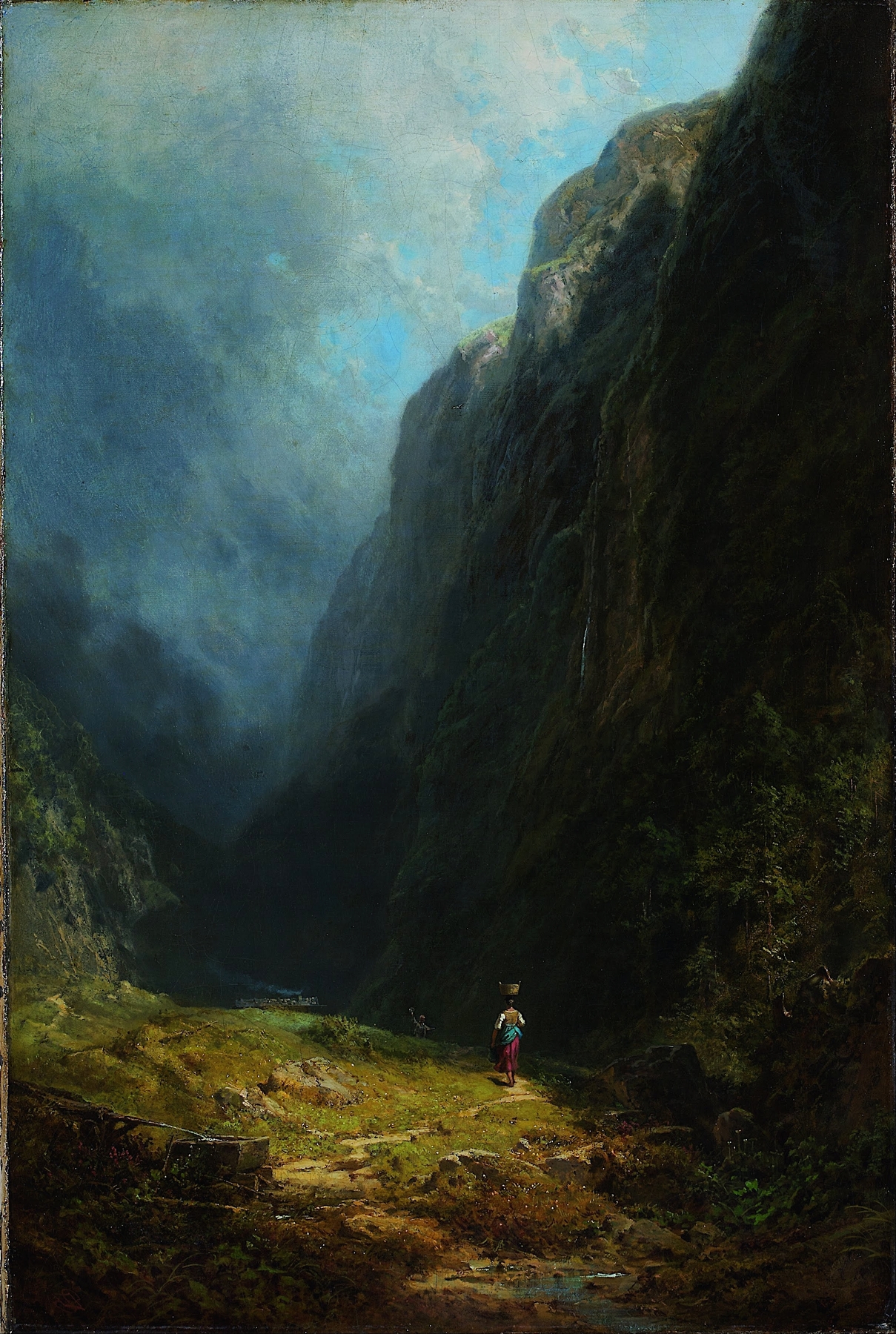
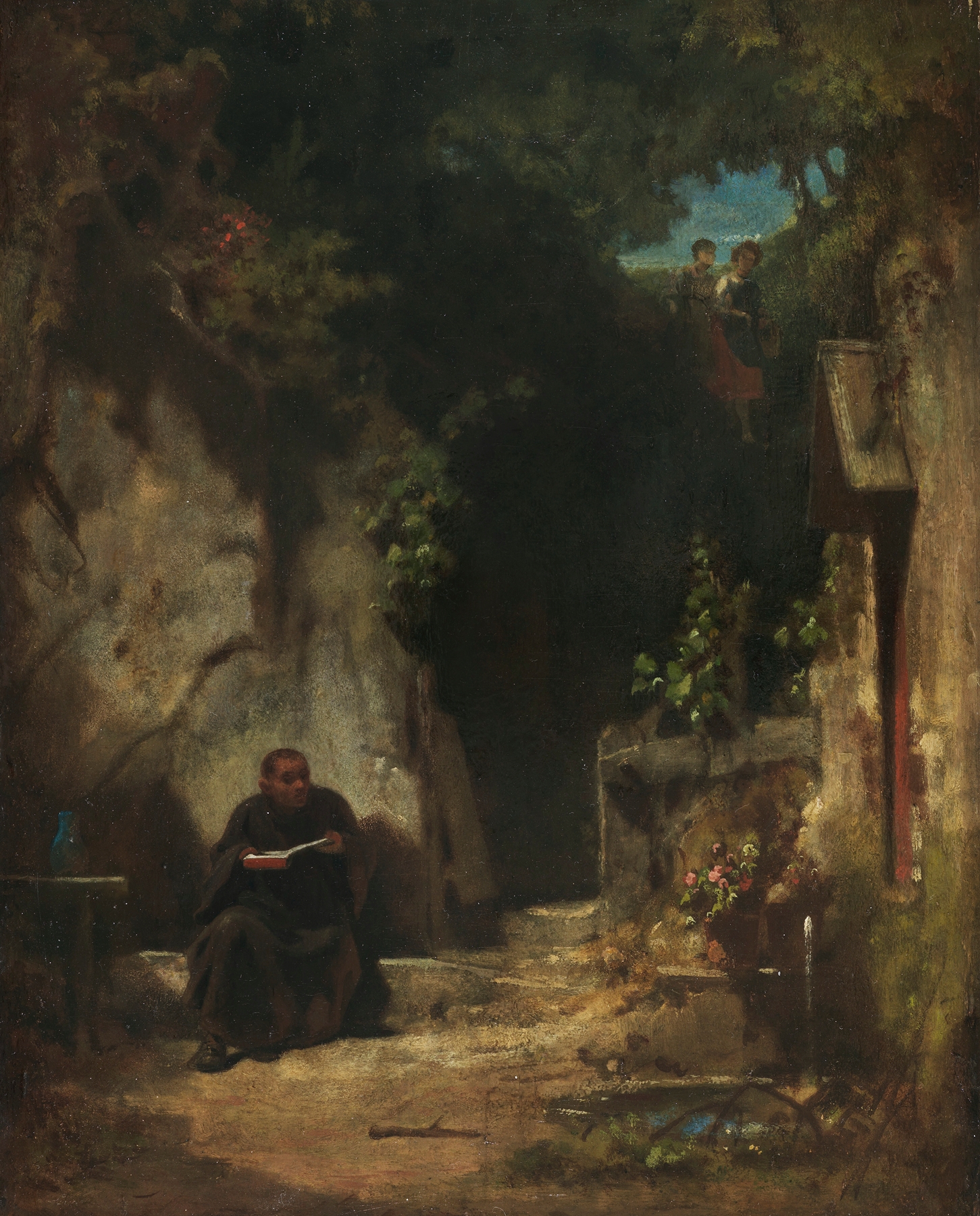
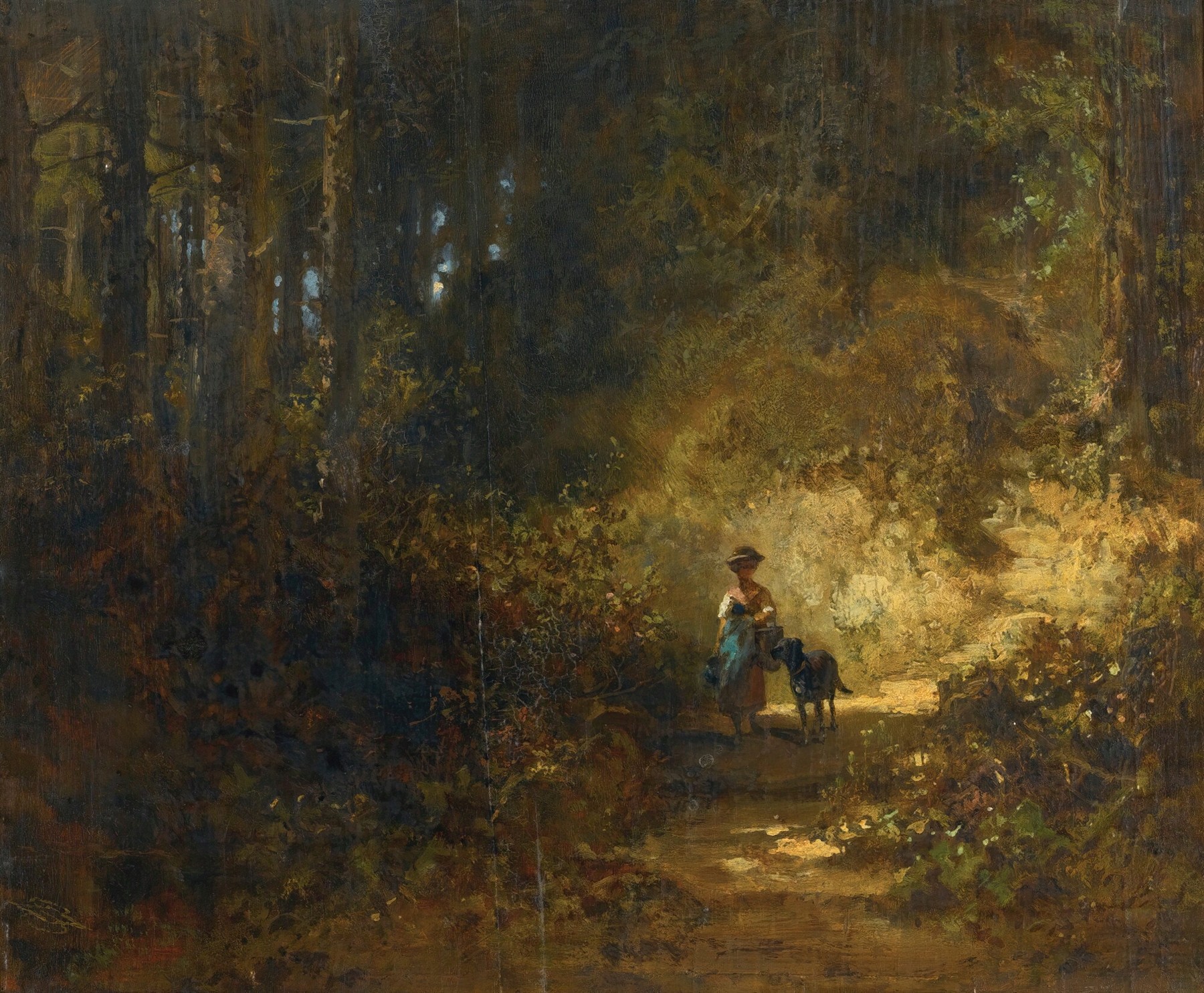
What if silence could speak through light? In Schulmädchen im Walde, the soft illumination casts a poignant aura over a sense of youthful melancholy, hinting at deeper layers of absence and nostalgia. Look to the left at the young girl standing alone beneath the towering trees, her delicate frame enveloped by the dappled sunlight filtering through the leaves. The warm earthy tones contrast with the cool greens, suggesting the vibrancy of youth juxtaposed against the isolation of nature.
Notice how the subtle brushwork captures her contemplative expression, while the gentle curves of the foliage embrace her, drawing the viewer’s eye inward toward her solitude. The painting unfolds a narrative of loss and introspection, where the girl seems to be both a part of and separate from the world around her. The forest, often a symbol of life and growth, takes on a somber tone, echoing the internal struggles she may face—perhaps the loss of innocence or a yearning for connection. The interplay between light and shadow not only highlights her presence but also emphasizes the void that surrounds her, prompting reflection on the complexities of youth and the inevitable passage of time.
In 1874, Carl Spitzweg painted this work during a significant period in his career, marked by a transition from romanticism to a more personal, introspective style. Emerging from a world shaped by industrialization, he depicted moments of quiet reflection, highlighting the contrast between the hustle of society and the solitude of nature. This painting captures that tension, revealing both the artist's emotional state and the broader cultural shifts of his time.