September Afternoon — History & Analysis
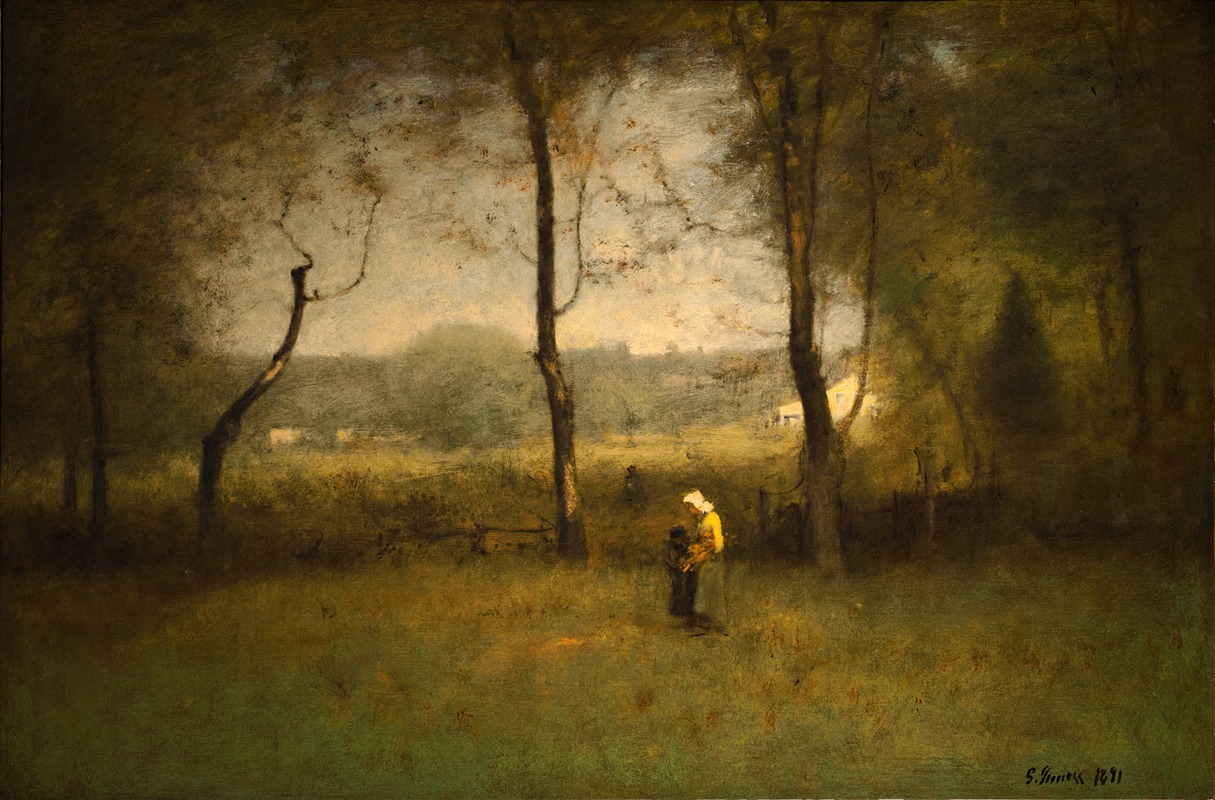
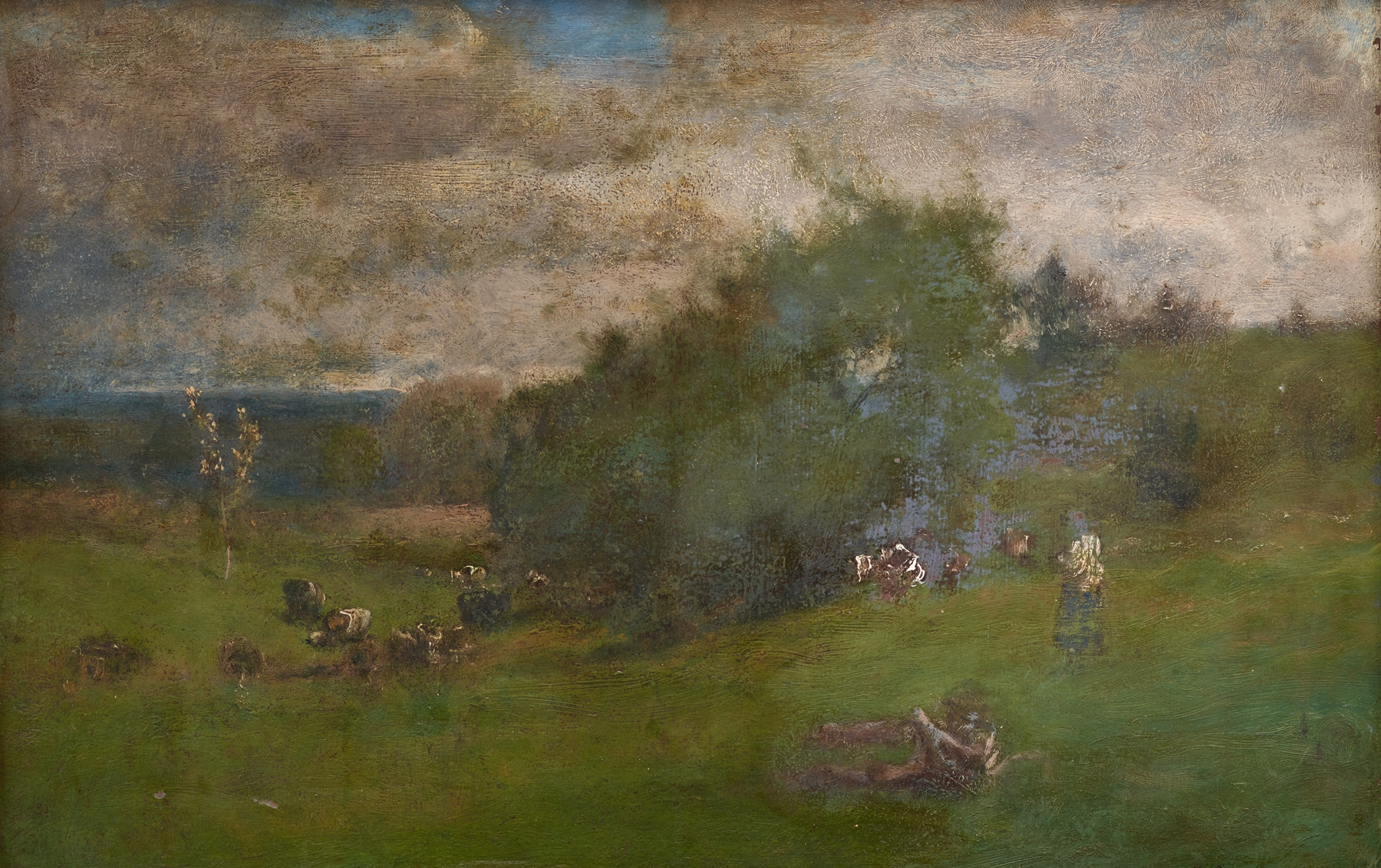
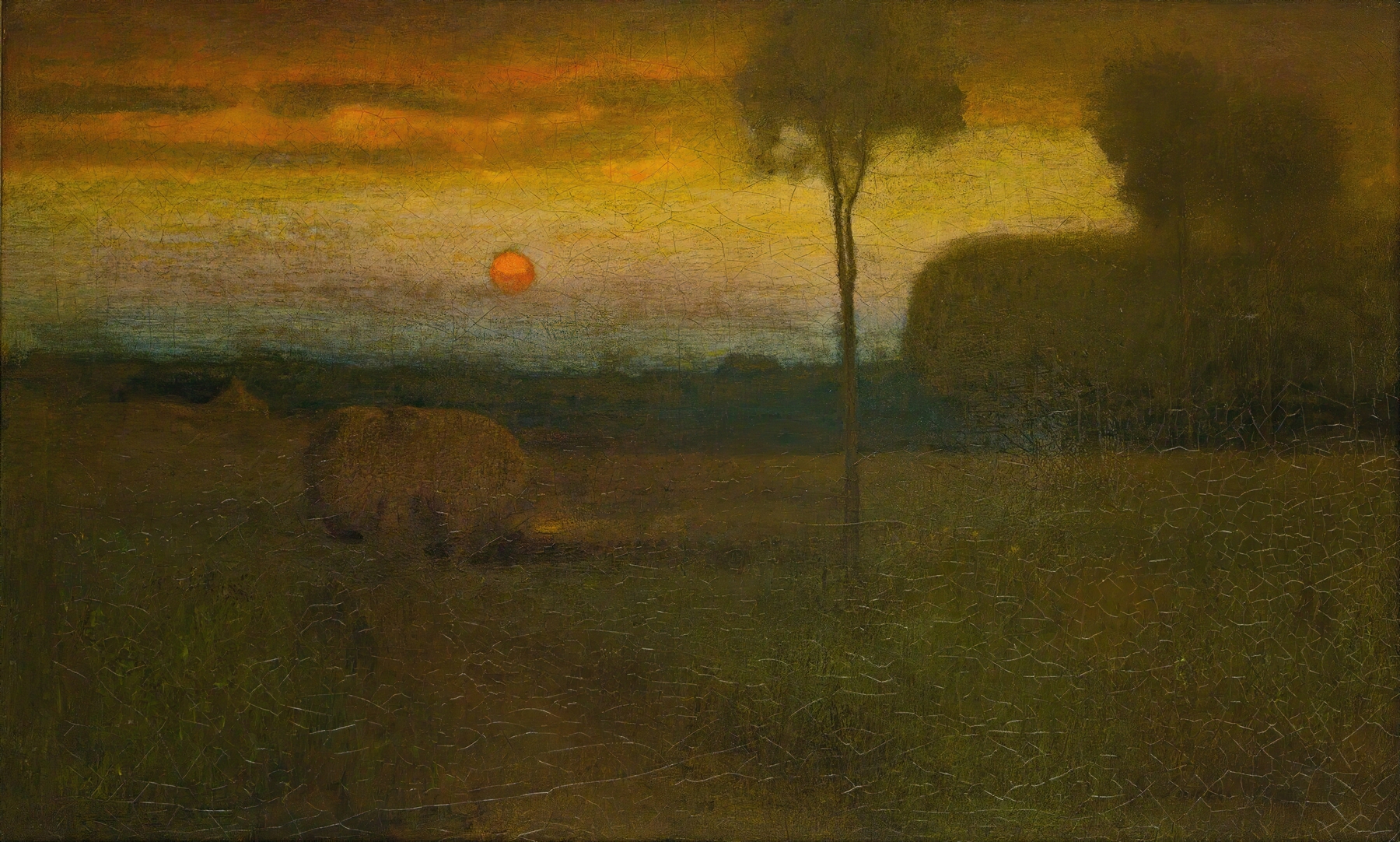
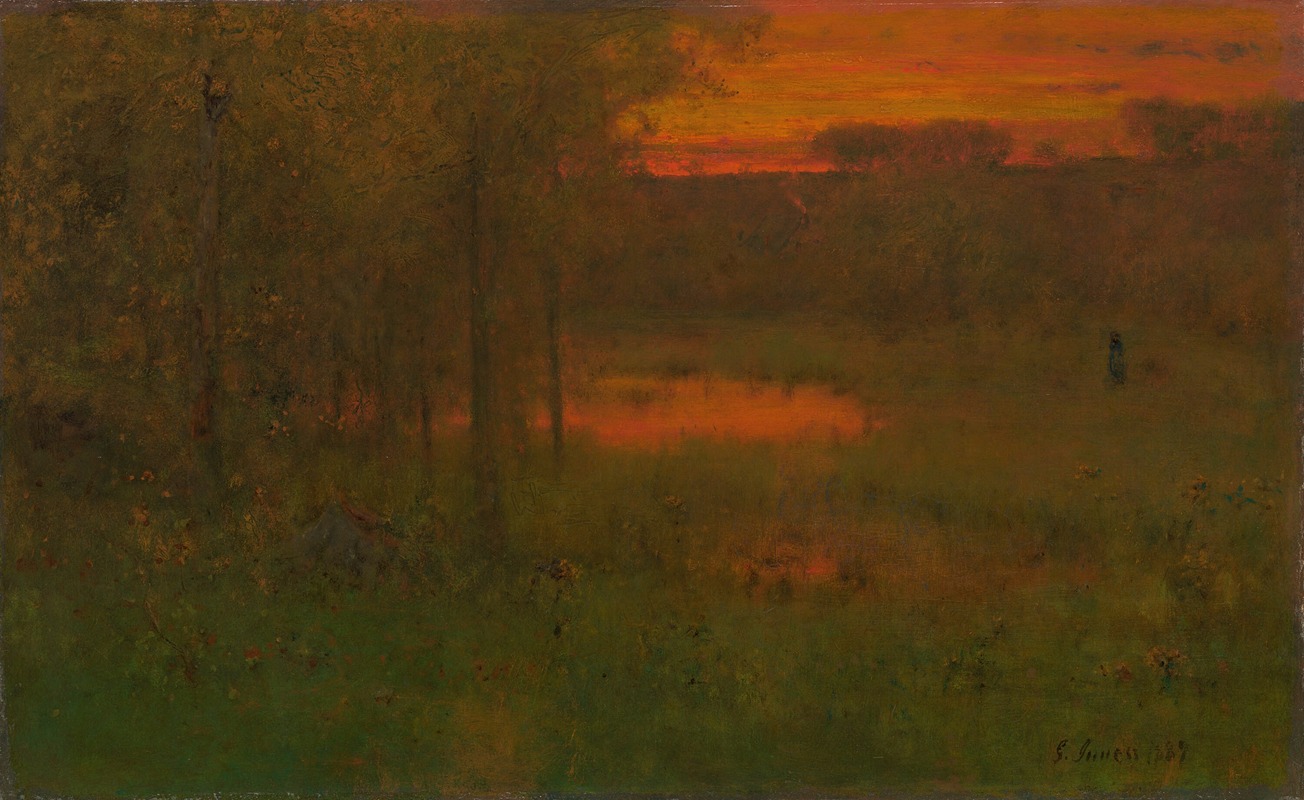
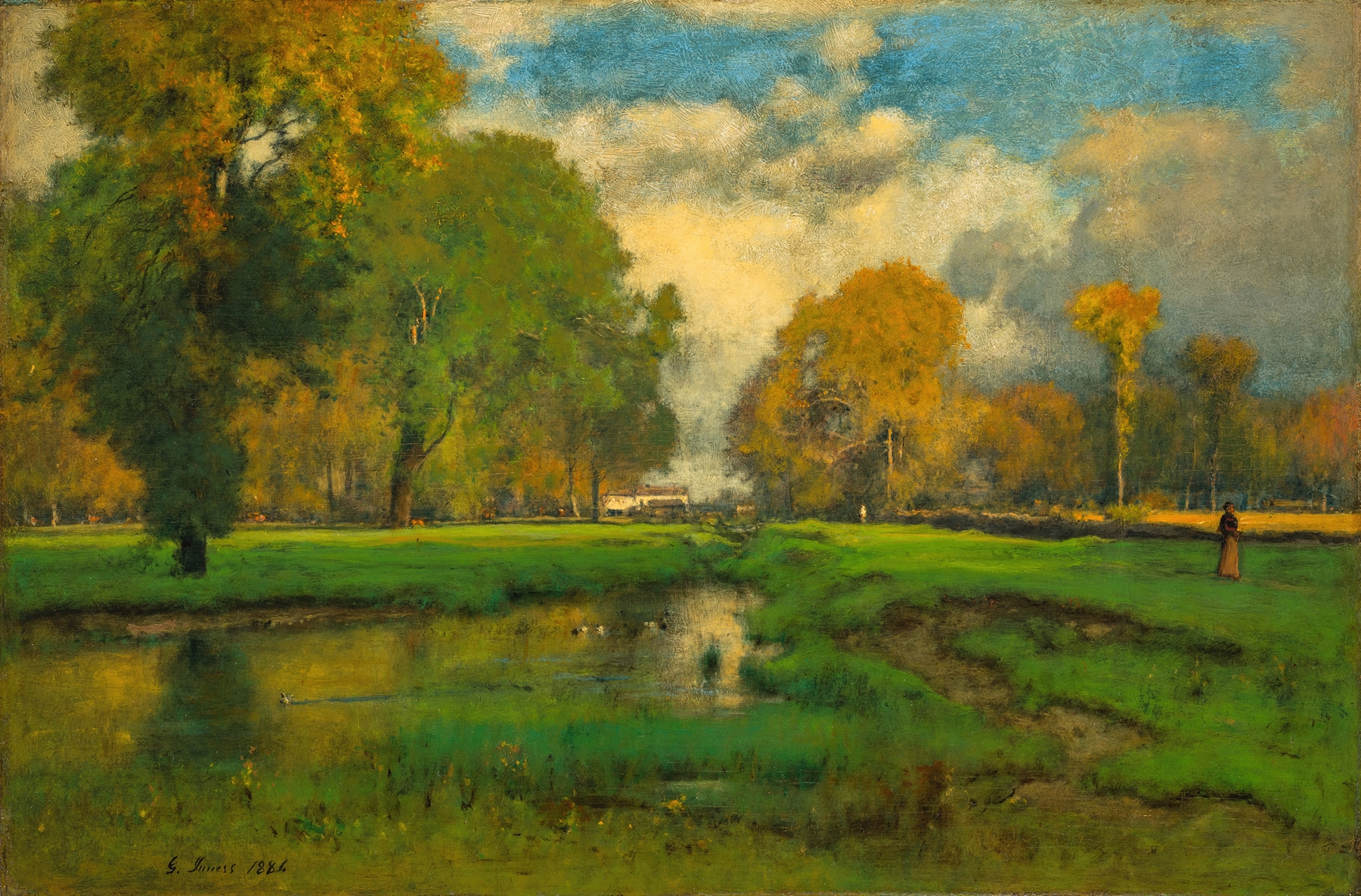
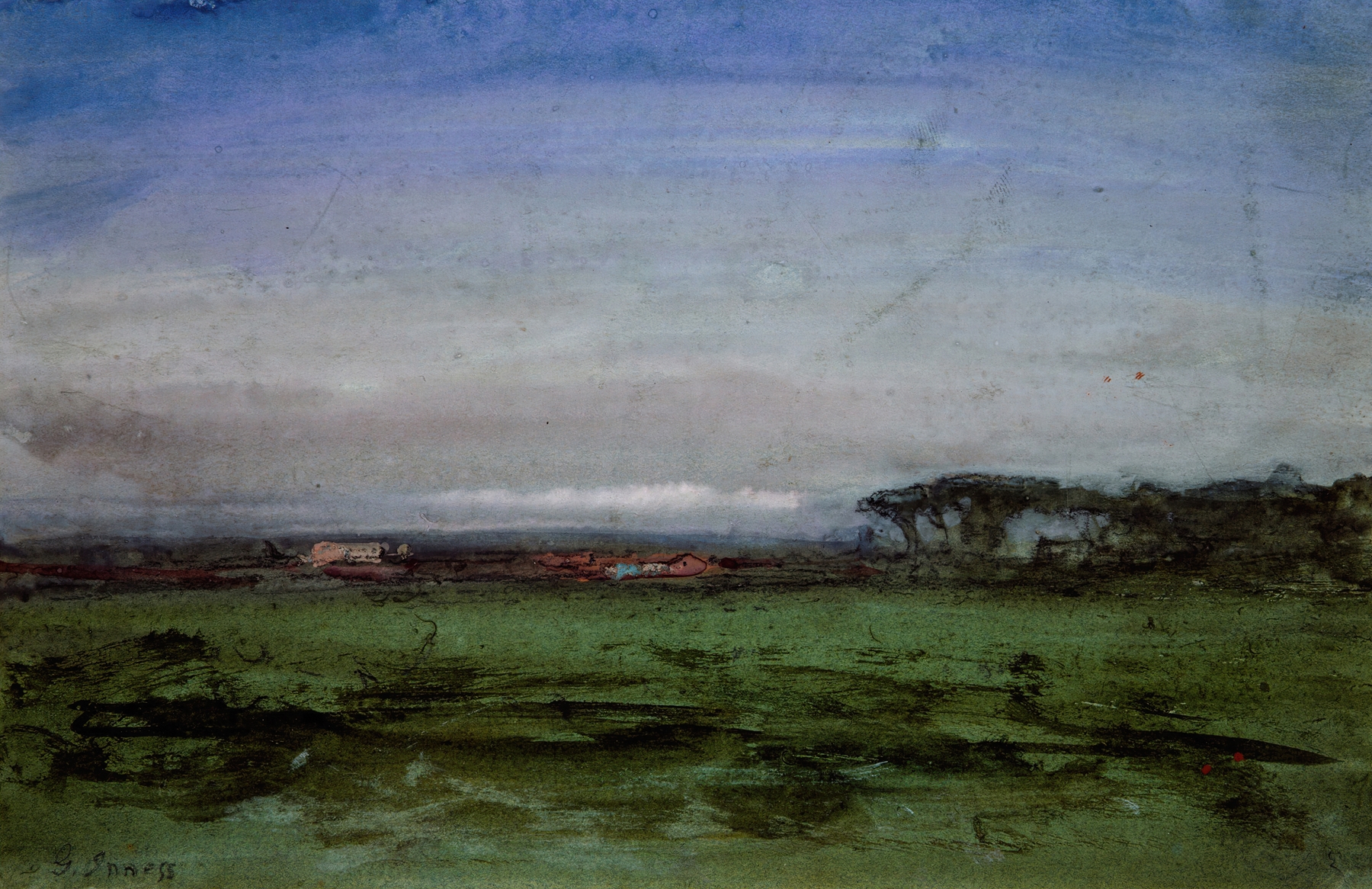
Can beauty exist without sorrow? As autumn whispers through the landscape, a tender nostalgia weaves its way into the heart of the viewer, inviting contemplation of both the vibrant and the melancholic. First, look to the center of the canvas where the diagonal path invites you deeper into the scene, leading the eye toward the gentle embrace of the trees. Notice how the light filters through the leaves, casting ethereal shadows that dance playfully on the ground.
Soft greens and warm golds harmonize in a palette that captures the essence of late afternoon, while the delicate brushstrokes create a sense of movement, as though the breeze itself has become part of the artwork. Inness masterfully captures the juxtaposition of tranquility and the inevitable decay of nature, a reflection of time's passage. The presence of the path suggests a journey, one that embodies the duality of beauty and loss—each step forward marked by an awareness of what is fleeting. This emotional tension resonates through the soft, golden light that bathes the landscape, evoking memories both cherished and forlorn.
In 1887, during a pivotal period in American art, the artist created this piece in the serene surroundings of his New Jersey estate. The rise of the Impressionist movement was shifting artistic paradigms, yet he remained rooted in a spiritual connection to the natural world. This work reflects his pursuit of capturing not only the visual essence of nature but also the deeper emotional currents that define human experience, linking beauty with the bittersweet nature of existence.