Springtime — History & Analysis
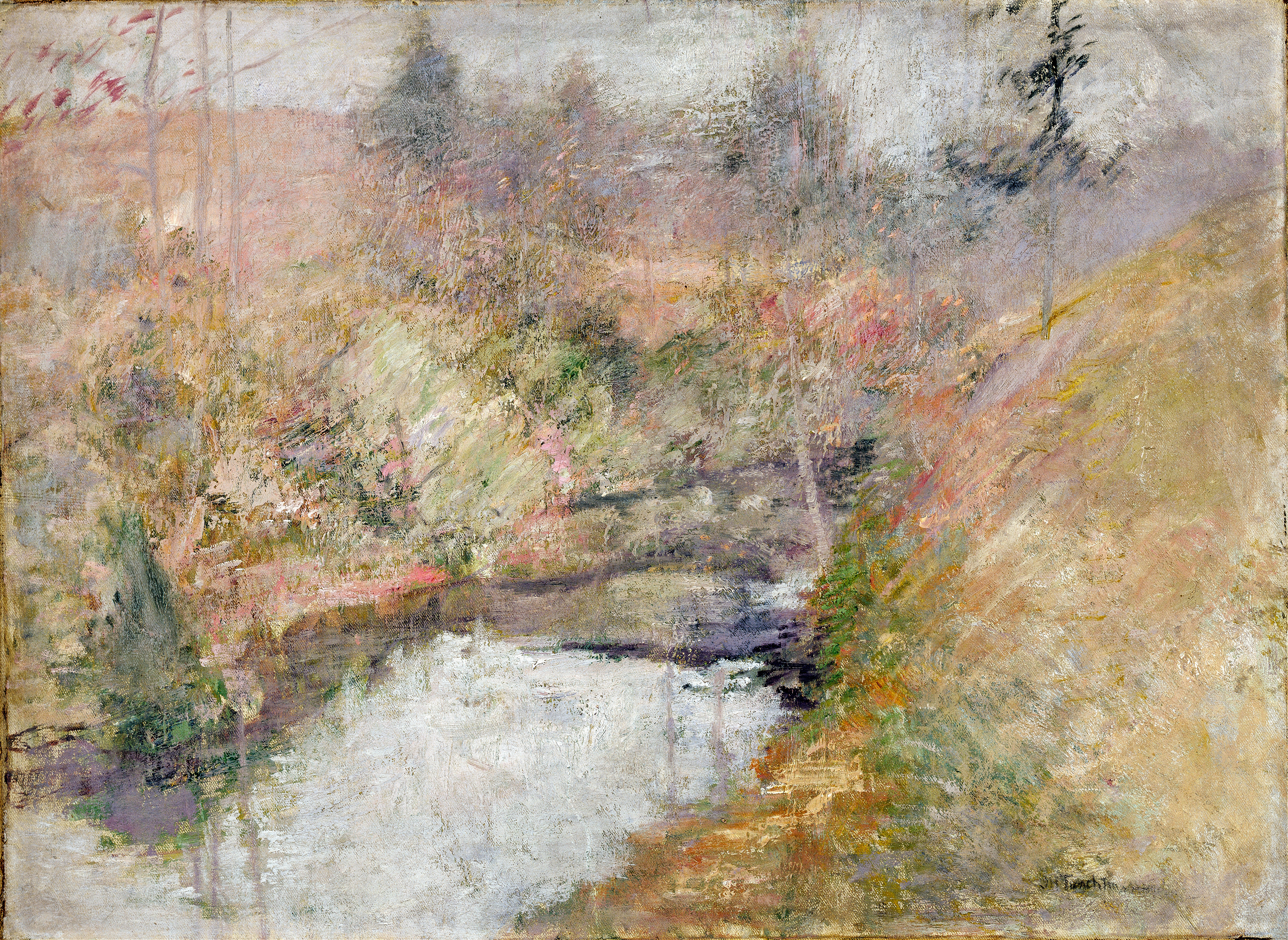
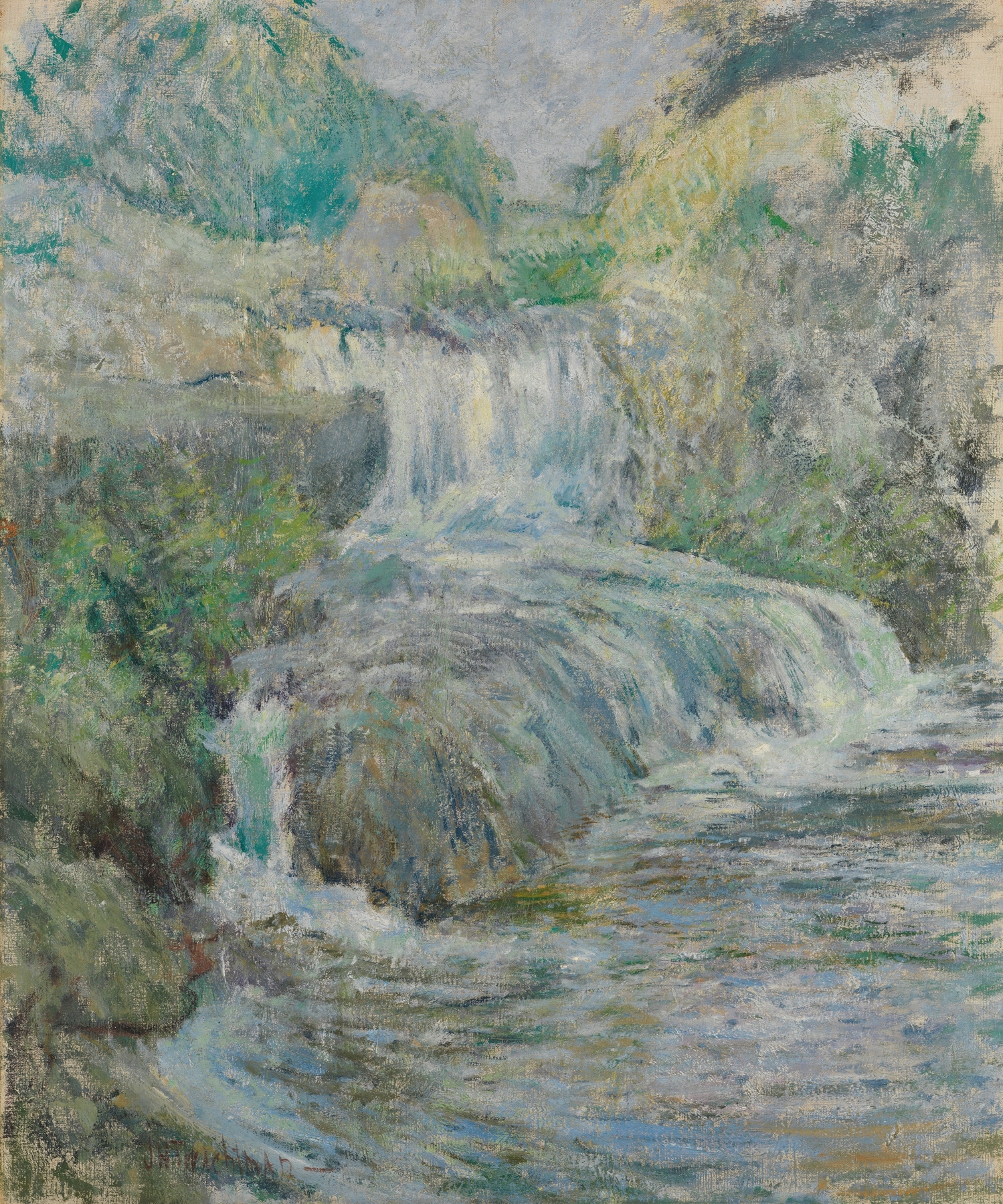
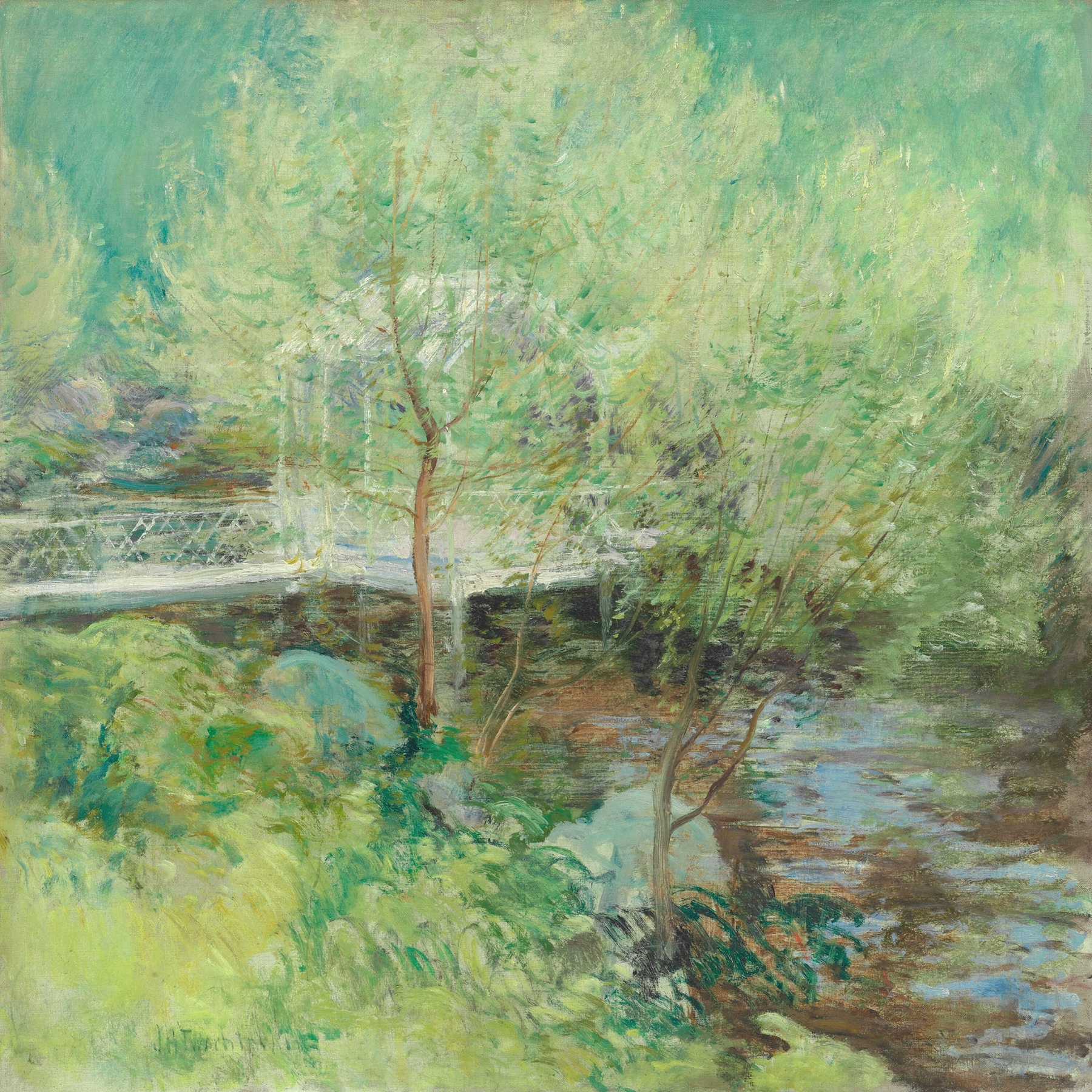
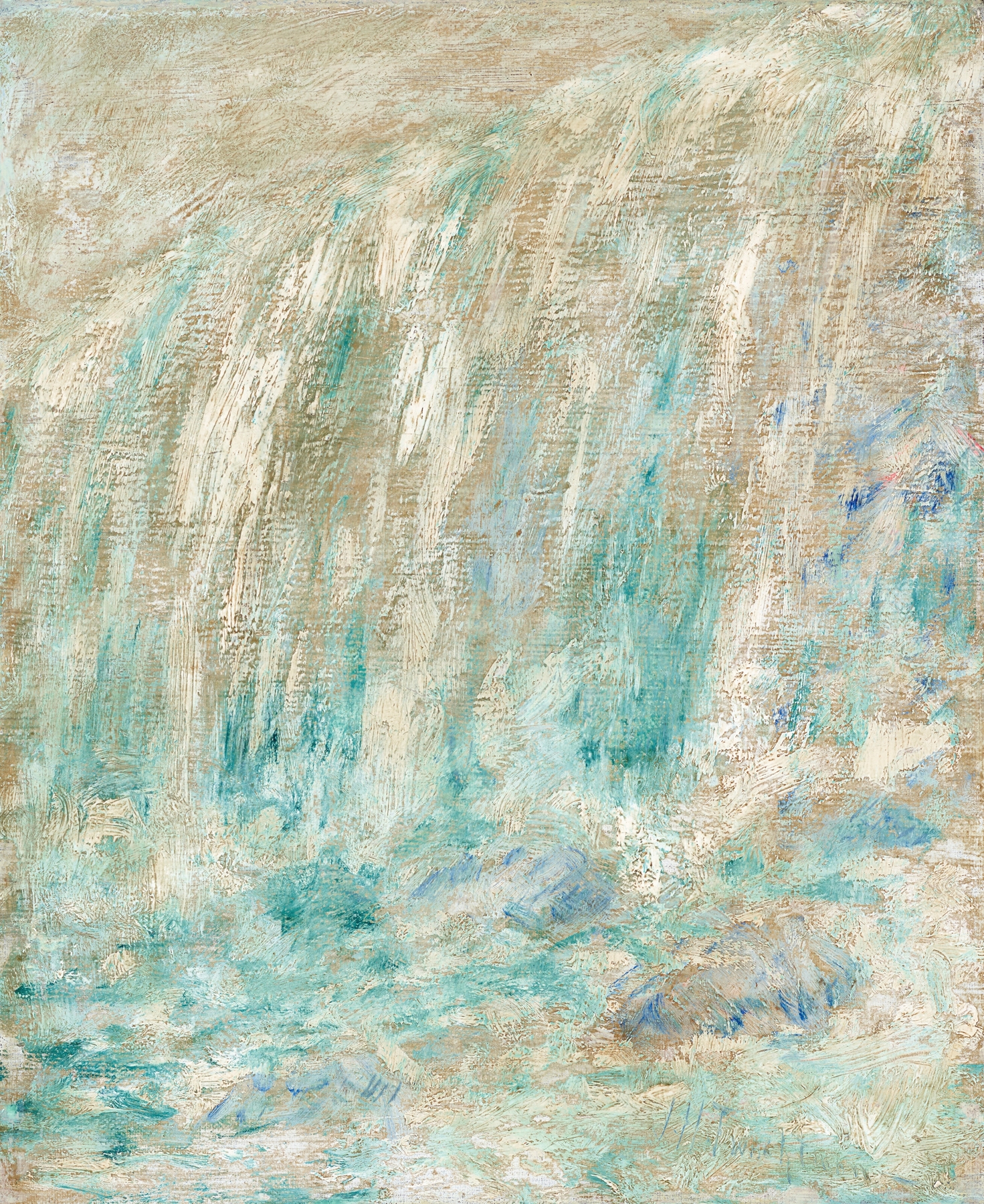
“Art reveals the soul when the world turns away.” In the stillness of spring, nature whispers secrets to those who listen, inviting introspection amidst the vibrant blooms and gentle breezes. Look to the center, where a lush, verdant landscape unfolds under a soft, diffused light. The delicate brushstrokes create a tapestry of greens, punctuated by bursts of color from blossoming flowers. Notice how Twachtman captures the essence of spring: the interplay of light and shadow that dances across the scene, enveloping the viewer in a sense of tranquility and renewal, urging one to pause and savor the moment.
As you explore, observe the contrast between the lively colors of the flora and the subtle, almost melancholic undertone of the landscape. This juxtaposition speaks to the ephemeral nature of beauty and life's fleeting moments. The serenity is palpable, yet there lingers an unspoken tension, hinting at the inevitable passage of time. Each brushstroke resonates with silence, as if the painting holds its breath, inviting personal reflection on rebirth and the transient beauty of existence.
Twachtman created Springtime around 1884 during a period of artistic exploration in the United States. As a leading figure in the American Impressionist movement, he sought to bridge European influences with the unique American landscape. This era marked a time of innovation and a shift towards capturing the ever-changing effects of light and nature, reflecting both personal and collective experiences in a rapidly modernizing world.