The Conflagration Seen From The Hisamatsu District — History & Analysis
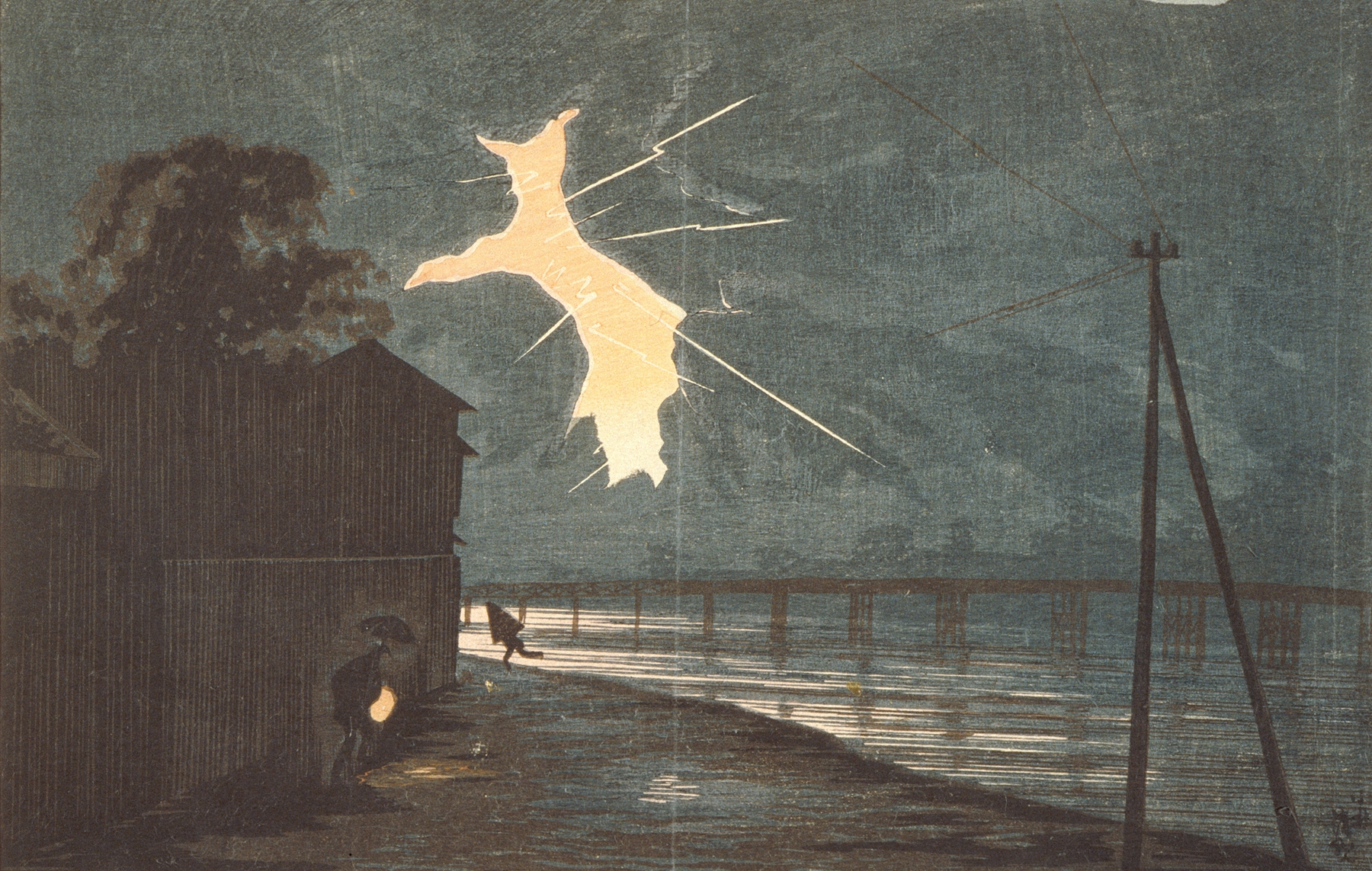
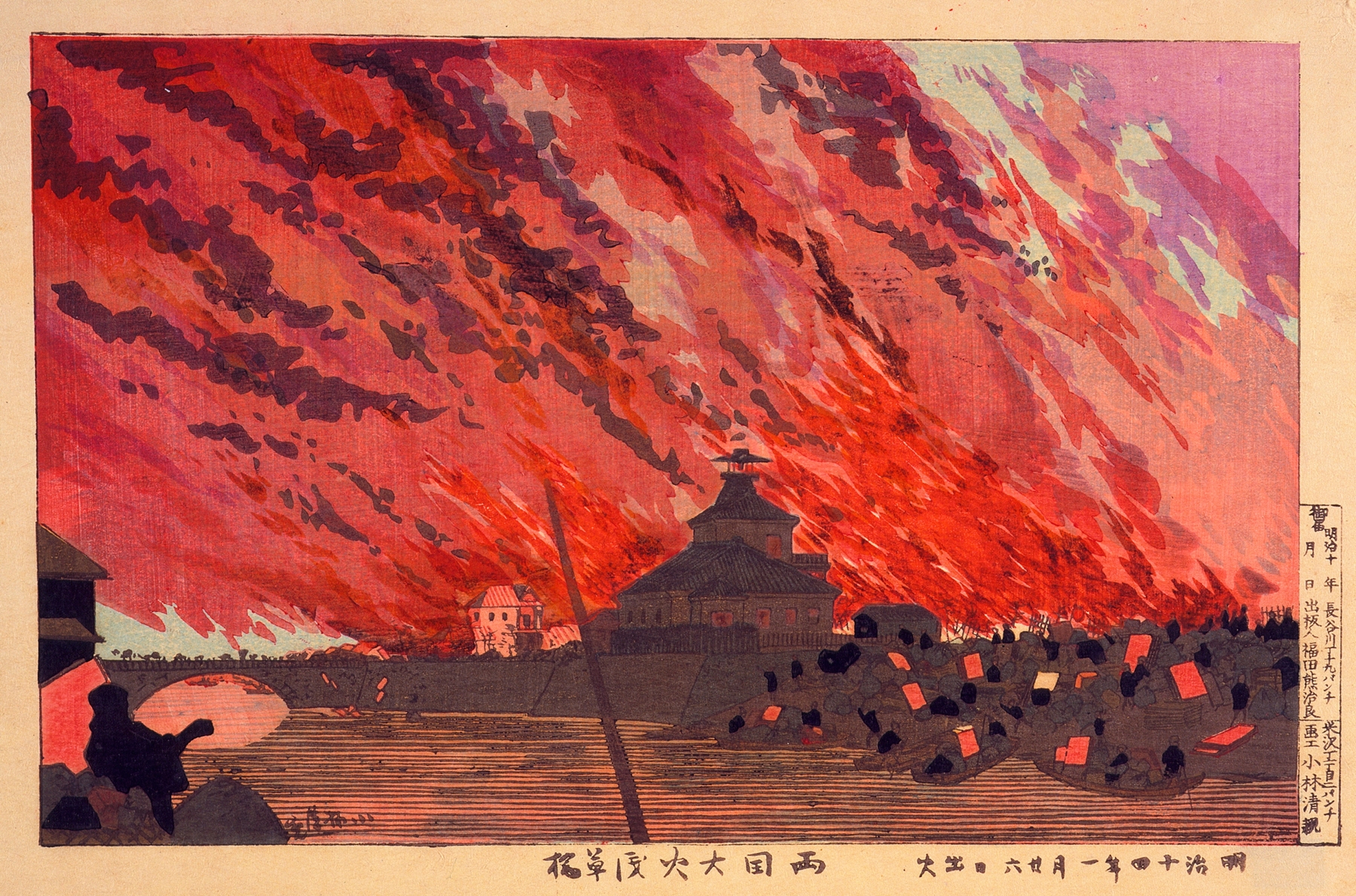
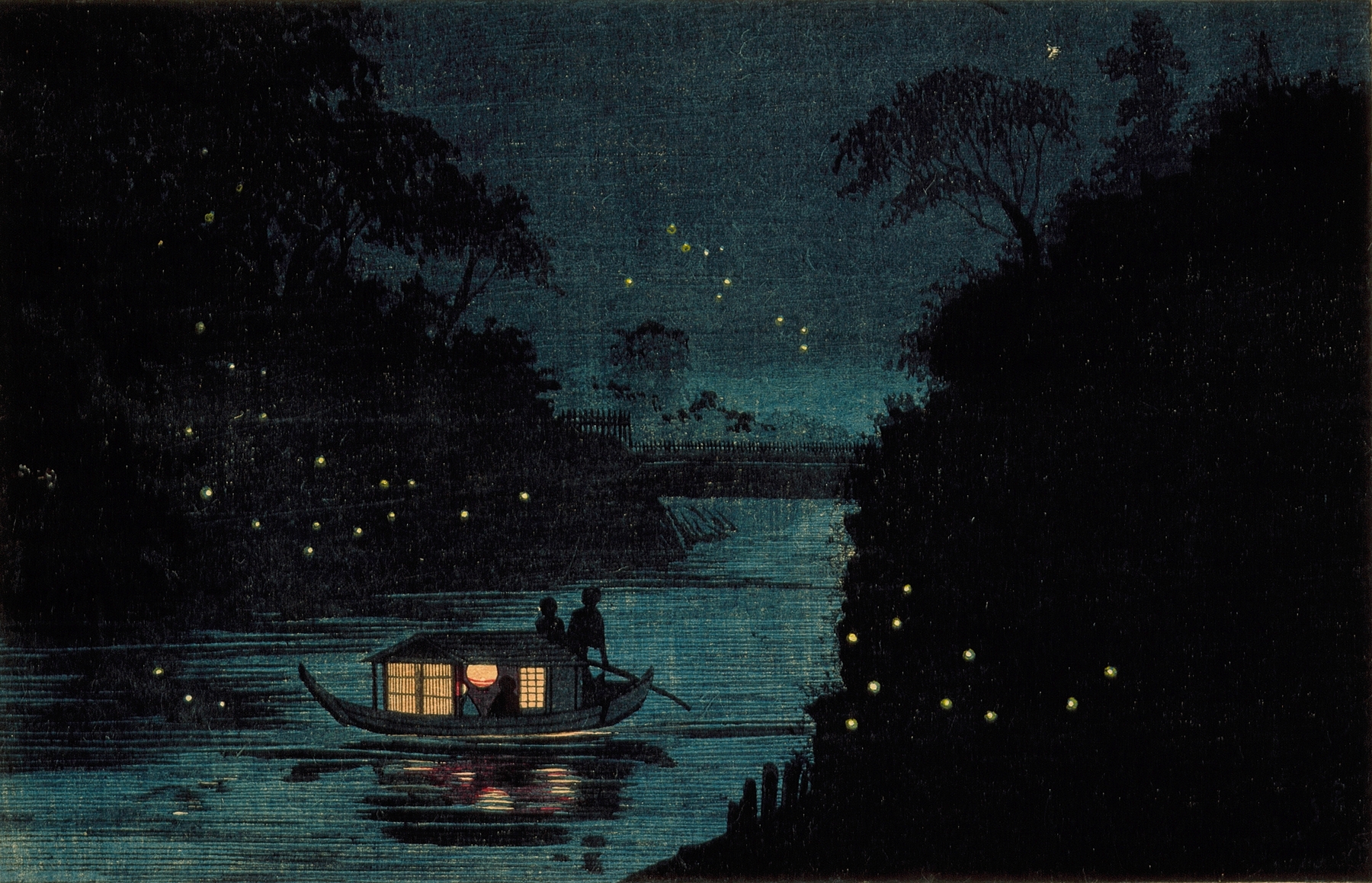
“Every brushstroke is a heartbeat remembered.” In the realm of memory and revelation, the past whispers through the canvas, revealing truths both haunting and beautiful. Look to the left, where vibrant reds and oranges blaze across the sky, the colors swirling like flames in a passionate dance. The artist’s meticulous brushwork captures the flicker of inferno, contrasting sharply with the deeper, muted hues of the foreground. Notice how the buildings, silhouetted against the fiery backdrop, stand stoic and immovable, their delicate details softened by the smoke that wafts through the air.
The interplay of light and shadow creates an intimate atmosphere, inviting viewers to traverse the fragile line between destruction and beauty. Within this scene lies a poignant commentary on resilience and loss. The juxtaposition of the vibrant fire, a symbol of chaos, and the stillness of the buildings evokes a sense of longing for what once was. Ghostly tendrils of smoke curl upwards, representing the memories that linger even as flames consume.
This moment of conflagration may also reflect the fragility of existence itself, a reminder that life is both ephemeral and profound, much like the fleeting nature of the blaze. During the late 19th century, Kobayashi Kiyochika was navigating the complex landscape of a rapidly modernizing Japan. Working in Tokyo between 1877 and 1882, he explored themes of transformation and urban change through his art. At this time, the nation was grappling with its identity amidst Western influences, and this painting serves as both a reflection of that tumultuous period and a masterstroke of Kiyochika’s evolving vision.