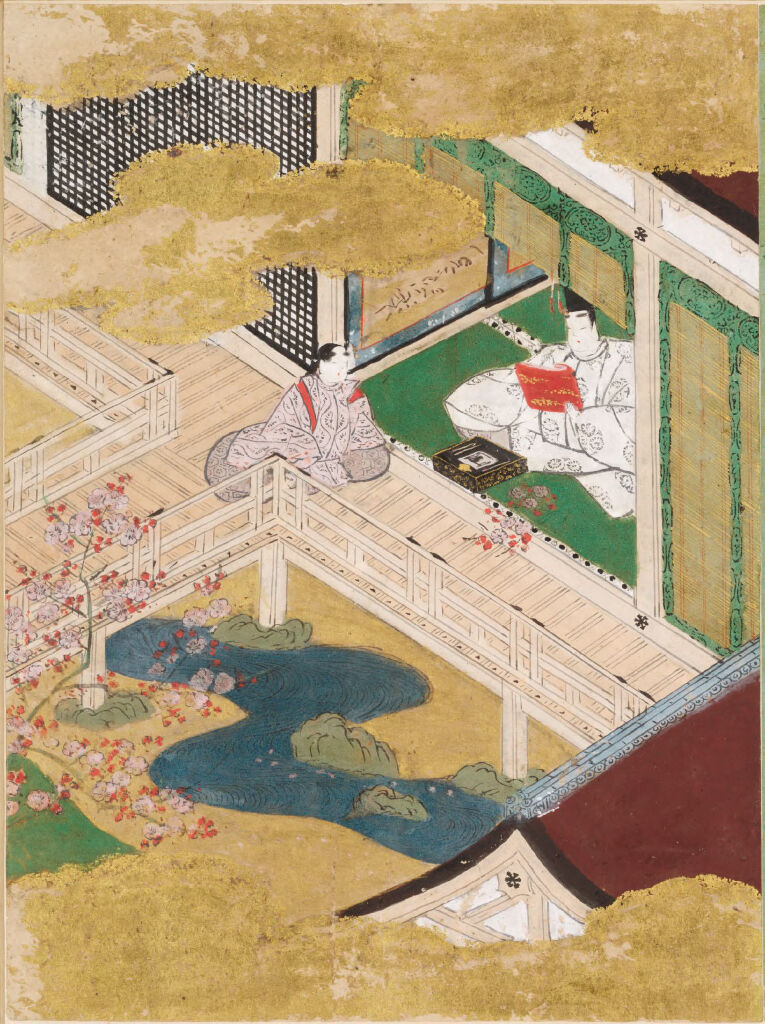
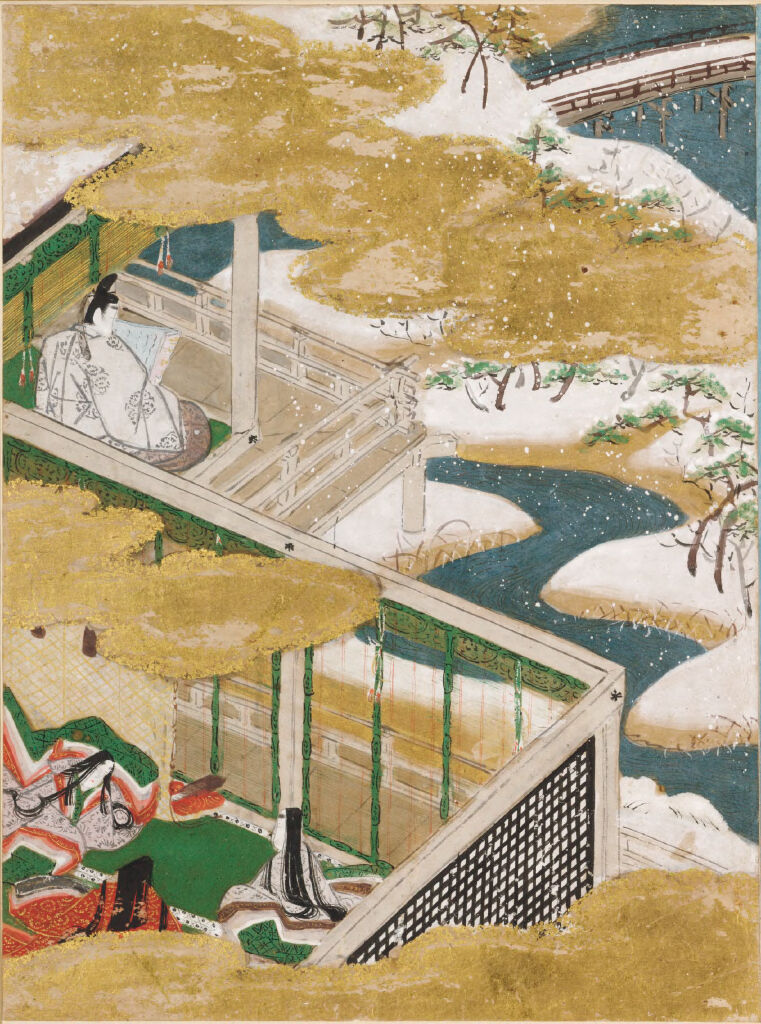
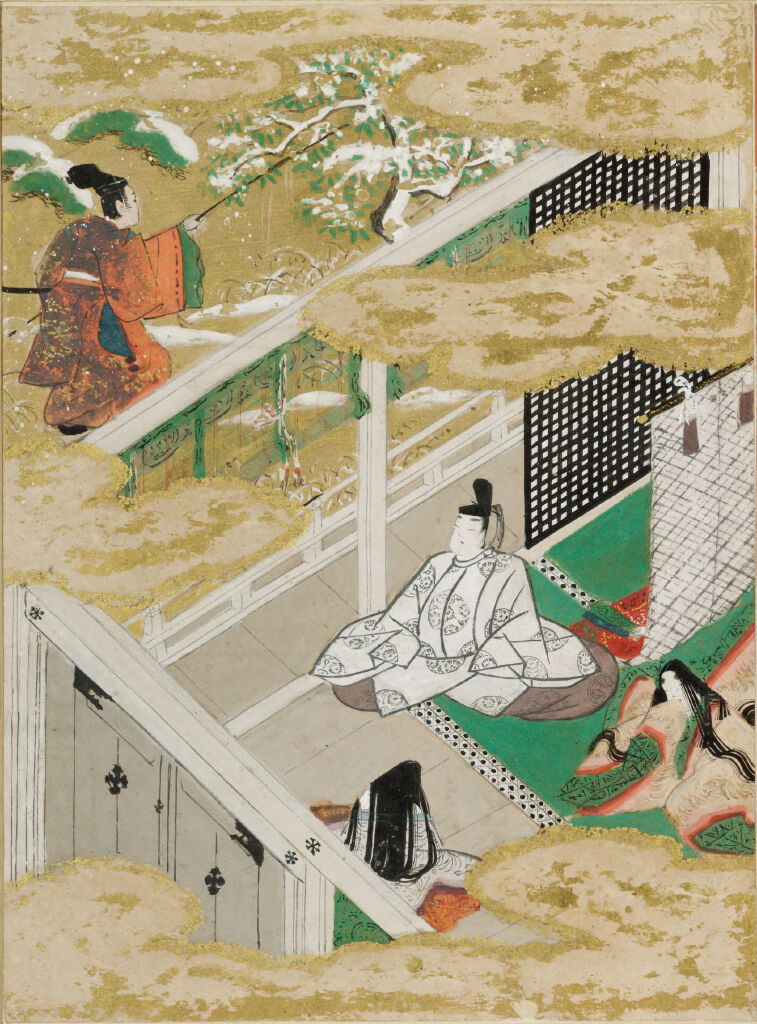
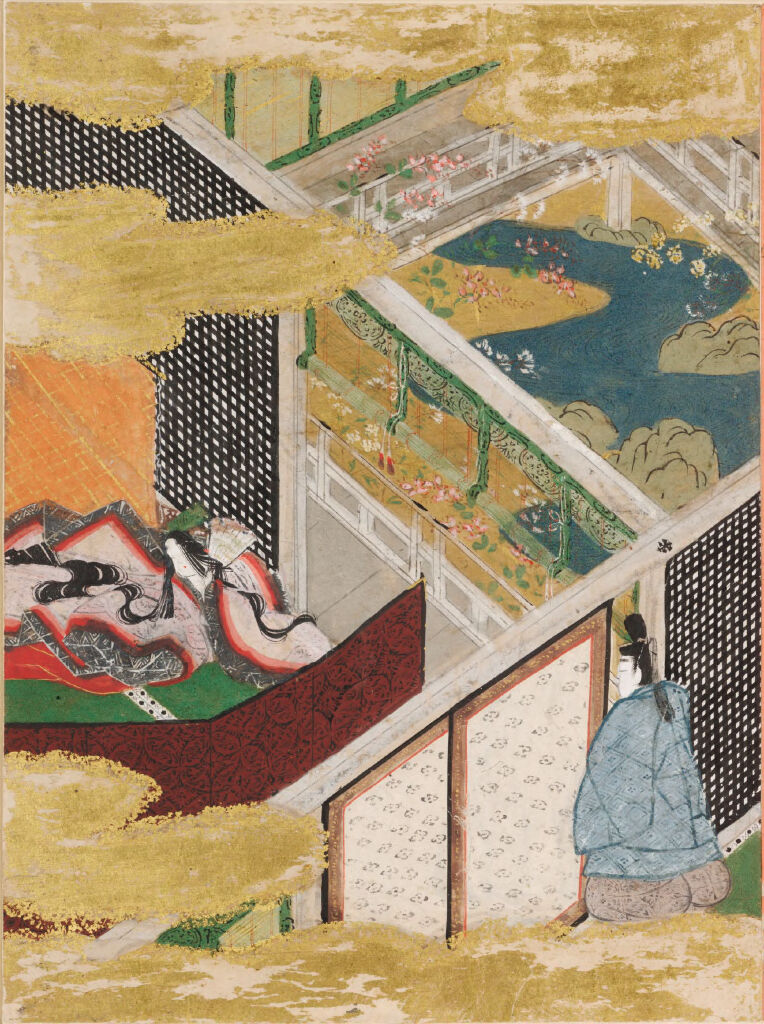
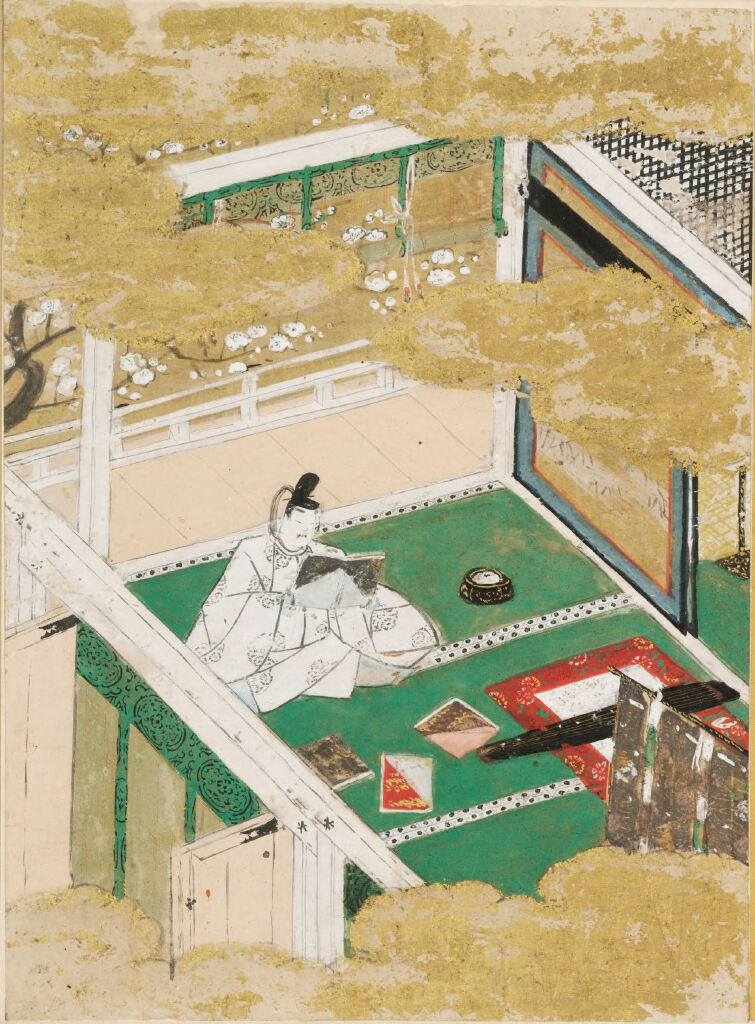
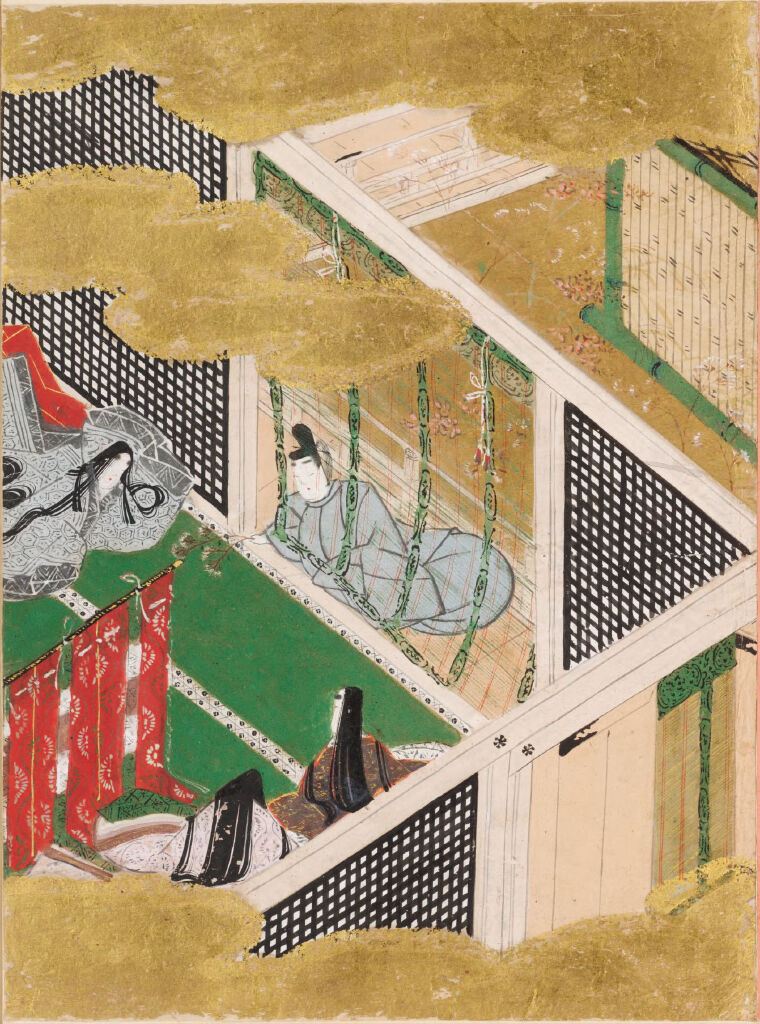
The Cressets (Kagaribi), Illustration to Chapter 27 of the Tale of Genji (Genji monogatari) — History & Analysis
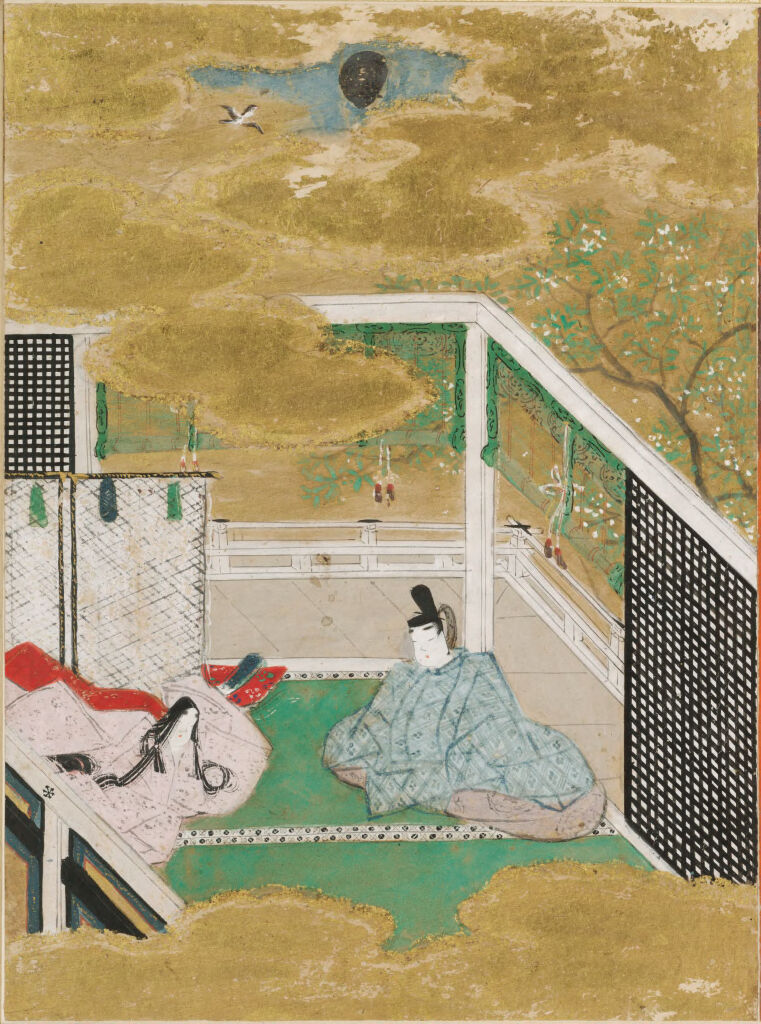
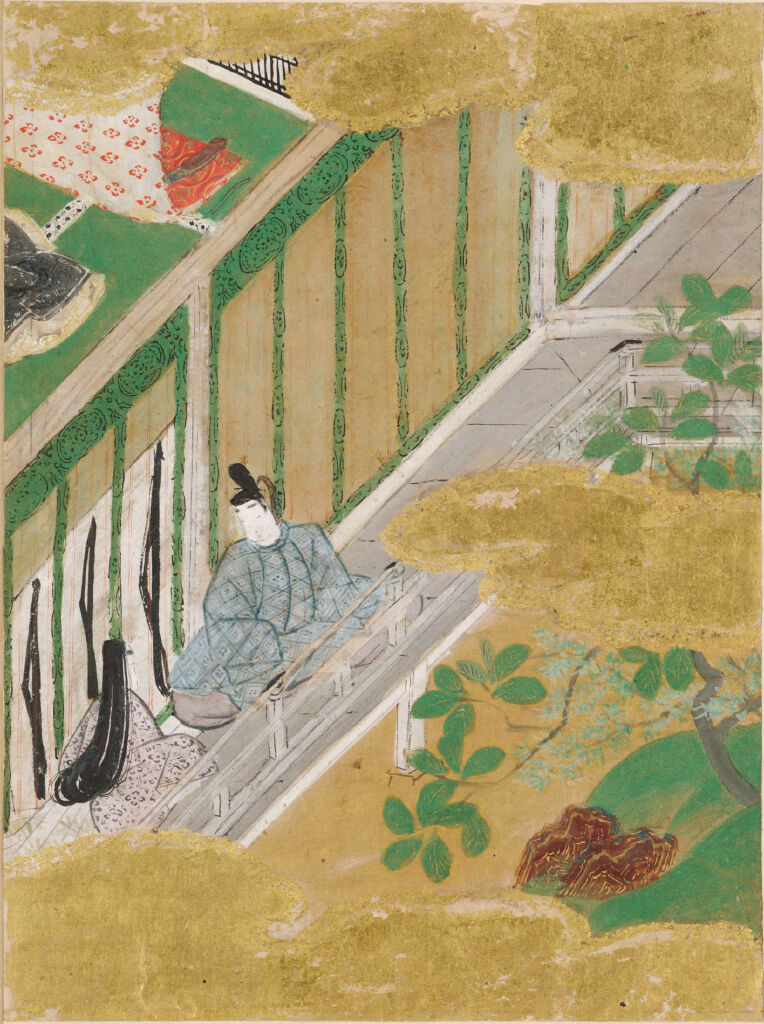
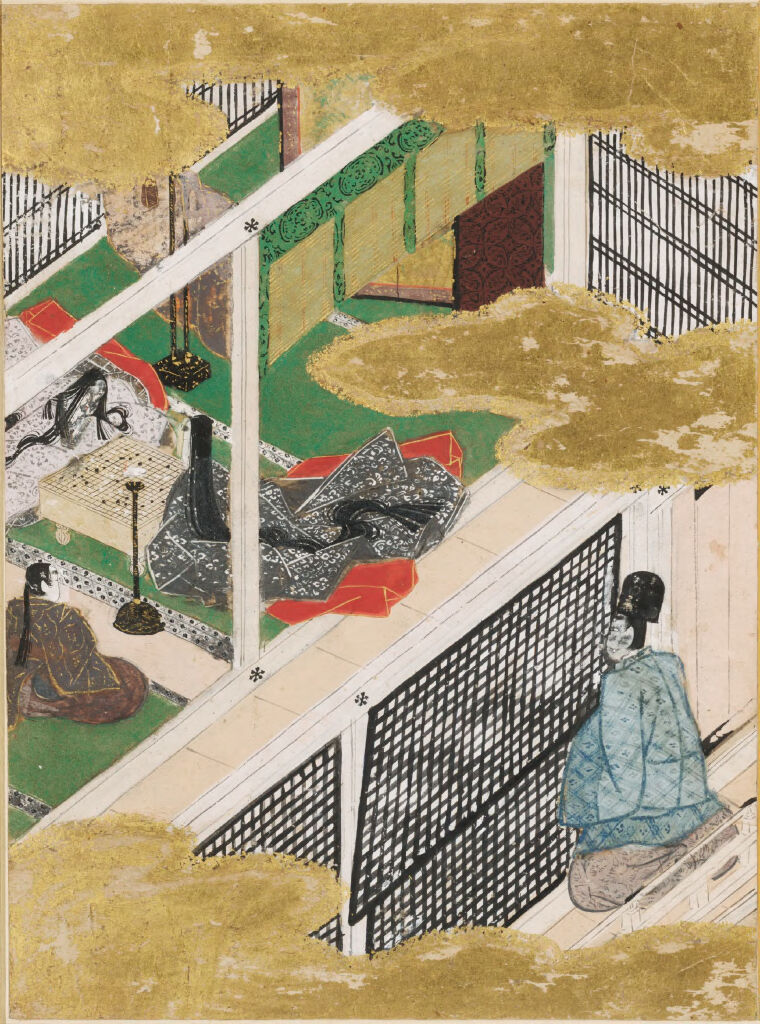
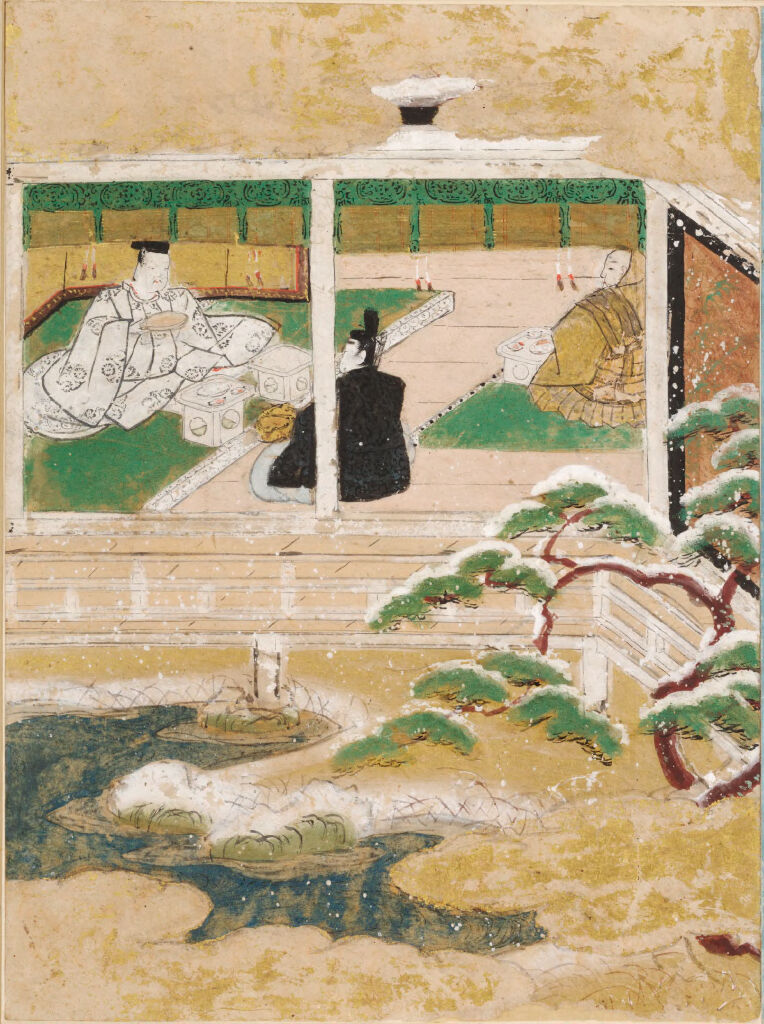
“To paint is to remember what time wants us to forget.” In this vibrant moment captured on paper, the dance of ephemeral beauty unfolds, reminding us of the transient nature of life itself. Focus on the delicate figures that weave through the composition, their flowing garments adorned with intricate patterns. Look to the right, where a luminescent cresset casts a warm glow, illuminating the soft faces of the courtiers engaged in the pursuit of fleeting pleasures. The use of rich colors, particularly deep reds and golds, evokes a sense of opulence, while gentle brushstrokes create a sense of movement, as if the characters might step off the page at any moment.
Beneath the surface of this visual feast lies an exploration of the interplay between permanence and impermanence. Each gesture hints at a deeper longing, as the participants in this scene grapple with the weight of their desires and the inevitability of time. The contrast between the stillness of the background and the lively interactions of the figures emphasizes the tension of a fleeting moment, inviting viewers to reflect on the moments they cherish.
During the Muromachi period, Tosa Mitsunobu was a key figure in the development of Japanese painting, particularly in the realm of narrative illustration. Created between 1509 and 1510, The Cressets illustrates Chapter 27 of the Tale of Genji, a seminal work in Japanese literature. At this time, the artist was exploring themes of beauty and transience in a culture steeped in the aesthetic appreciation of the ephemeral, marking a significant evolution in the portrayal of human emotion and experience in art.