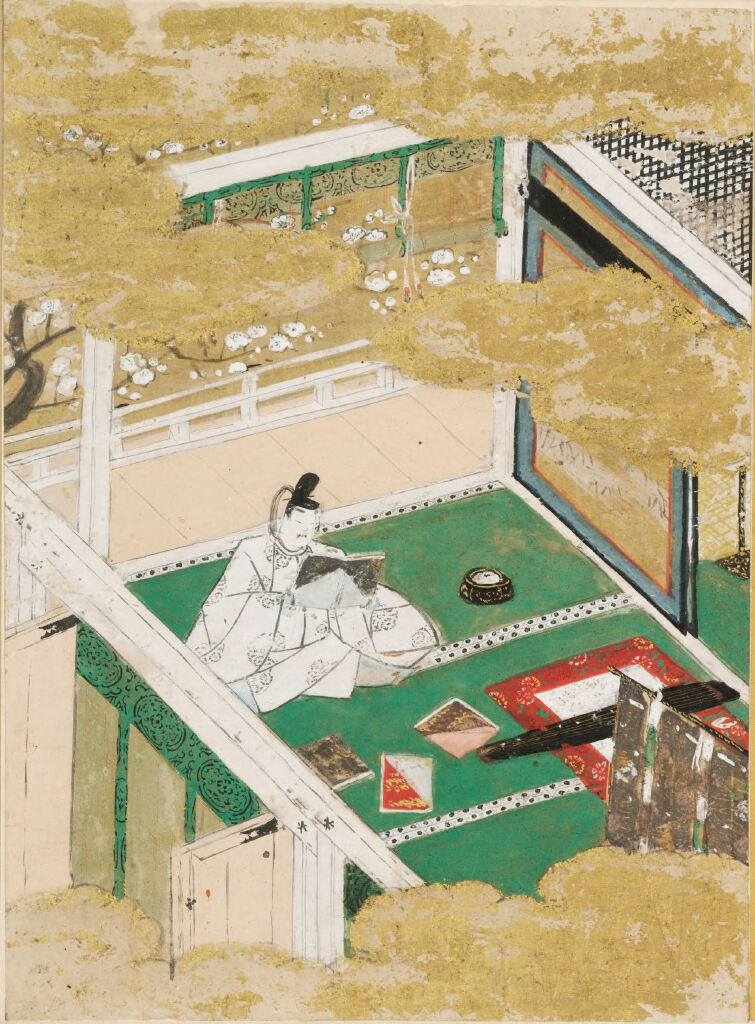
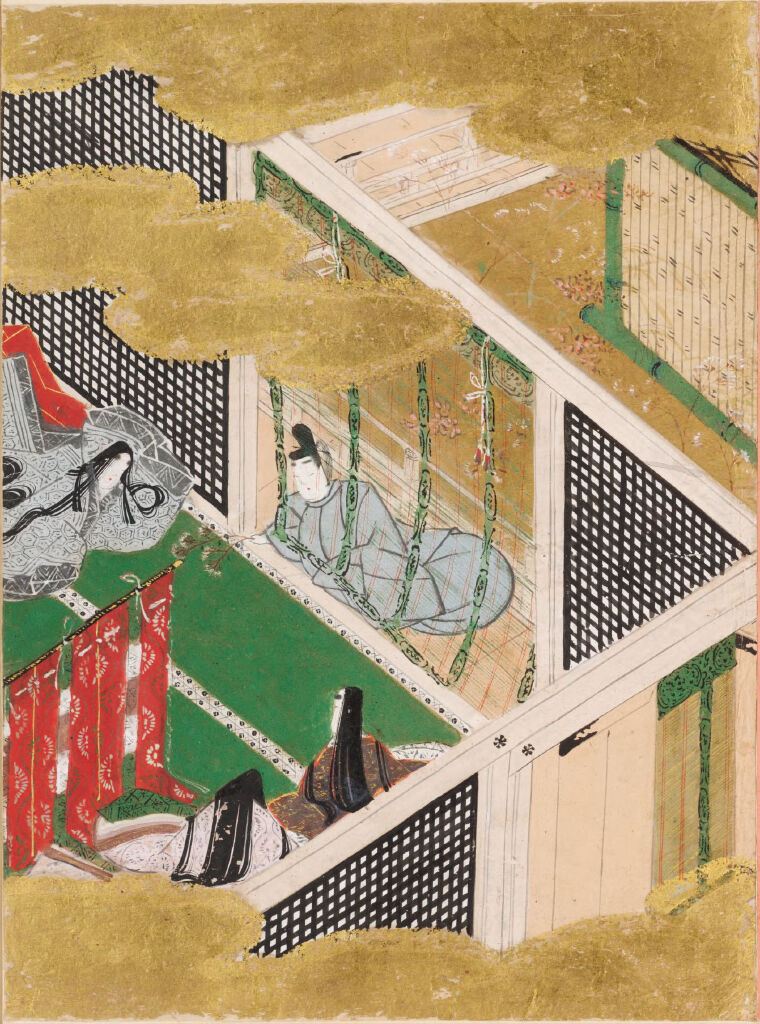
The Flute (Yokobue), Illustration to Chapter 37 of the Tale of Genji (Genji monogatari) — History & Analysis
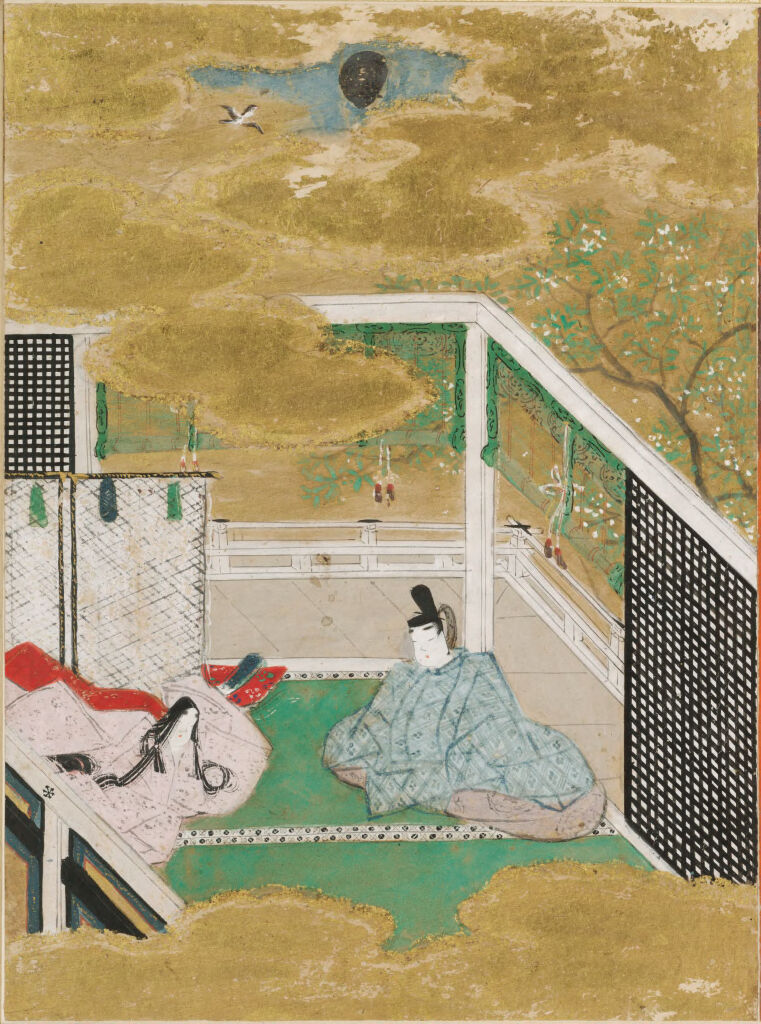
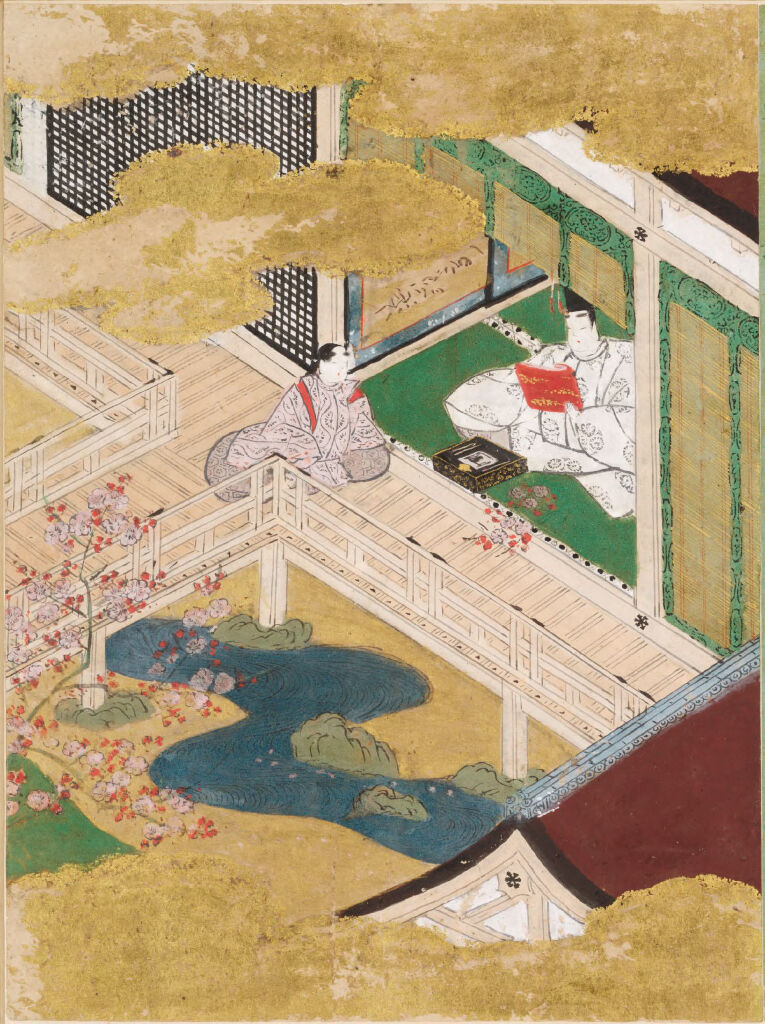
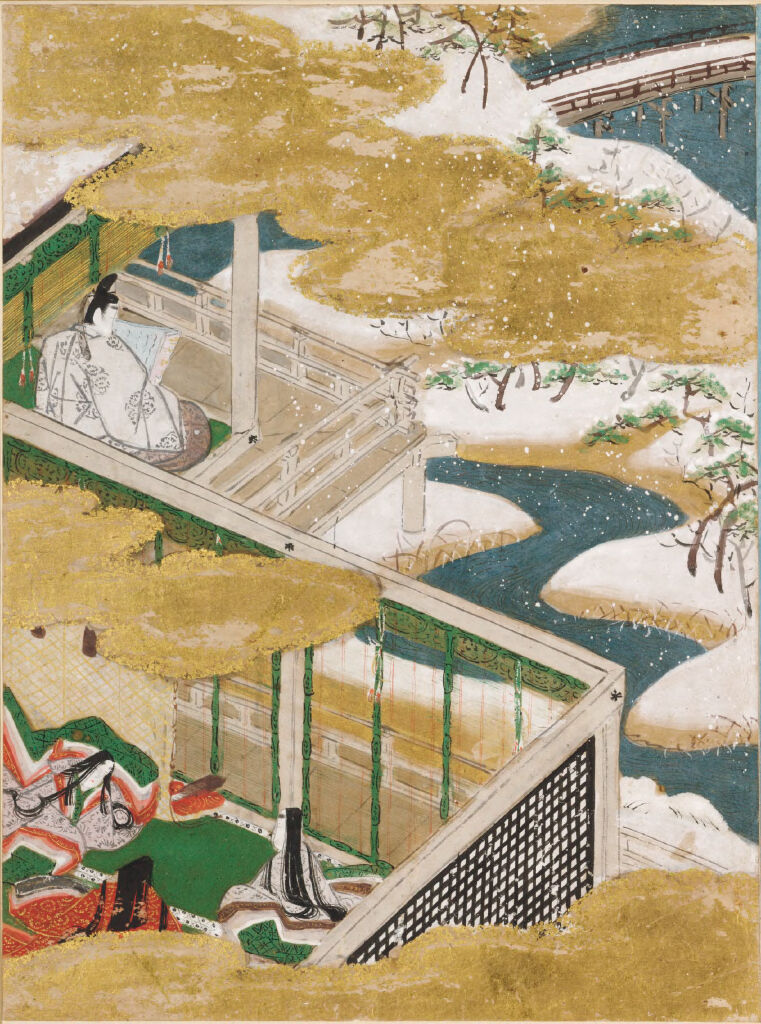
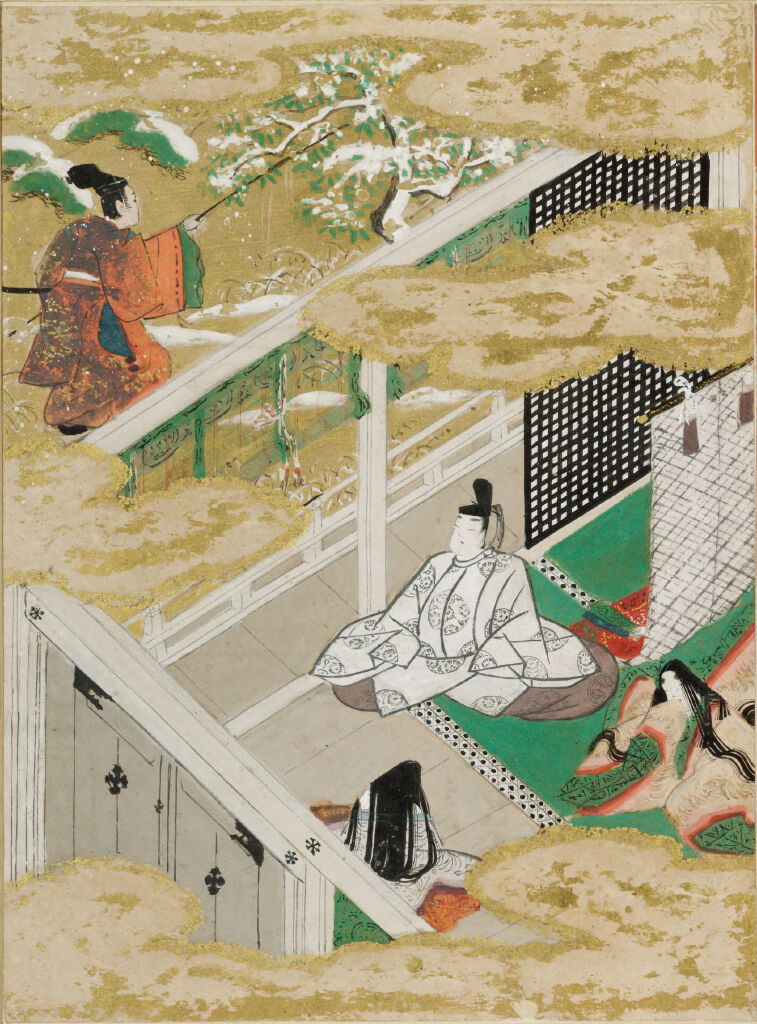
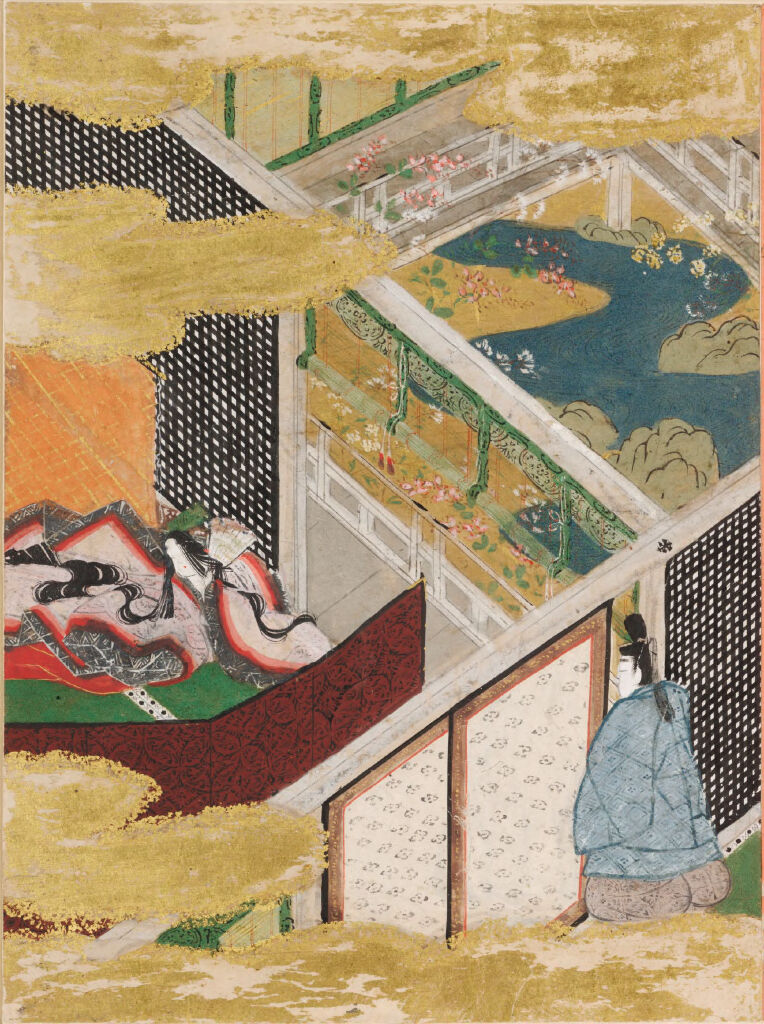
“Under the brush, chaos becomes grace.” In the delicate world of Tosa Mitsunobu, the tumult of human emotion and experience is transformed into a poetic symphony of color and form. The intricate layers of beauty conceal deeper narratives, where the interplay of violence and tenderness finds its expression. First, look to the figure on the left, her serene countenance contrasting sharply with the tumultuous background. Notice the subtle brushwork that captures the flowing fabric of her kimono, each fold and crease suggesting movement and life. The muted earth tones blend seamlessly with vibrant splashes of red and gold, creating a visual tension that draws the eye across the canvas.
The background, a swirling mass of abstract shapes, evokes a sense of emotional upheaval, providing a stark juxtaposition to the poised figure at the forefront. As you delve deeper into the artwork, consider the symbolism woven into the details. The central motif of the flute represents not only a musical instrument but also the fragility of life and love, hinting at the fleeting nature of beauty amidst chaos. The ghostly outlines in the background could signify the ghosts of past relationships, their presence felt but not fully realized, capturing the violence of lost connections.
This emotional resonance invites contemplation on the contrasts between harmony and discord, elation and sorrow. Created around 1509-1510 during the Muromachi period, this piece reflects a time of shifting artistic traditions in Japan. Tosa Mitsunobu, a prominent figure in the realm of Yamato-e painting, sought to merge the delicate aesthetics of court life with the complexities of human emotion. This era was marked by a fascination with literature and the arts, particularly the Tale of Genji, making it a fertile ground for exploring themes of love and loss in an eloquent visual language.