The Paulownia Pavilion (Kiritsubo), Illustration to Chapter 1 of the Tale of Genji (Genji monogatari) — History & Analysis
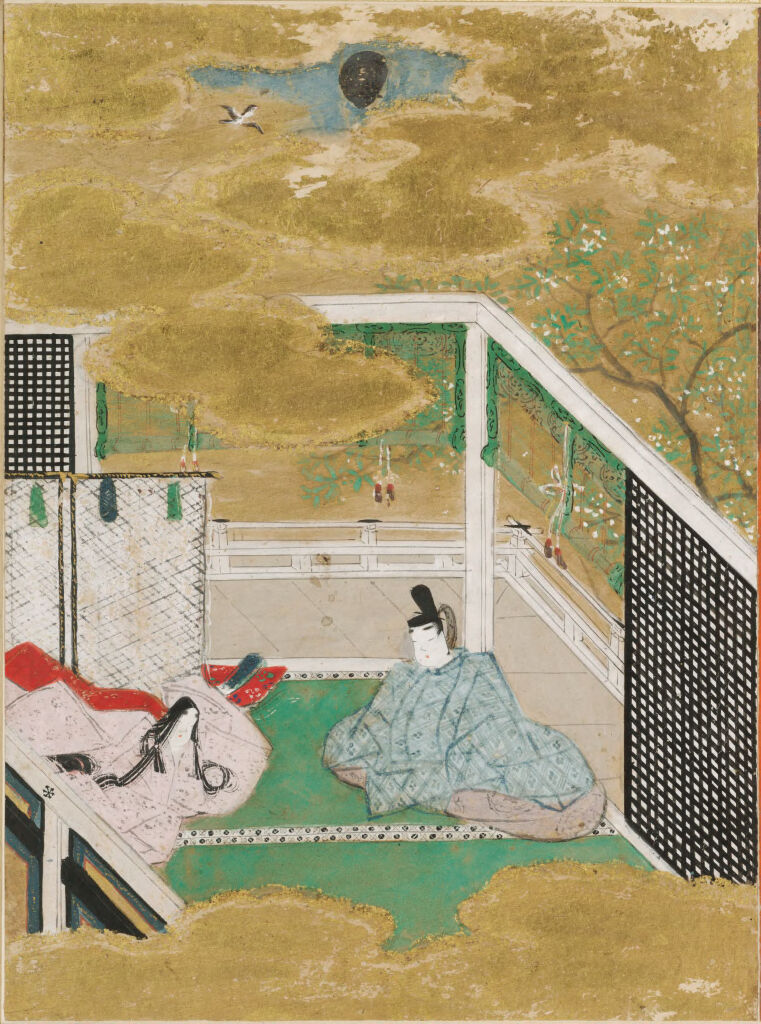
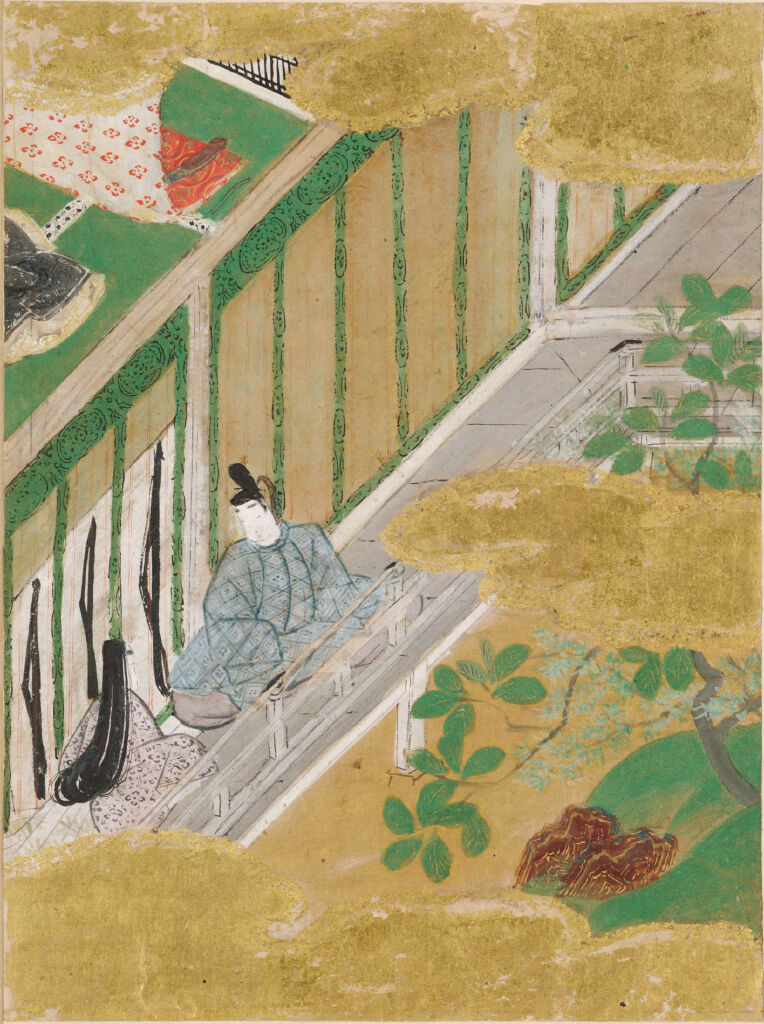
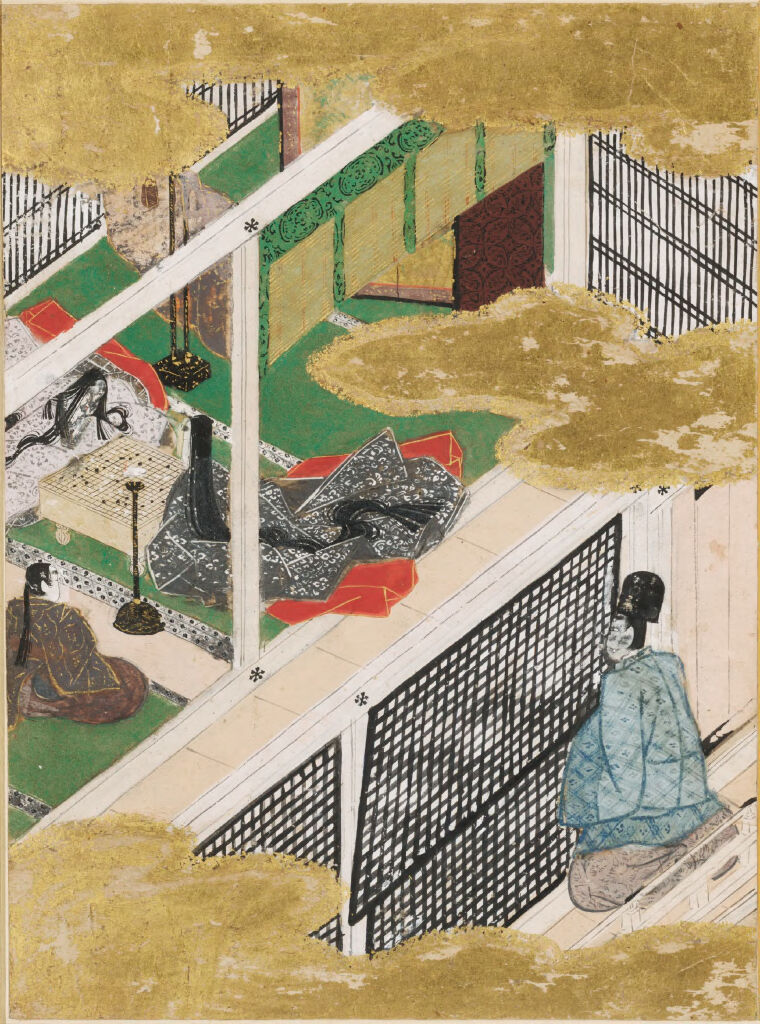
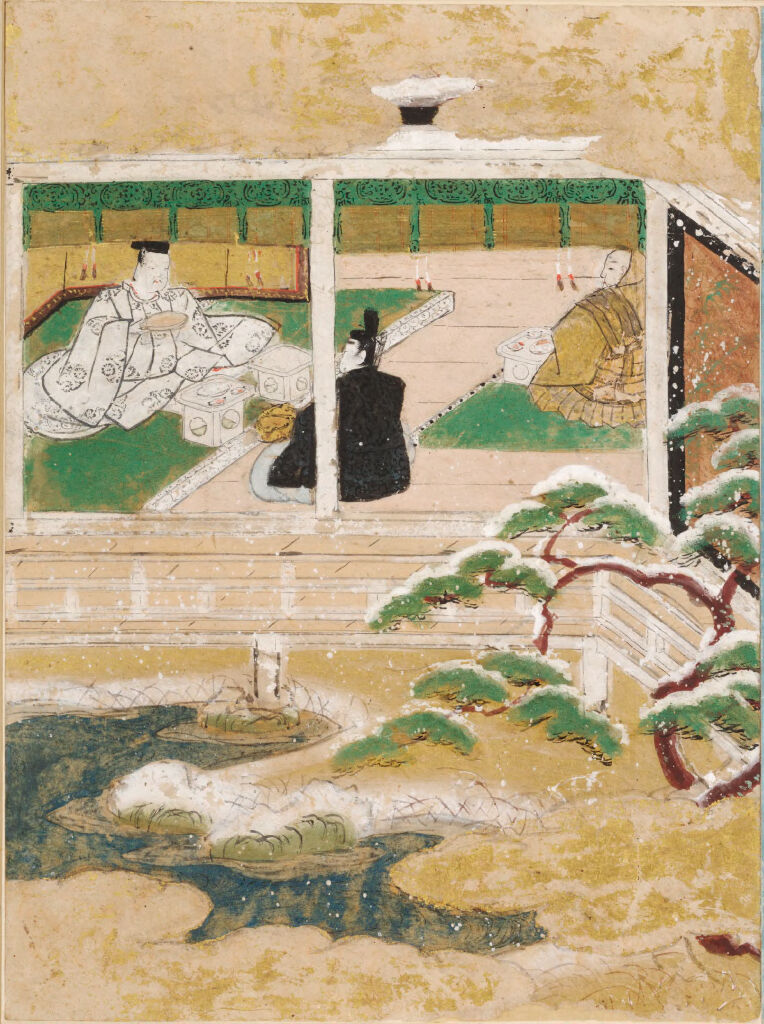
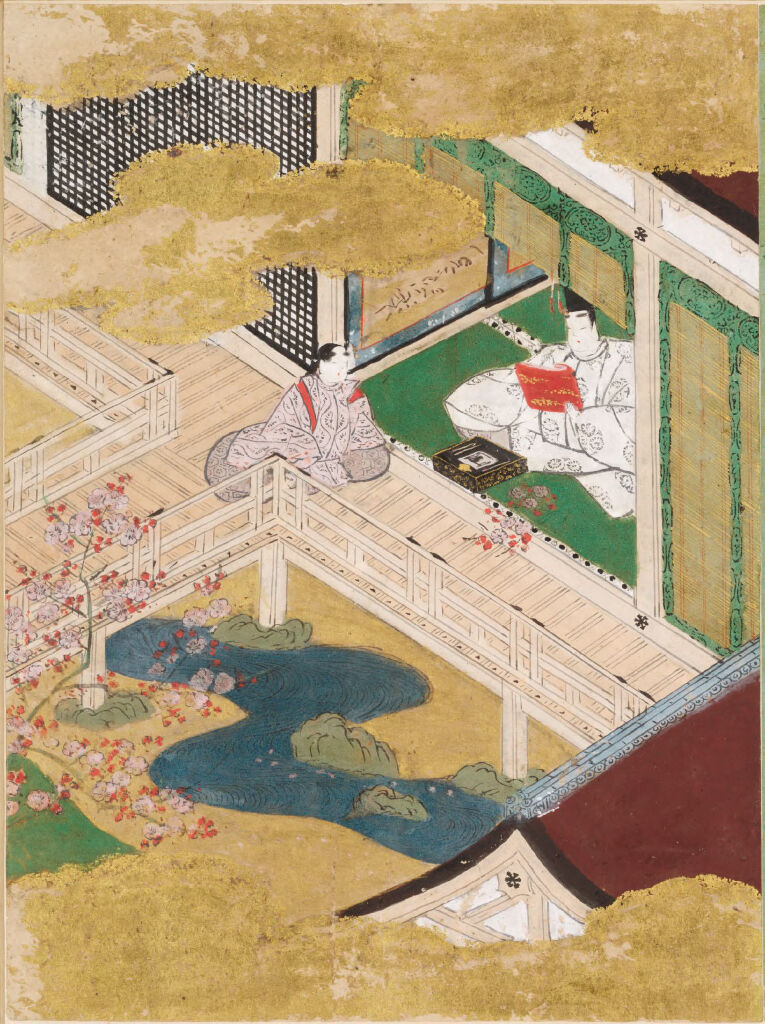
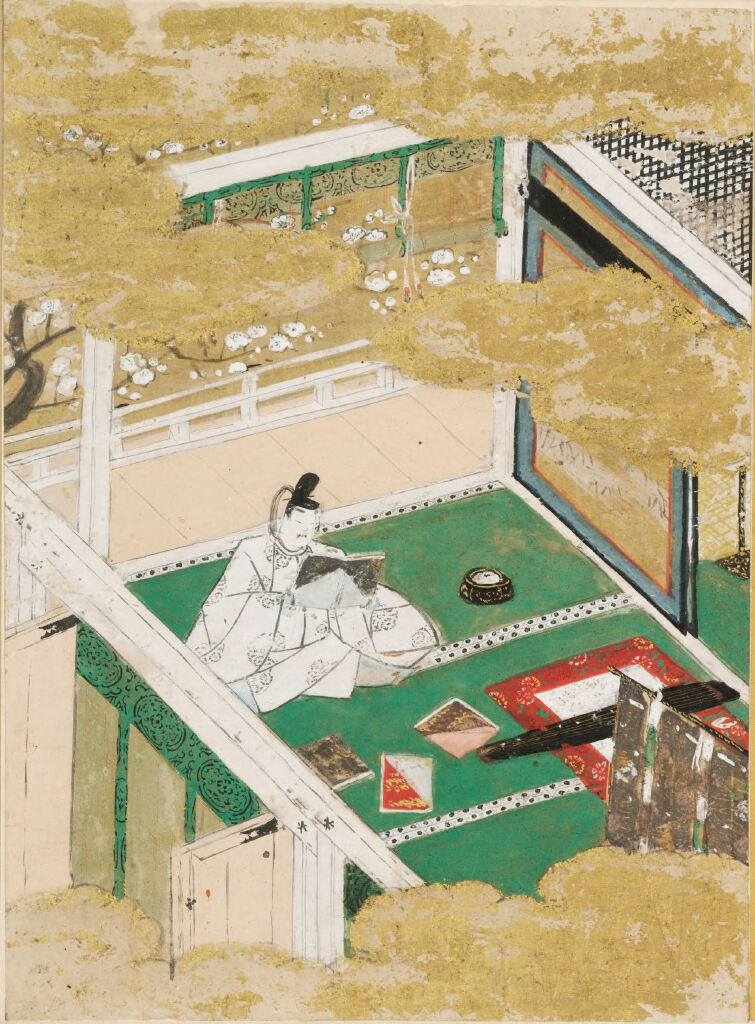
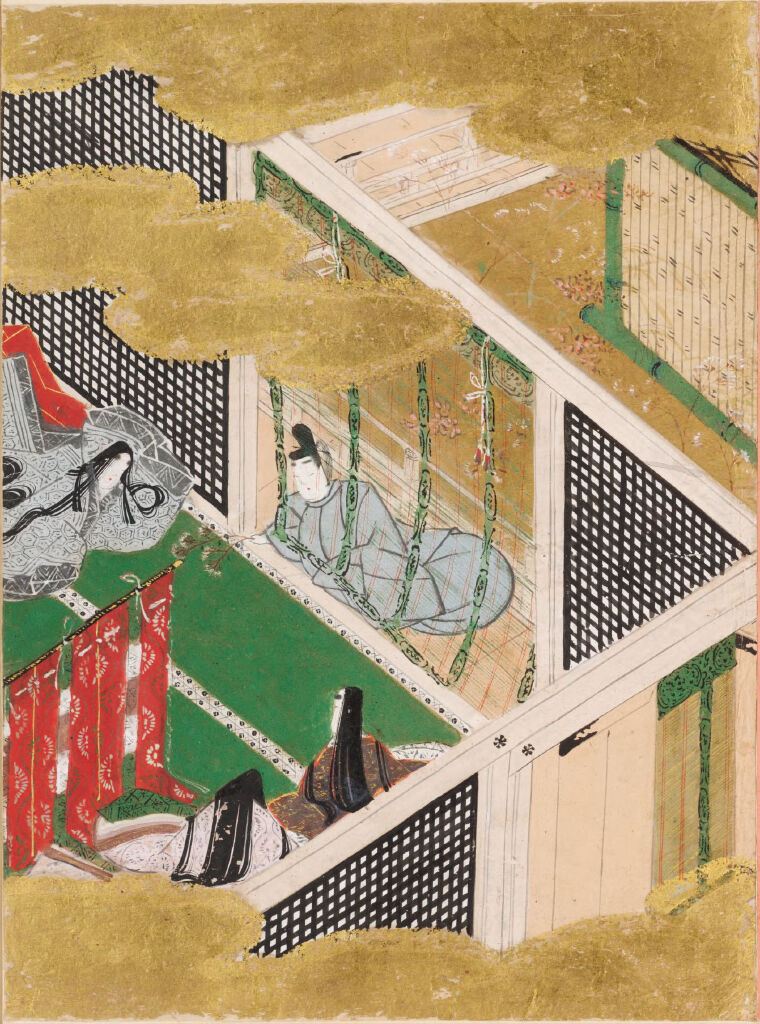
Can beauty exist without sorrow? In the delicate brushstrokes of this Muromachi-era illustration, the essence of longing and the fleeting nature of joy converge, whispering secrets of the human experience. Focus first on the artist's use of color; the soft, muted pastels envelop the scene, evoking a dream-like quality. Look closely at the intricate details of the pavilion’s architecture, where the gently sloping roof seems to cradle the fragile beauty of the cherry blossoms above. Notice how the light seems to dance through the branches, casting delicate shadows that hint at hidden stories yet to unfold.
The delicate composition invites the viewer to step into a moment suspended in time, each element thoughtfully placed to express harmony and transience. Beneath the surface, the tension between nature and human emotion emerges. The serene beauty of the pavilion juxtaposes the ephemeral blossoms, symbolizing the inevitable passage of time and the bittersweet nature of existence. Each petal, falling like unspoken words, serves as a reminder that joy often blooms alongside sorrow, intertwined in a delicate balance.
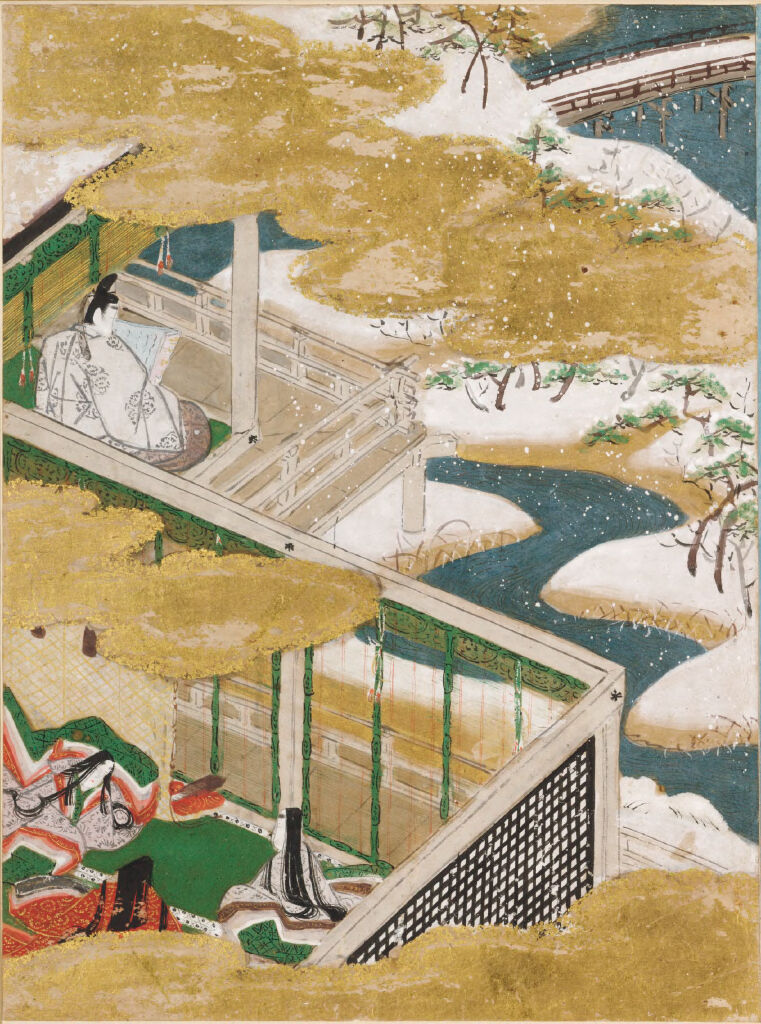
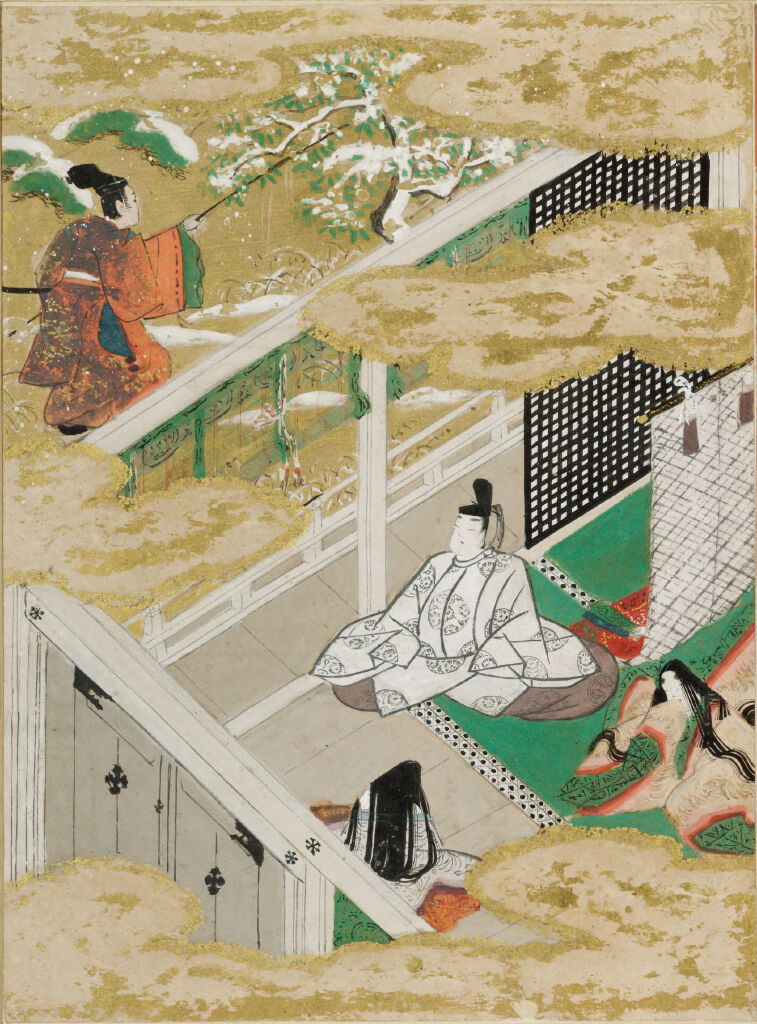
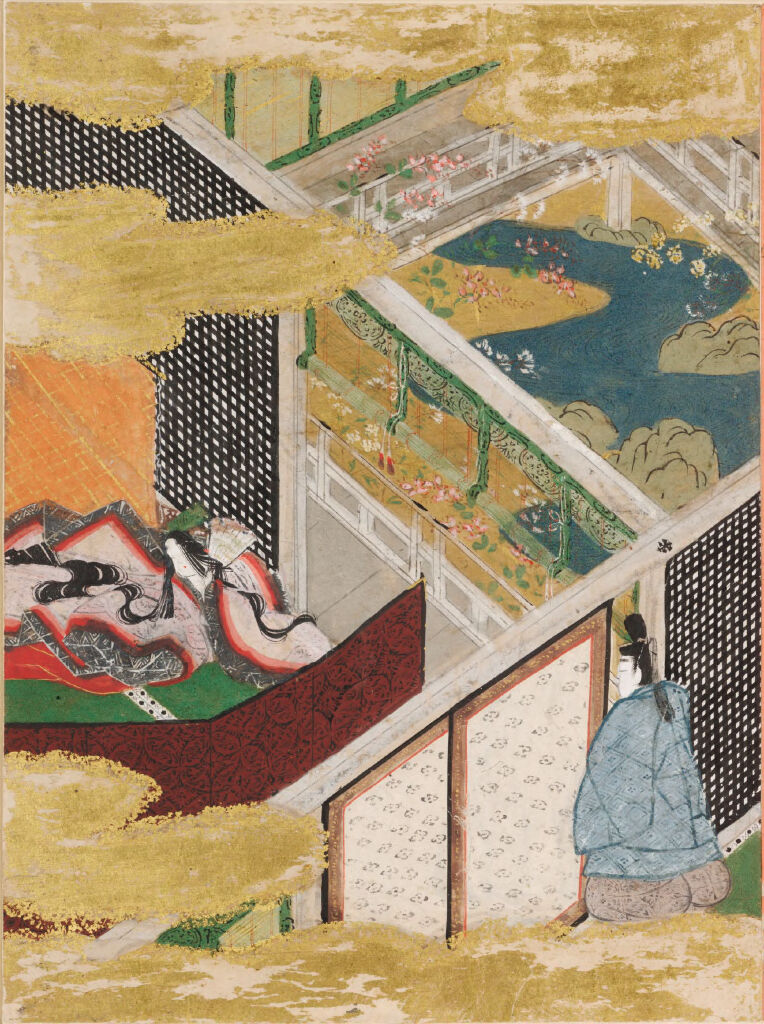
The figures depicted seem to embody this duality, their expressions hinting at desires unfulfilled, yet their surroundings emanate a sense of hope. In the early 16th century, amidst the cultural flourishing of the Muromachi period, Tosa Mitsunobu created this illustration as part of a series illuminating The Tale of Genji, a literary masterpiece that reflects the complexities of court life. At this time, the artist was embracing the distinct aesthetics of Yamato-e, blending traditional narratives with vivid visuals. The world was transformed by a growing appreciation for the arts, yet the themes of love, loss, and beauty remain universal, resonating profoundly through the ages.