The Rest on the Flight into Egypt — History & Analysis
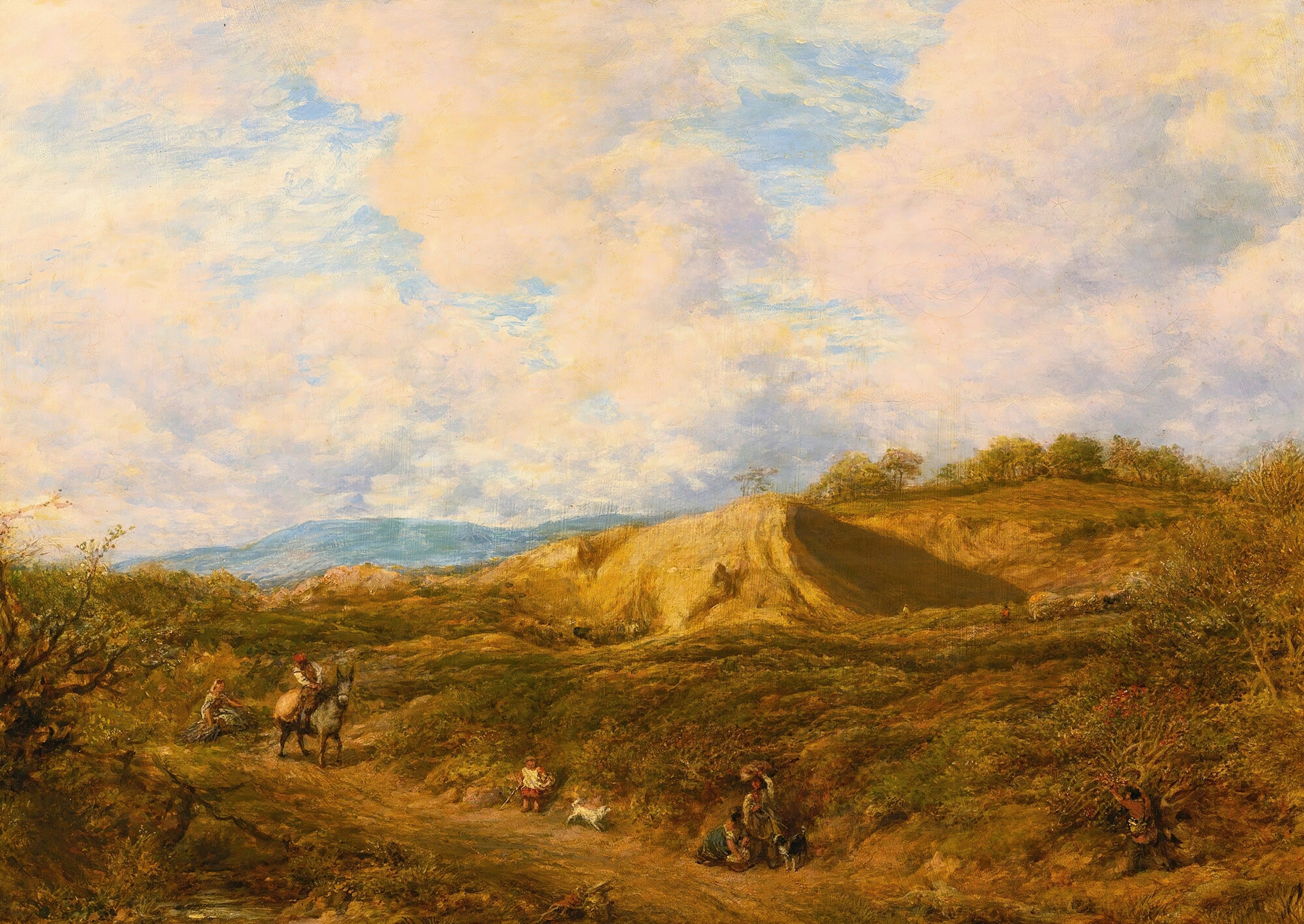
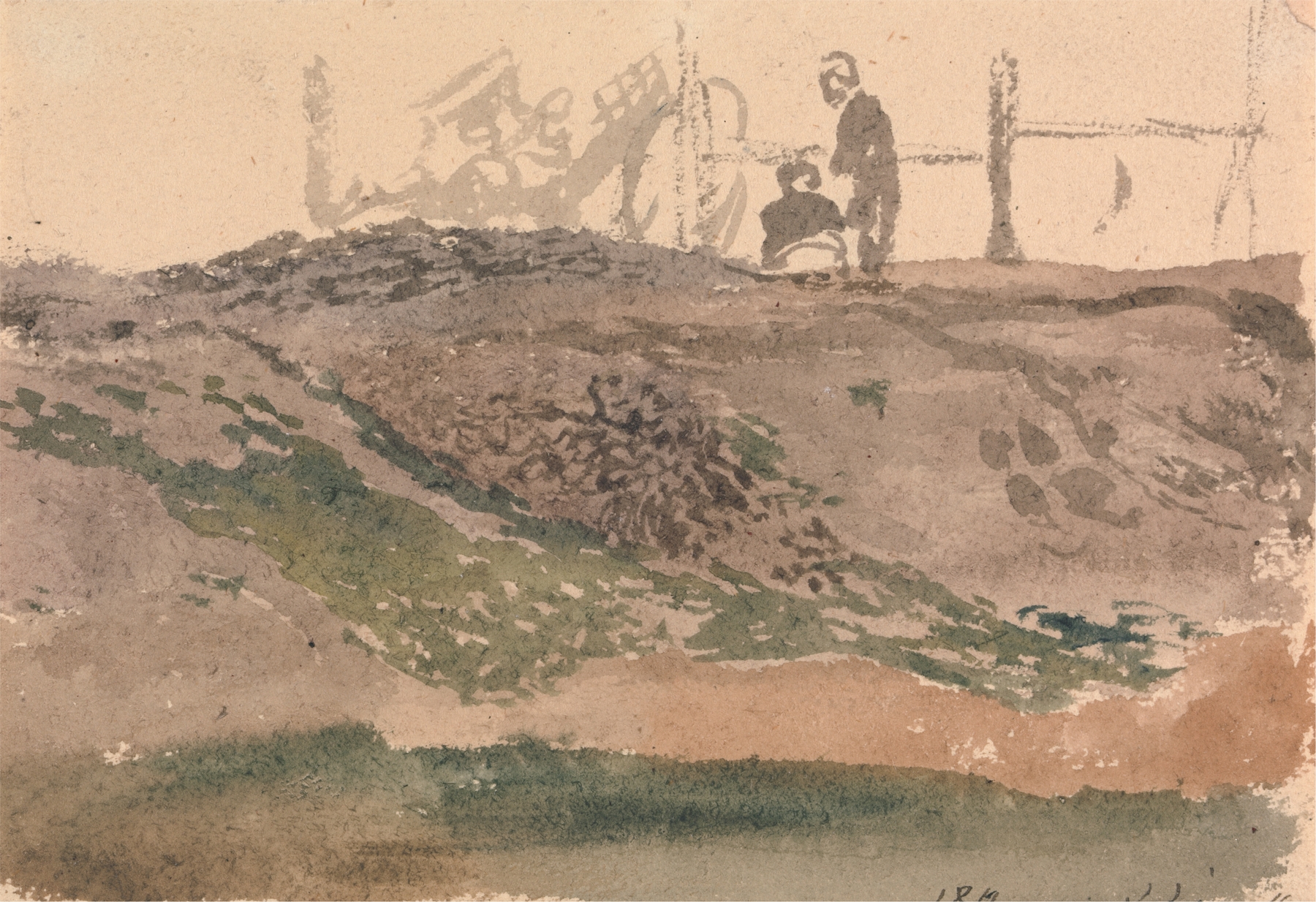
What if beauty was never meant to be finished? In John Linnell's The Rest on the Flight into Egypt, the canvas sings with the soft, unrelenting hues of nature, suggesting a world forever in the throes of becoming. Look to the foreground where the figures of Mary and Joseph cradle the child, their forms enveloped in serene, earthy tones, grounding the scene. Notice how the golden light caresses their faces, creating a gentle halo effect that draws the eye.
The lush greenery behind them bursts forth in varying shades of green, harmonizing with the warm browns of the earth, while a tranquil sky swirls overhead, hinting at the promise of peace amid their flight. The delicacy and precision of Linnell's brushwork imbue the scene with an almost tactile quality, inviting the viewer to linger. Beneath this tranquil surface, there lies a tension between flight and rest, danger and solace. The juxtaposition of the serene moments and the impending journey reflects the duality of human existence.
The presence of the bright color palette evokes both hope and vulnerability, while the figures’ positioning suggests a fleeting pause in their perilous journey, echoing the transient nature of life’s beauty. In 1827, amidst a burgeoning interest in Romanticism and a shift toward landscapes imbued with emotion, Linnell painted this work in England. At this time, he was influenced by the ideals of the Pre-Raphaelite Brotherhood, emphasizing color and naturalistic detail. The world around him was evolving, grappling with industrialization and societal change, yet he found solace in capturing a moment of divine tranquility, reflecting his deep connection to nature and spirituality.