View of Houses of Entertainment in Imado at Dawn — History & Analysis
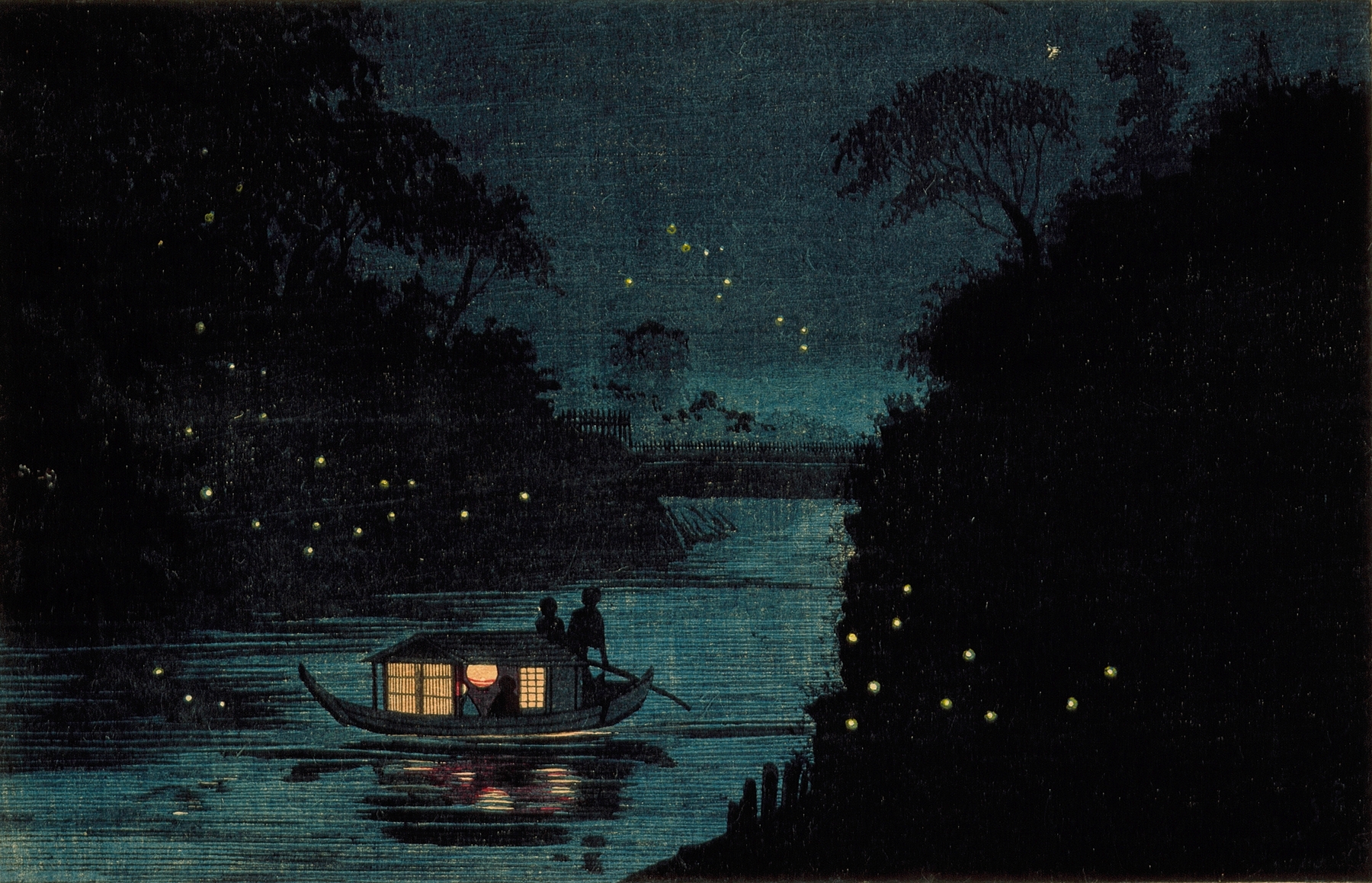
Can beauty exist without sorrow? In View of Houses of Entertainment in Imado at Dawn, a delicate balance between joy and melancholy unfolds, revealing the threads of destiny woven through the fabric of life. Look to the center of the composition where the soft glow of dawn bathes the rooftops in hues of pink and gold, beckoning the viewer into a world caught between night and day. The details of the wooden facades, with their intricate latticework, capture the essence of traditional Japanese architecture, while the faint outlines of figures suggest the vibrancy of life within.
Notice how Kiyochika employs subtle gradations of color, creating an ethereal atmosphere that invites contemplation, yet hints at the transience of this moment. Delve deeper into the painting, and you’ll find the interplay between the brightening sky and the shadowed alleyways—a poignant metaphor for the duality of existence. The houses stand as monuments to fleeting pleasures, evoking both the charm of entertainment and the isolation often found in pursuit of happiness.
The distant mountains loom as silent witnesses, suggesting that fate is ever-present, guiding the lives of those who venture beneath the rooftops, trapped in a cycle of joy and sorrow. Created in 1879, during a time of rapid modernization in Japan, the artist was influenced by the tensions between tradition and change. As Kiyochika painted this scene in Tokyo, he captured the essence of a culture on the brink of transformation, where the allure of entertainment and the weight of impending change coexisted, forever altering the landscape of both art and society.