Great Fire at Ryōgoku Sketched from Hamachō, January 26, 1881 — History & Analysis
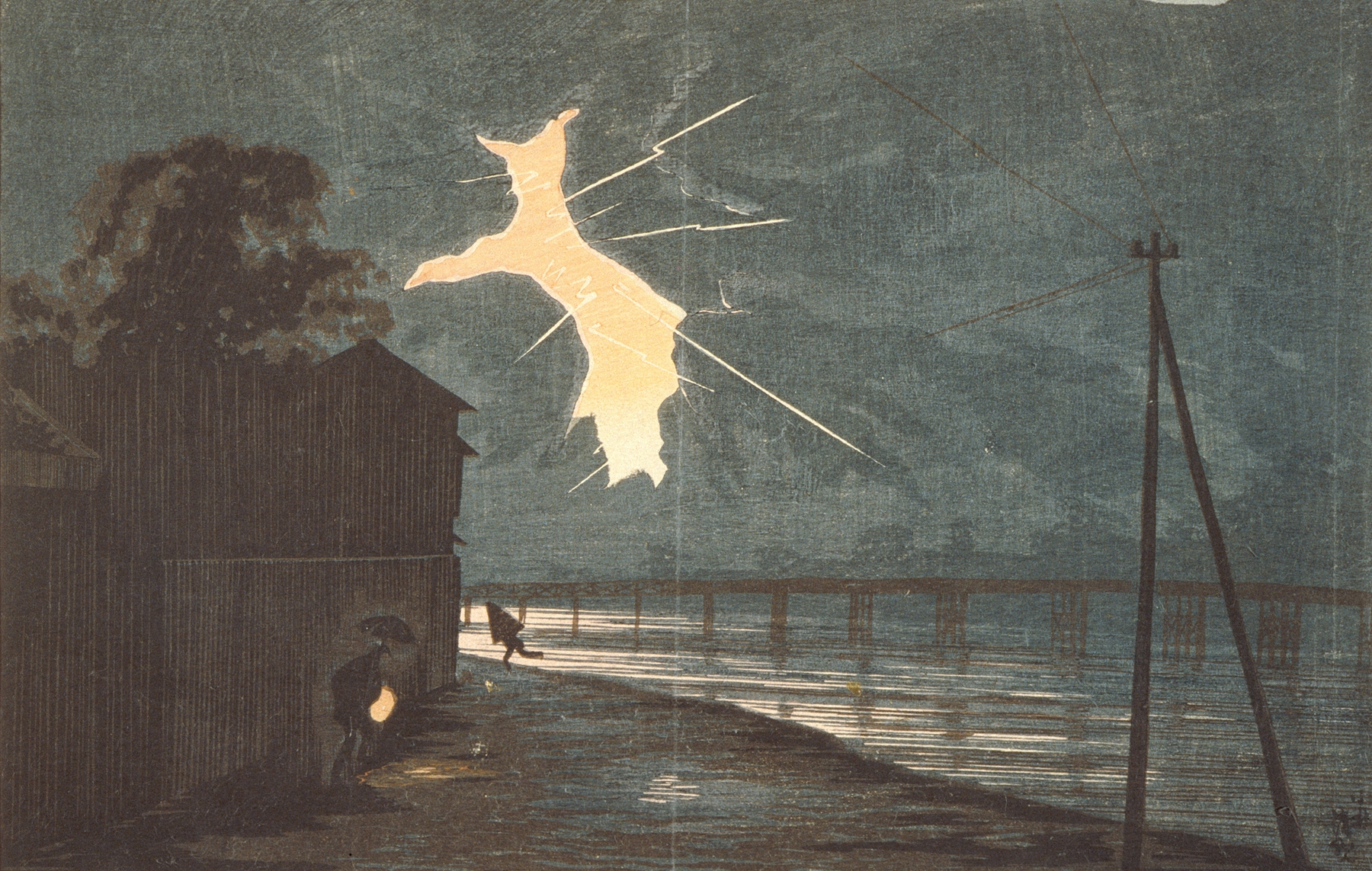
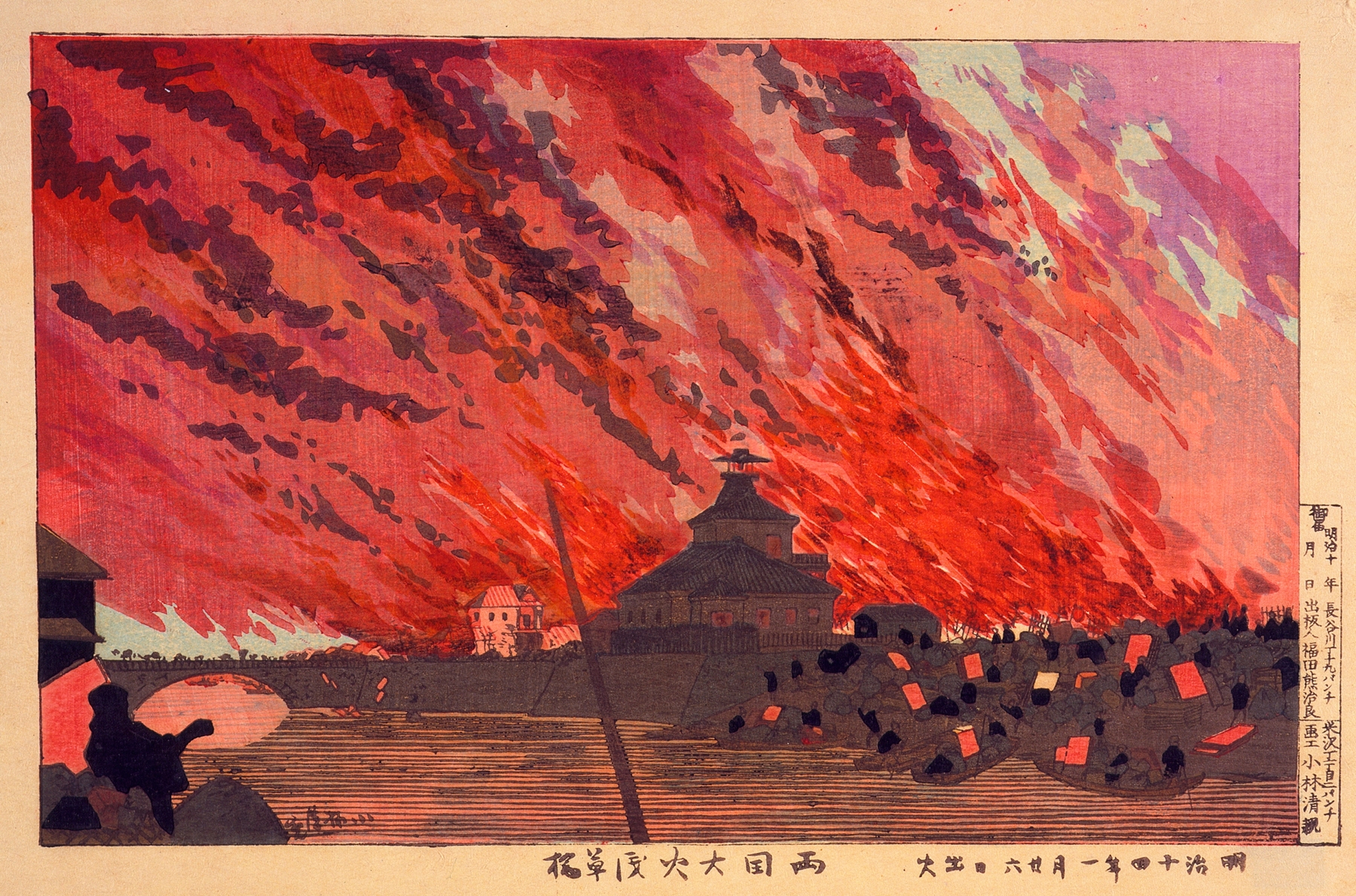
“Every brushstroke is a heartbeat remembered.” In the wake of devastation, how do we capture the essence of violence that lingers in the air long after the flames have faded? Focus on the central blaze, where the vivid reds and oranges clash with the night’s deep blues, illuminating the chaos of the moment. The swirling smoke, rendered with delicate strokes, captures an ethereal quality, drawing the viewer's eye upwards toward the heavens. Notice how the figures in the foreground appear dwarfed by the towering flames, their expressions a mixture of horror and awe, creating a stark contrast that evokes a visceral response.
The composition guides us through the turmoil, enveloping us in the once-bustling landscape, now rendered hauntingly still amid the chaos. Beneath the surface, there is an exploration of destruction and resilience. Each figure carries their own story of loss, perhaps escaping a life reduced to ashes, while the onlookers symbolize both the fragility and the endurance of humanity in the face of calamity. The juxtaposition of the vibrant fire against the darkened sky signifies not just devastation, but the birth of new narratives from the ashes of the old.
This fierce interplay leads to a deeper reflection on the cyclical nature of tragedy and rebirth. In January 1881, Kobayashi Kiyochika created this work amidst a rapidly transforming Japan, where Western influences began to permeate traditional art forms. The Great Fire at Ryōgoku was a significant event that disrupted lives and reshaped the landscape of Tokyo, a reality that the artist captured with poignant clarity. As Kiyochika navigated his own artistic evolution, this piece reflects both a personal engagement with the changing world and a broader commentary on the societal impact of disaster.