View of Fuji from the Coast of Kiyomigata — History & Analysis
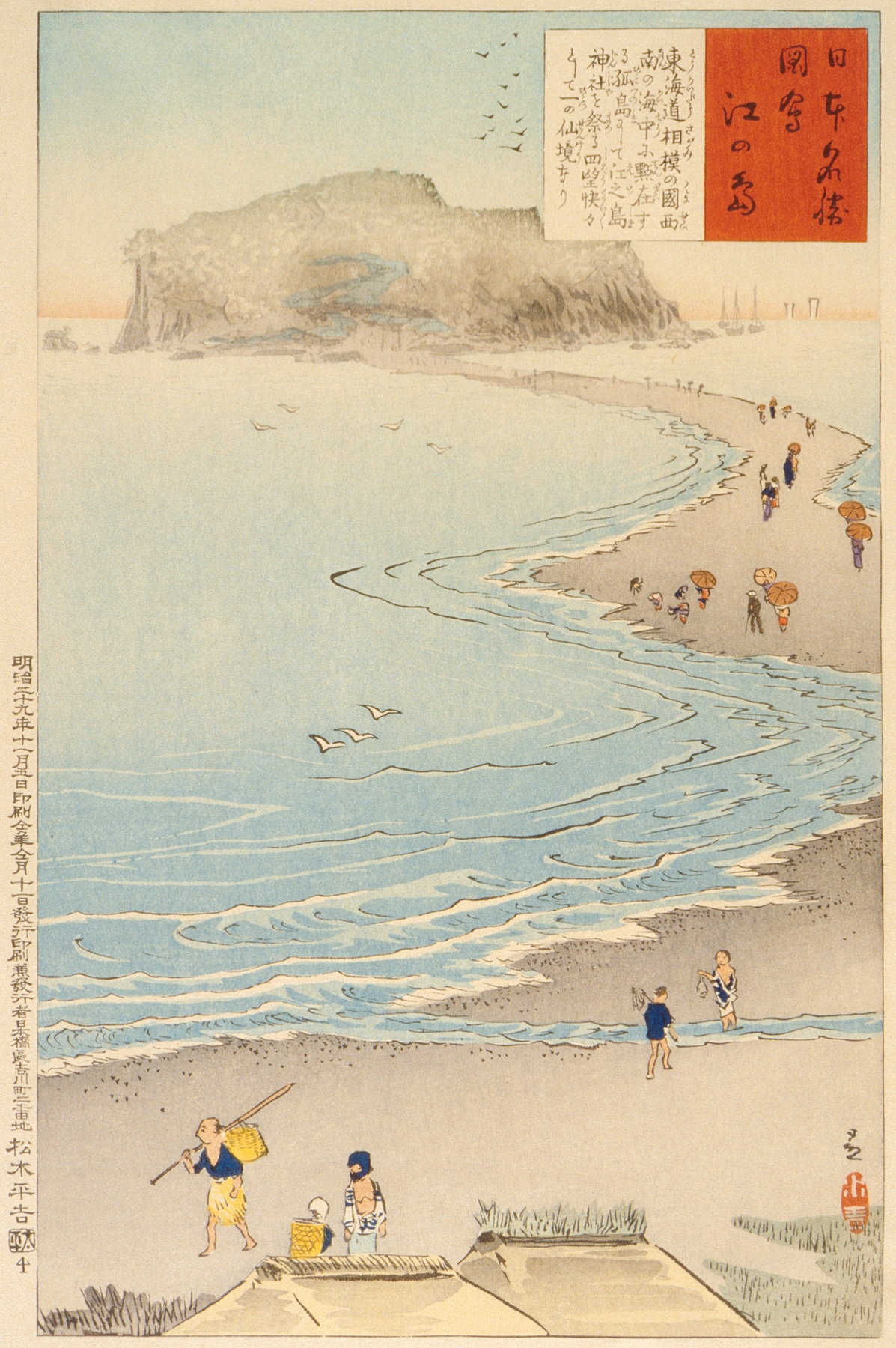
What if beauty was never meant to be finished? In a world where impermanence reigns, the fleeting nature of a moment can often slip through our fingers like grains of sand. Focus your gaze on the majestic silhouette of Mount Fuji, rising proudly in the background. The mountain looms with an ethereal quality, delicately outlined by a wash of soft pastels that blend the sky and earth into harmony.
Notice how the shoreline, with its gentle curves, extends towards the viewer, inviting you into the scene. The vibrant blues and greens of the coastal landscape pulsate with life, contrasting with the serene presence of the mountain, hinting at the tension between nature's tranquility and the chaotic pulse of existence. Within this composition, a dichotomy emerges; the stillness of Fuji embodies timelessness, while the lively coast speaks to the transience of human life. The interplay of light across the water's surface captures a moment of reflection, inviting contemplation of both beauty and madness in the face of nature's grandeur.
The juxtaposition of clarity and uncertainty evokes a deep emotional resonance, inviting one to ponder the balance between the eternal and the ephemeral. Created in 1896, this work marks a pivotal point in Kobayashi Kiyochika's career as he sought to redefine traditional Japanese art during the Meiji era. At this time, Japan was undergoing significant political and social changes, as Western influences began to reshape its cultural landscape. Kiyochika's art reflects this transition, blending classical elements with modern techniques, establishing a bridge between heritage and contemporary expression.