
A Group of Old Testament Figures — History & Facts
What if beauty was never meant to be finished? In A Group of Old Testament Figures, the brushstrokes pulse with an energy that suggests a dynamic revolution of thought, a meeting of the sacred and the sublime. Look to the center of the canvas, where the figures are gathered, each draped in rich, flowing robes that flutter as though caught in a divine breeze. Notice how the warm, golden hues contrast with deep blues and rich earth tones, creating a sense of depth and reverence. The light cascades from an unseen source, illuminating the faces, capturing their expressions — a blend of contemplation and authority.
This compositional balance draws the viewer's gaze toward the central figures, inviting deeper exploration of their stories. As you ponder the expressions, consider the juxtaposition of the serene and the tumultuous; the divine peace of these figures stands against the backdrop of human conflict and doubt. The contrasting colors and textures echo a world caught between tradition and change, reflecting a society on the brink of new ideas. Giaquinto's meticulous detail emphasizes not just the figures themselves, but the weight of their choices and the moral dilemmas they embody. Created in the early 1750s, this work is a testament to Corrado Giaquinto's exploration of baroque themes amidst the transitional art movements of his time.
Living in Italy, the period was marked by a shift toward neoclassicism, reflecting a growing sense of reason and clarity in art. Amidst this shifting landscape, Giaquinto found his voice, merging the divine narratives of the Old Testament with a vibrant, emotive style that speaks to the heart of both history and humanity.
More Artworks by Corrado Giaquinto
Browse all →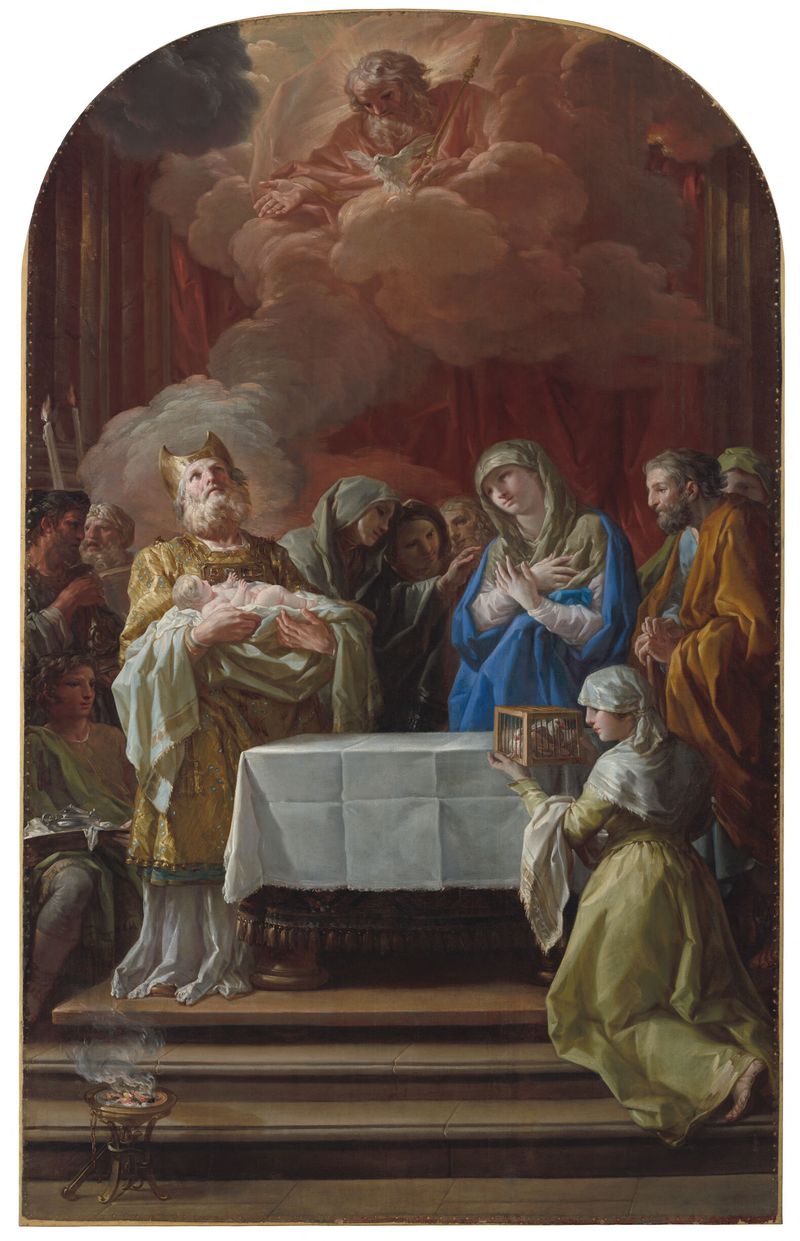
More Religious Art
Browse all →
The Return of the Prodigal Son
Rembrandt van Rijn

The Garden of Earthly Delights
El Bosco

Count Orgaz’ funeral
El Greco

The Hundred Guilder Print: the central piece with Christ preaching, the plate arched
Rembrandt van Rijn

The Descent from the Cross
Rogier van der Weyden

The return of the prodigal son
Rembrandt van Rijn