Public domain · Free to download
Famous Animal Paintings
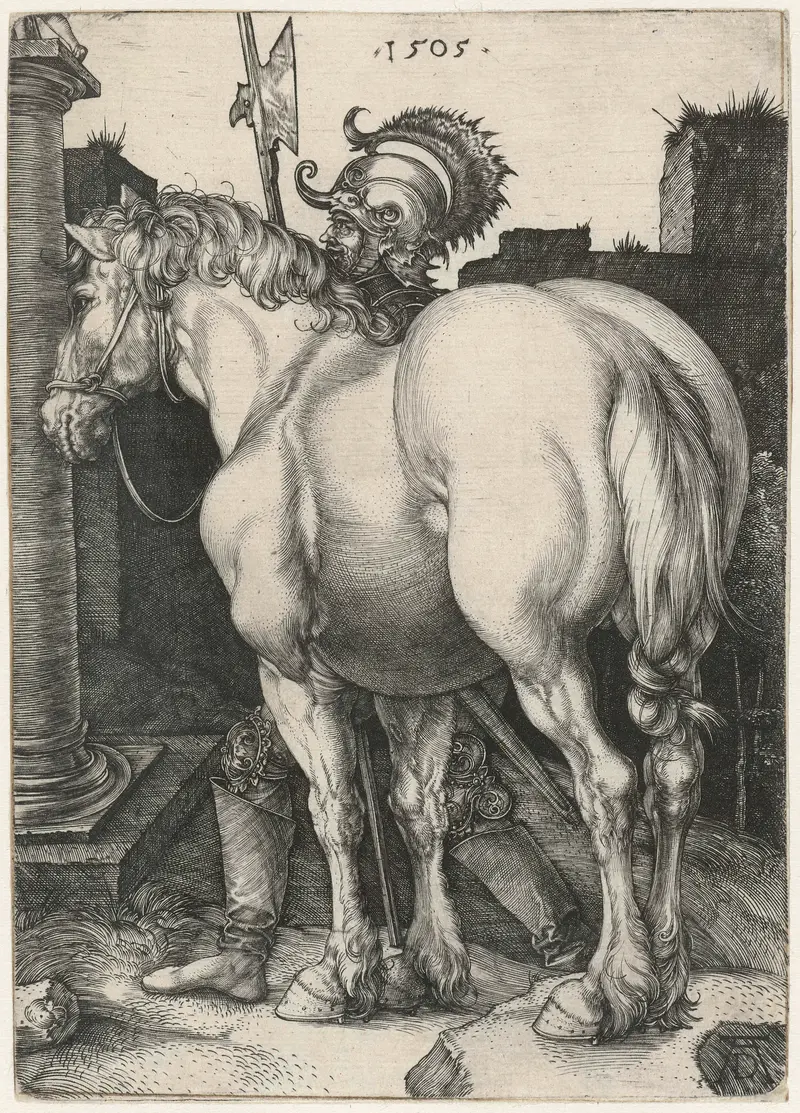
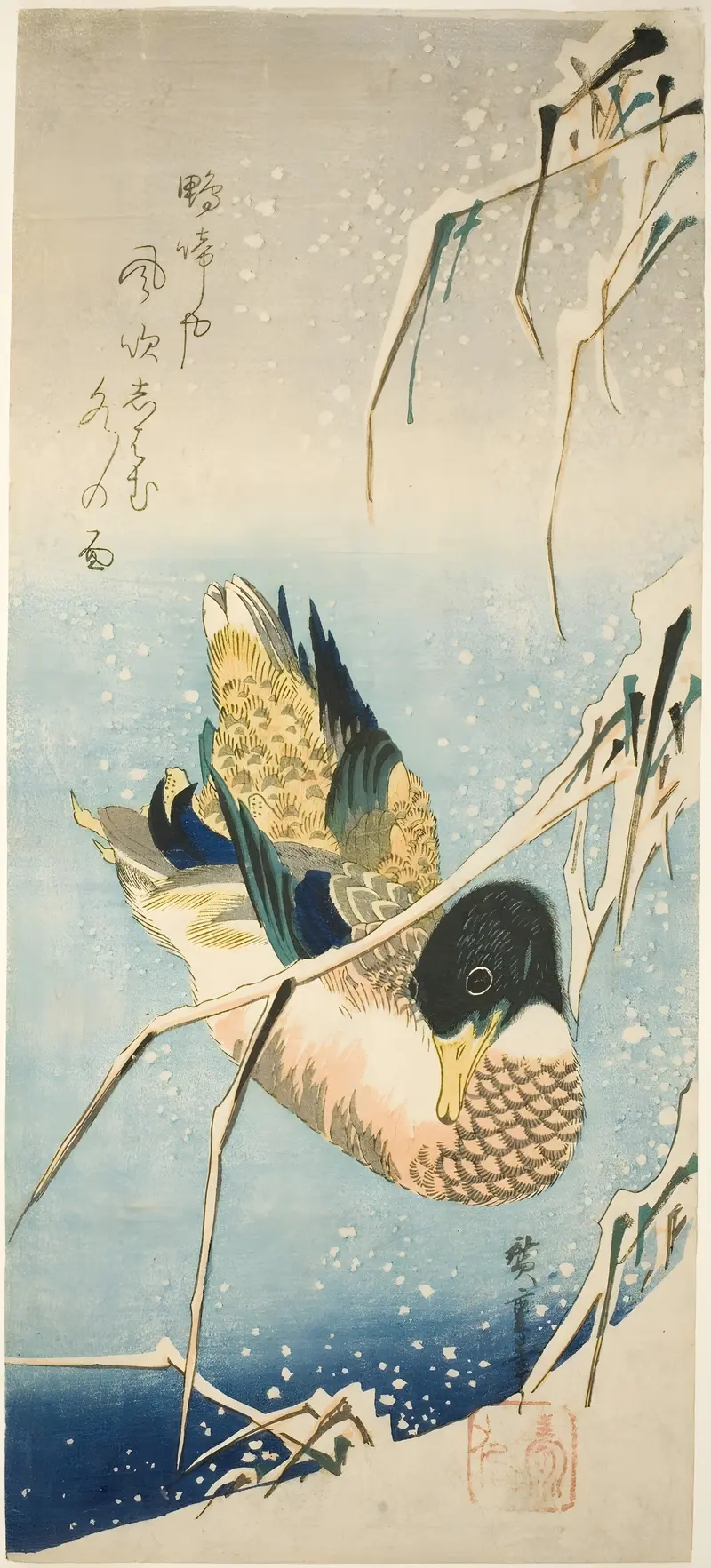
We curated the 25 most famous animal paintings of all time, from Fabritius's Goldfinch and Dürer's Young Hare to Stubbs's Whistlejacket and Rousseau's tiger, and added the most famous paintings of cats, dogs, horses and birds.
For each one you get what it shows, the story behind it, a detail to look for and where to see it today. Every image is a public-domain reproduction of the real painting, free to download and free to use.
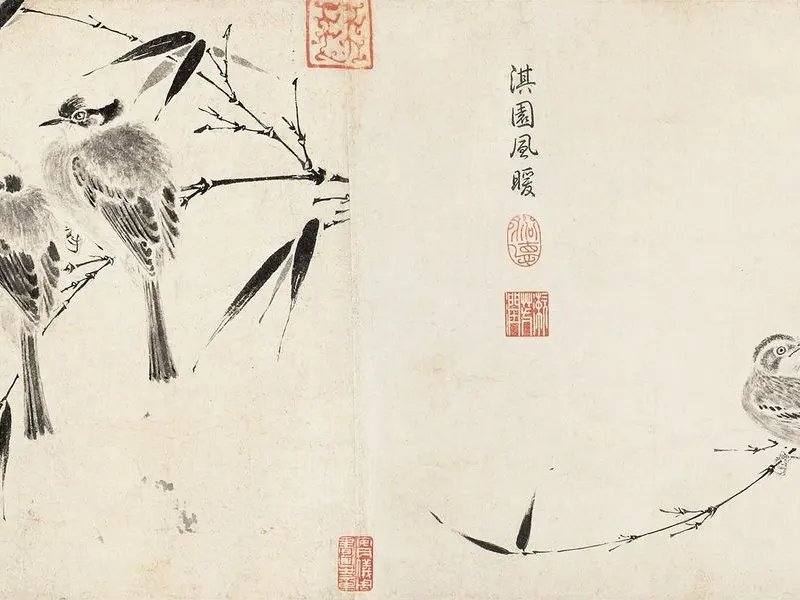
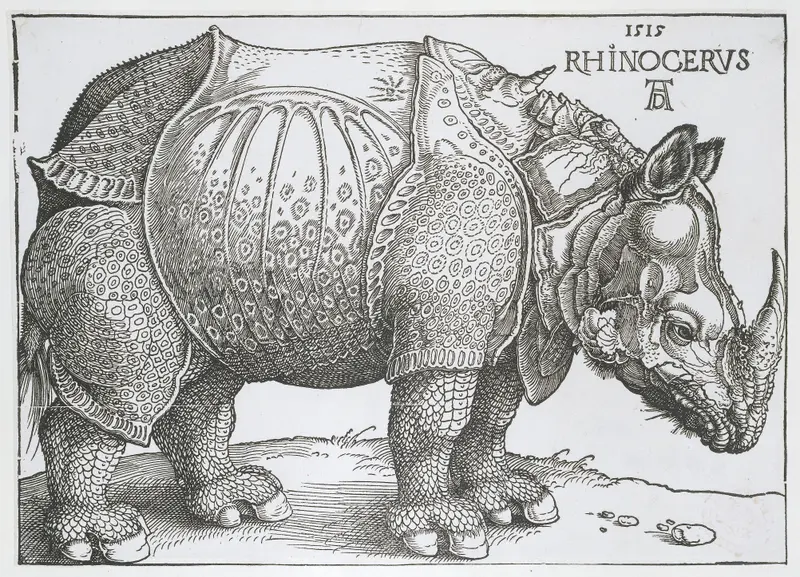
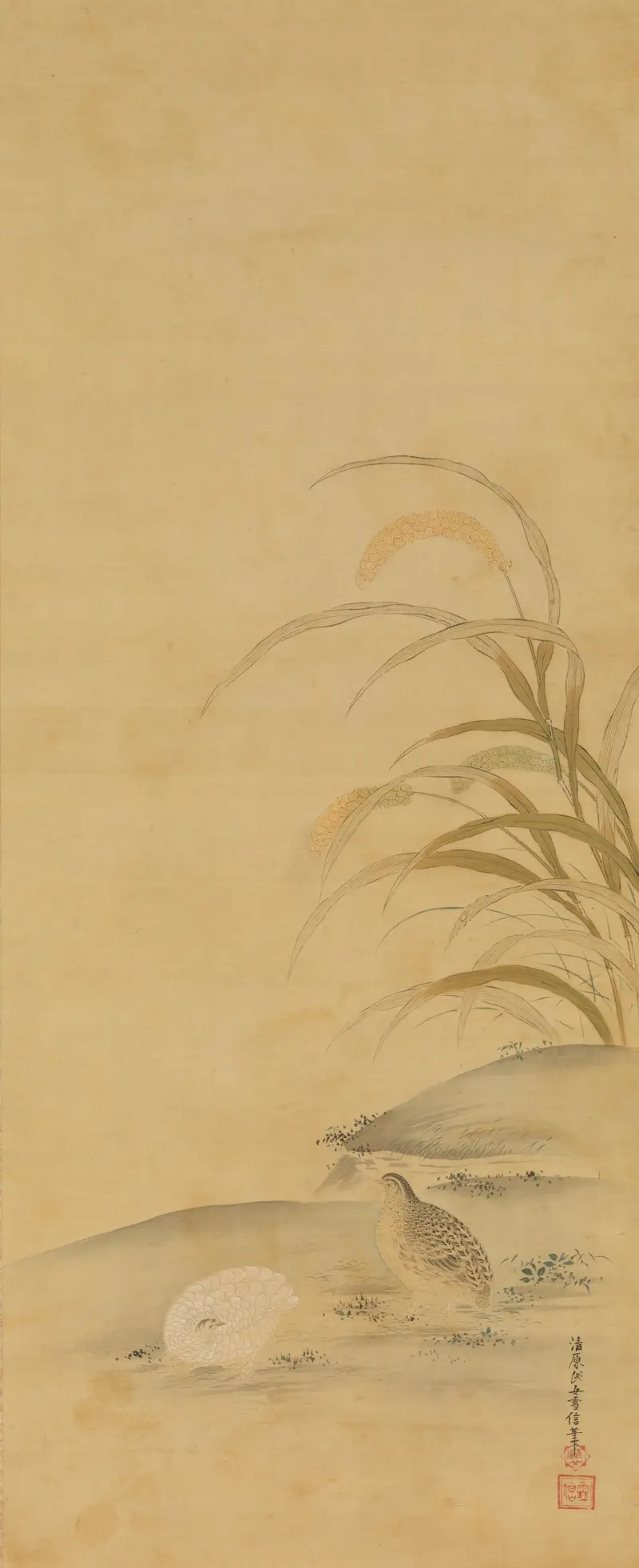
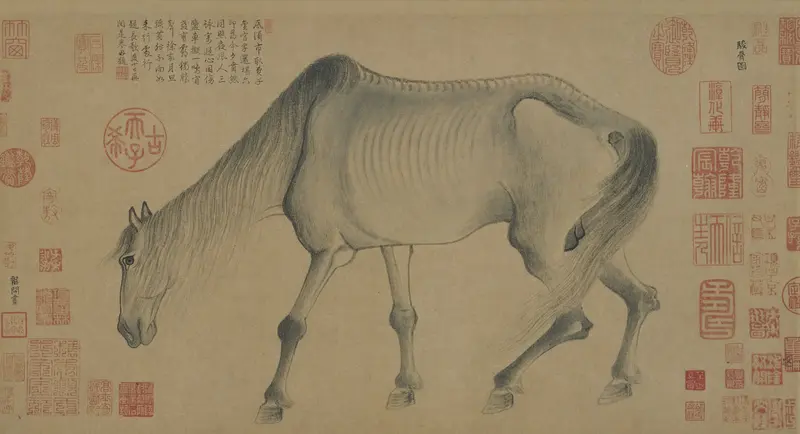
Animals are among the oldest subjects in art. Painters have shown them as beloved pets and prized possessions, as symbols of faith and politics, and simply as creatures worth looking at closely, from a hare in Dürer's studio to Franz Marc's blue horses.
Selected and written by Pavel MazuelasUpdated October 29, 2026
Part of The Most Famous Paintings in the WorldRelated: Famous Landscape Paintings, Famous Still Life Paintings
The 25 most famous animal paintings of all time
Ranked from 1 to 25 by worldwide fame. Click any painting to see it up close and download it free.
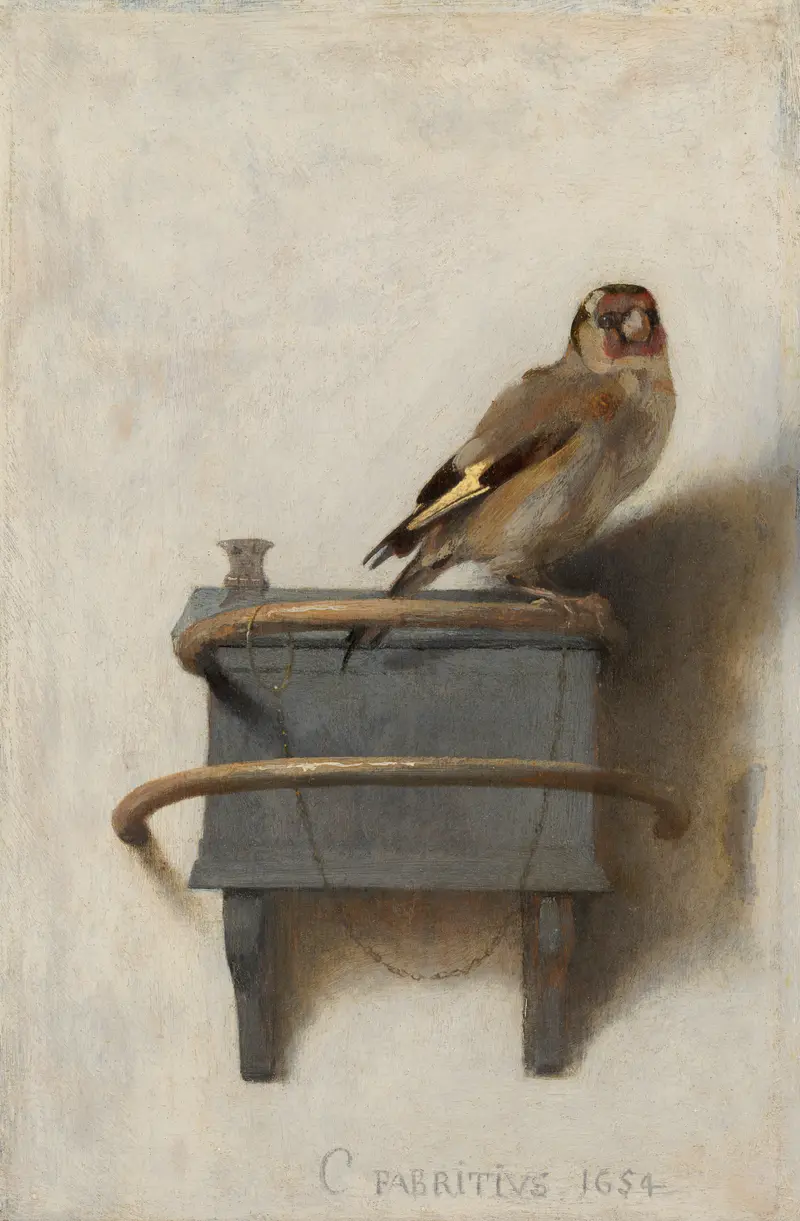
No. 1Dutch Golden Age
The Goldfinch by Carel Fabritius
Animal: A goldfinch
1654 · Oil on panel · 33.5 × 22.8 cm
Mauritshuis, The Hague
A goldfinch perches on its feeder, chained by one foot. Goldfinches were popular pets because they could be taught tricks, such as drawing water from a bowl with a tiny bucket. Carel Fabritius laid in the wing with thick yellow paint and scratched into it with the handle of his brush. He died that same year, 1654, in the gunpowder explosion that wrecked Delft and destroyed many of his works, one reason so few survive. It is in the Mauritshuis in The Hague.
Sources: Mauritshuis
No. 2Romanticism
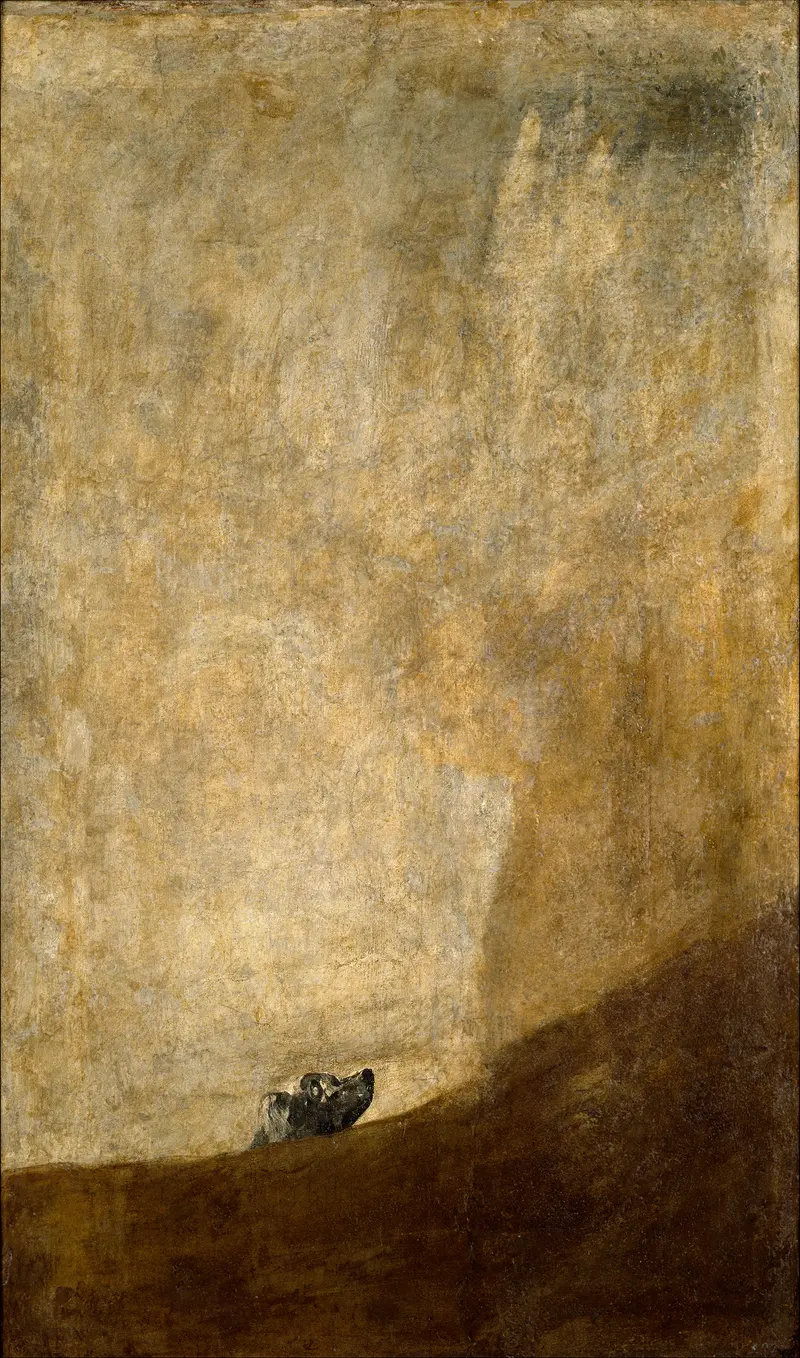
The Dog by Francisco de Goya
Animal: A dog
1820–1823 · Mixed method on mural transferred to canvas · 131.5 × 79.2 cm
Museo del Prado, Madrid
Only a dog's head shows, low against a vast, empty expanse of color, looking up at something outside the picture. It is one of Goya's Black Paintings, the murals he painted on the walls of his own house outside Madrid, the Quinta del Sordo, between 1820 and 1823; this one was beside a door on the upper floor. In 1874 the murals were transferred to canvas, and in 1881 they were given to the Spanish State. It is in the Museo del Prado in Madrid.
Sources: Museo del Prado
No. 3
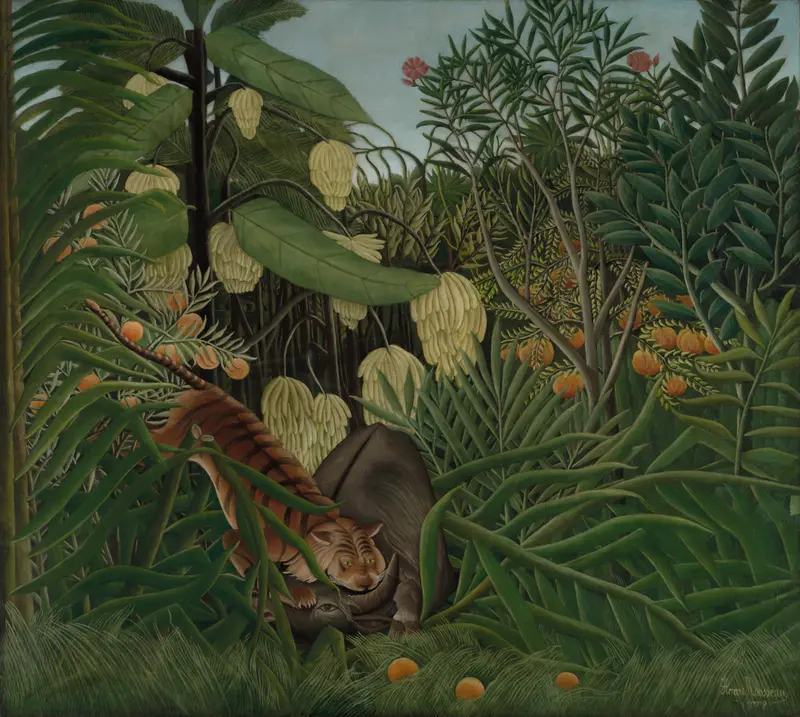
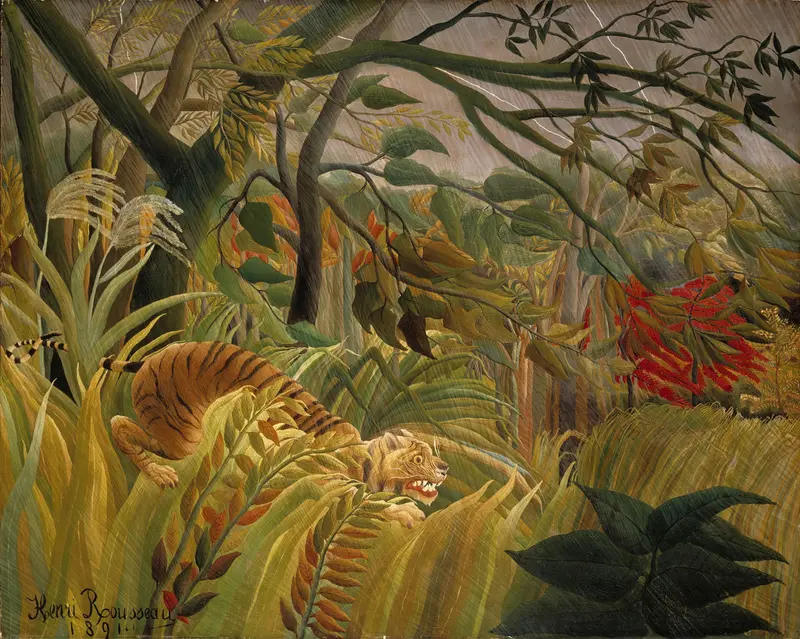
Tiger in a Tropical Storm (Surprised!) by Henri Rousseau
Animal: A tiger
1891 · Oil on canvas · 129.8 × 161.9 cm
National Gallery, London
A tiger crouches in storm-lashed jungle as lightning flashes. It was the first of about 20 jungle paintings by Henri Rousseau, who never left France: he built the plants from house plants and the tropical species he saw at the Jardin des Plantes in Paris. He painted the rain last, as fine silver-gray streaks over the finished picture. Is the tiger cowering or stalking? Even the National Gallery can't say. Shown in 1891 as “Surpris!”, it is in the National Gallery in London.
Sources: National Gallery
No. 4
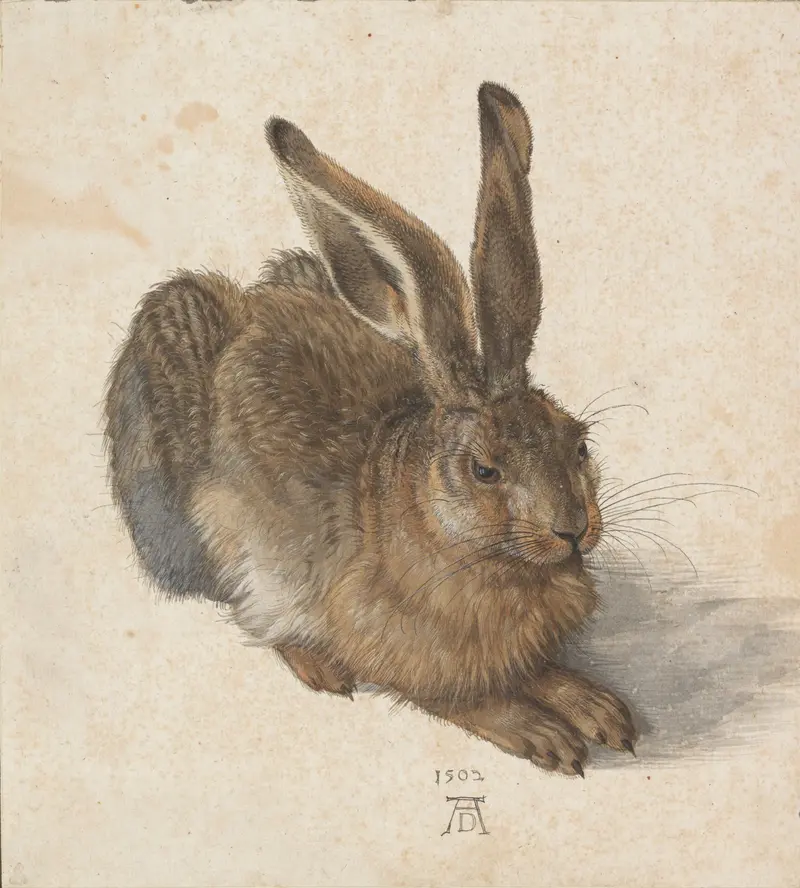
Young Hare by Albrecht Dürer
Animal: A hare
1502 · Watercolor and body color, heightened with white · 25.1 × 22.6 cm
Albertina, Vienna
Look into the hare's eye: it reflects the window bars of Dürer's studio, the only clue to where the animal sat. Albrecht Dürer painted it in 1502 in watercolor and body color, hair by hair. Its fame spawned copies, often with forged monograms; the Albertina counts at least 25 such hares in Europe's old art cabinets. The museum calls it the heart of its collection, yet the original can only be shown every few years. It is in the Albertina in Vienna.
Sources: Albertina
No. 5Realism
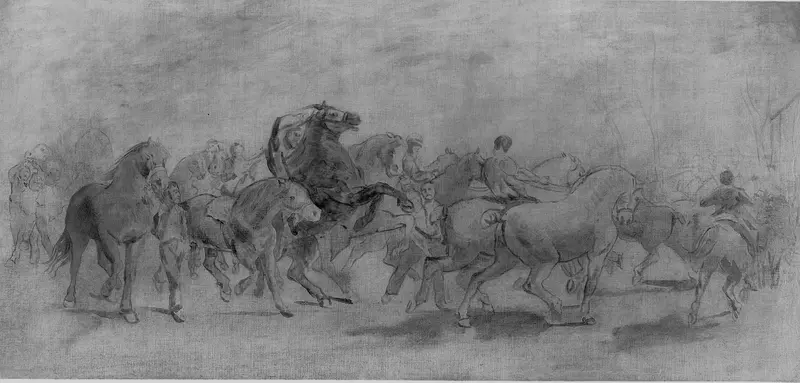
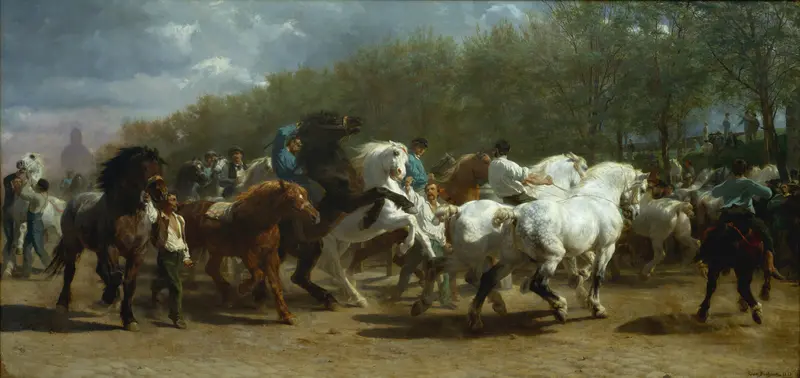
The Horse Fair by Rosa Bonheur
Animal: Horses
1852–55 · Oil on canvas · 244.5 × 506.7 cm
Metropolitan Museum of Art, New York
Percherons rear and plunge as their handlers show them off at the Paris horse market. Rosa Bonheur sketched for over a year at the twice-weekly fair on the Boulevard de l'Hôpital; the dome behind is the Salpêtrière. To work there she got police permission to wear men's clothes. The picture caused a sensation at the 1853 Salon, then toured Britain and the United States and made her famous worldwide. It is in the Metropolitan Museum of Art in New York.
Sources: Metropolitan Museum of Art
No. 6Baroque
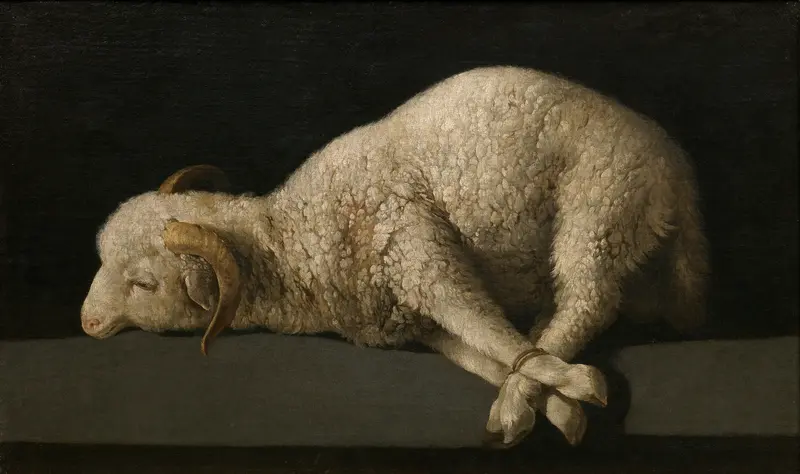
Agnus Dei by Francisco de Zurbarán
Animal: A lamb
1635–1640 · Oil on canvas · 37.3 × 62 cm
Museo del Prado, Madrid
A young lamb lies with its feet bound, ready for sacrifice. The Prado identifies it as a merino lamb, eight to twelve months old, and it stands for Christ, as quiet and calm as Jesus before his death. Francisco de Zurbarán painted several versions with small changes, which the Prado says shows such images sold well, probably to private clients. The museum bought this one at auction in 1986. It is in the Museo del Prado in Madrid.
Sources: Museo del Prado
No. 7Realism
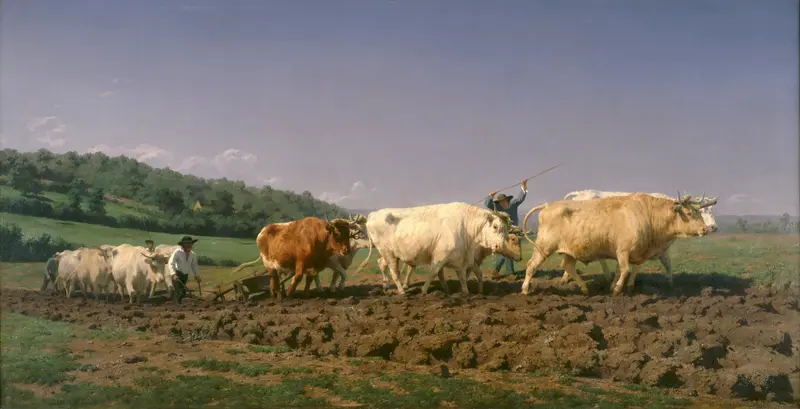
Ploughing in the Nivernais by Rosa Bonheur
Animal: Oxen
1849 · Oil on canvas · 133 × 260 cm
Musée d'Orsay, Paris
Two teams of oxen drag heavy plows through fresh earth on an early autumn day. This is the first plowing, the “dressing” that breaks and airs the soil before winter. The oxen, Charolais-Nivernais cattle, are the heroes, and the cowherd is a tiny figure. The French State commissioned it from Rosa Bonheur in 1848 for the museum in Lyon, then kept it in Paris. Critics praised it almost unanimously. It is in the Musée d'Orsay in Paris.
Sources: Musée d'Orsay
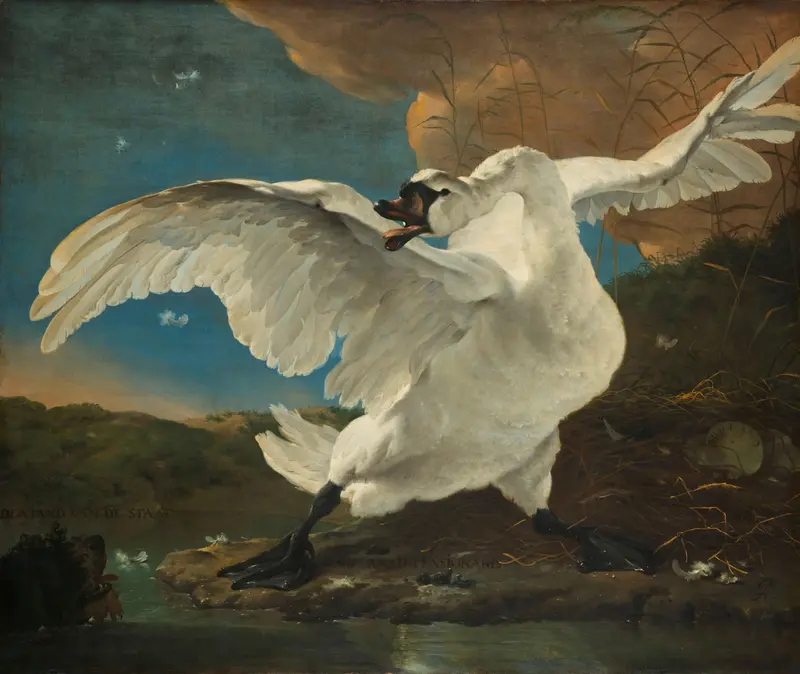
No. 8Dutch Golden Age
The Threatened Swan by Jan Asselijn
Animal: A swan and a dog
c. 1650 · Oil on canvas · 144 × 171 cm
Rijksmuseum, Amsterdam
A swan rears up, wings spread, to defend its nest from a dog swimming toward it. Jan Asselijn painted it around 1650 as a nature scene, but about a century later someone added labels that turned it into politics: “the Grand Pensionary” under the swan, meaning the statesman Johan de Witt, “Holland” on the egg and “the enemy of the state” above the dog. With that meaning it became the first acquisition of the Rijksmuseum's forerunner, in 1800. It is in Amsterdam.
Sources: Rijksmuseum
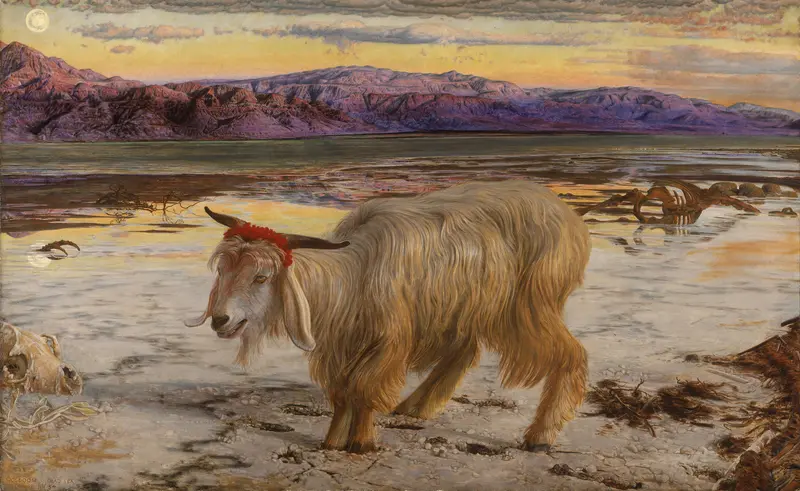
No. 9
The Scapegoat by William Holman Hunt
Animal: A goat
1854–1855 · Oil on canvas · 86.5 × 139.8 cm
Lady Lever Art Gallery, Port Sunlight
A goat with a scarlet cloth wound around its horns stands alone on the salt-crusted shore of the Dead Sea. William Holman Hunt learned that on the Day of Atonement a goat carried the people's sins out of the temple, and the cloth was believed to turn white if they were forgiven. He painted it on the spot, with the mountains of Edom behind, and saw the goat as a figure of Christ. It is in the Lady Lever Art Gallery in Port Sunlight.
Sources: Lady Lever Art Gallery
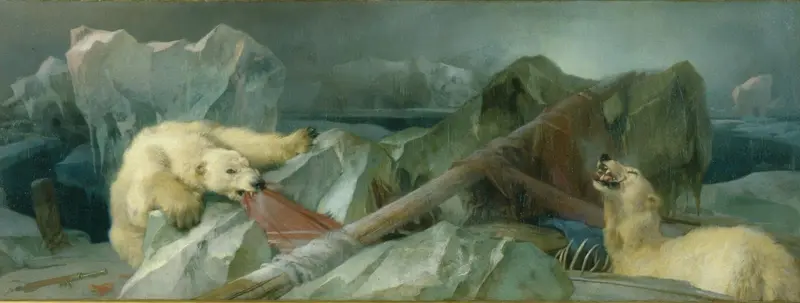
No. 10
Man Proposes, God Disposes by Edwin Landseer
Animal: Polar bears
1864 · Oil on canvas · 91.4 × 243.7 cm
Royal Holloway, University of London, Egham
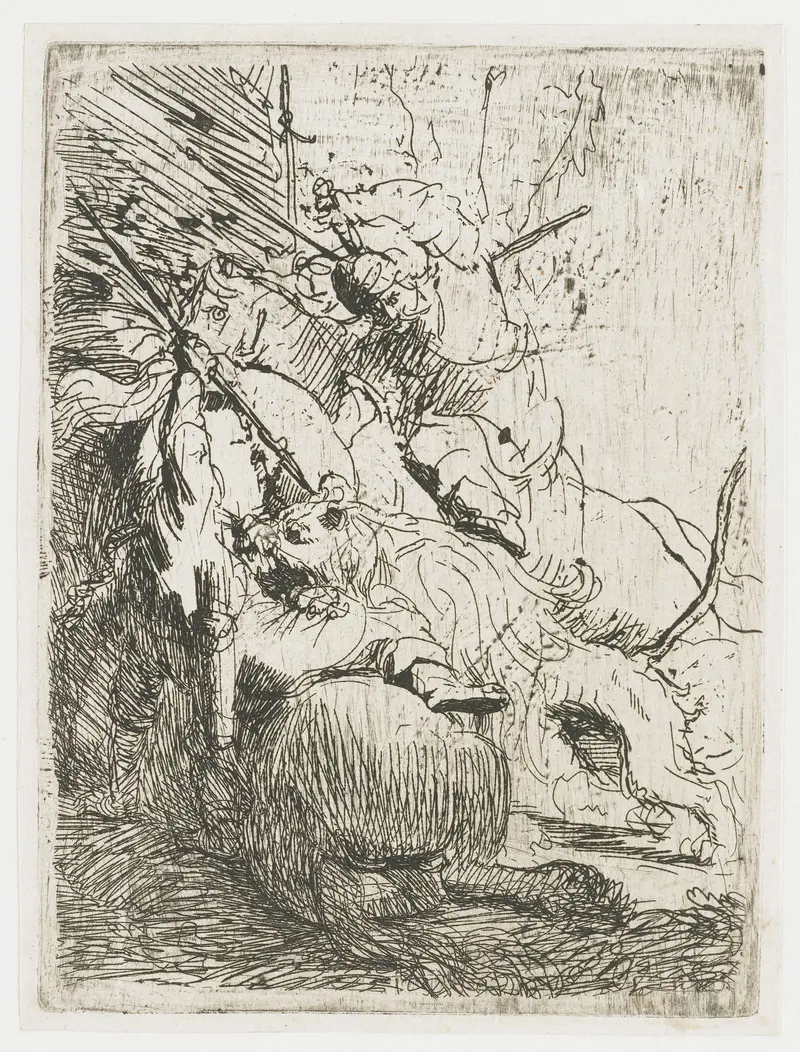
Two polar bears tear at the wreckage of Sir John Franklin's lost Arctic expedition, which vanished in search of the North-West Passage with two ships and 129 men. Look for Franklin's telescope, one of the objects later found by the Inuit. Thomas Holloway bought this grim picture in 1881 for his new women's college, and a legend says it is cursed, so it is covered with a Union Jack during exams. It is at Royal Holloway, University of London.
Sources: Royal Holloway, University of London
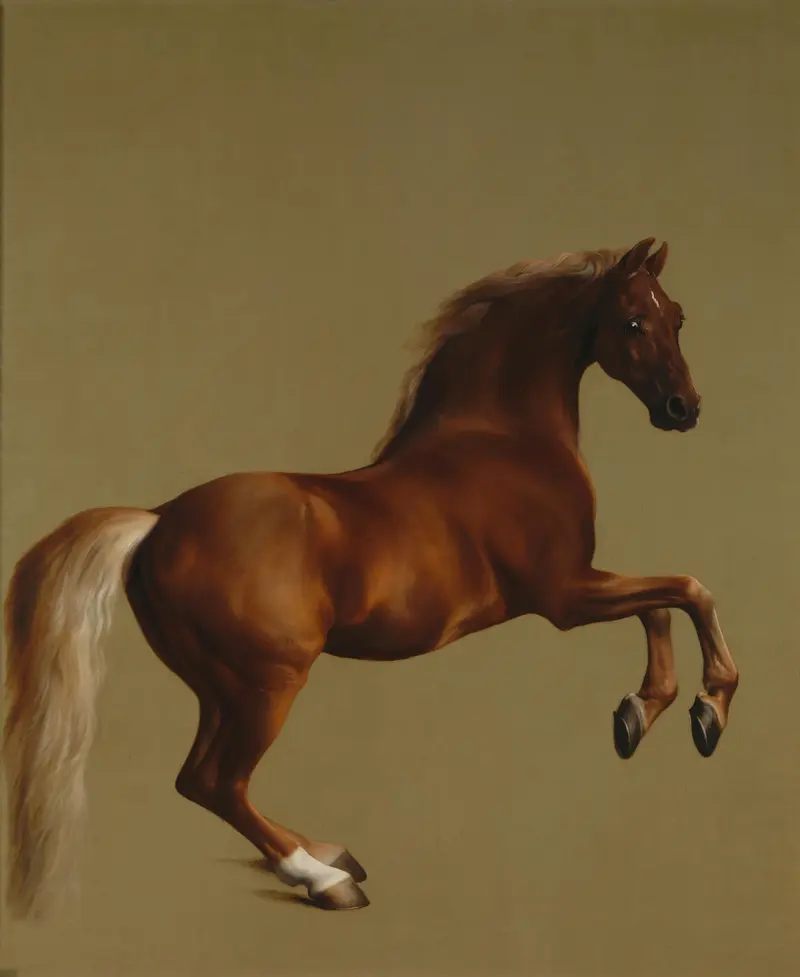
No. 11
Whistlejacket by George Stubbs
Animal: A horse
c. 1762 · Oil on canvas · 296.1 × 248 cm
National Gallery, London
The racehorse Whistlejacket rears up, life-size, against a plain gold background. The Marquess of Rockingham commissioned the portrait around 1762 from George Stubbs, who had spent 18 months dissecting horses in a Lincolnshire barn to learn their anatomy. The horse's name came from his coppery coat: a “whistlejacket” was a mix of treacle and gin taken for colds. The National Gallery says he was always meant to be riderless. It is in London.
Sources: National Gallery
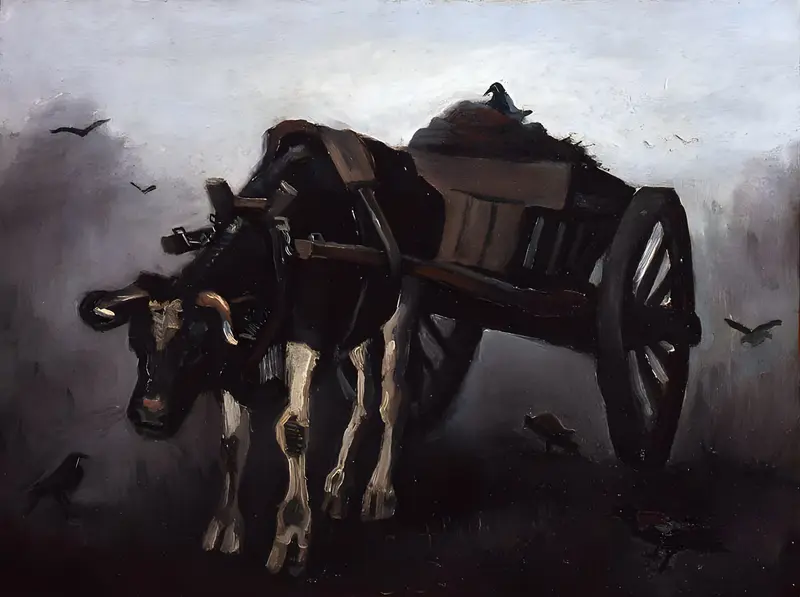
No. 12Realism
Cart with Black Ox by Vincent van Gogh
Animal: An ox
1884 · Oil on canvas · 57.8 × 77.5 cm
Portland Art Museum, Portland, Oregon
A black ox stands harnessed to a heavy cart. Van Gogh painted it in Nuenen in July 1884 and told his brother Theo about his “rather large studies of ox-carts,” one with a black ox and one with a red-and-white one. It is at the Portland Art Museum in Oregon.
Sources: Portland Art Museum
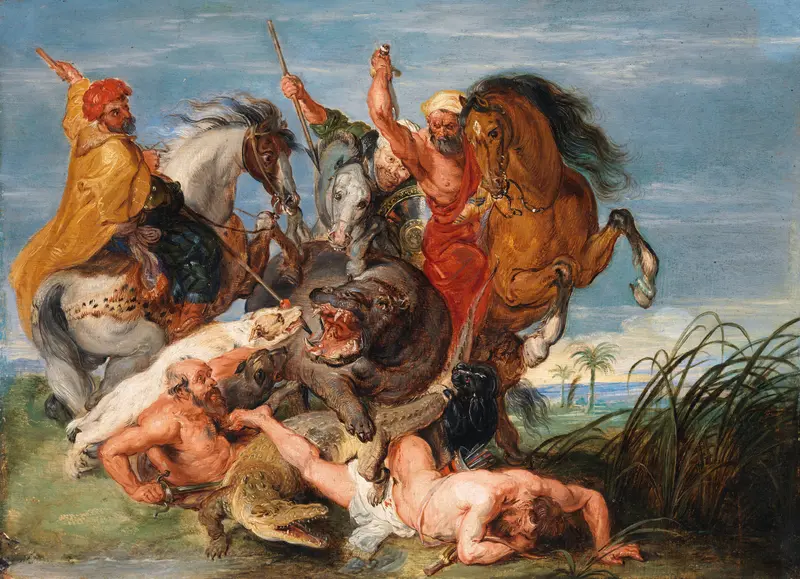
No. 13Baroque
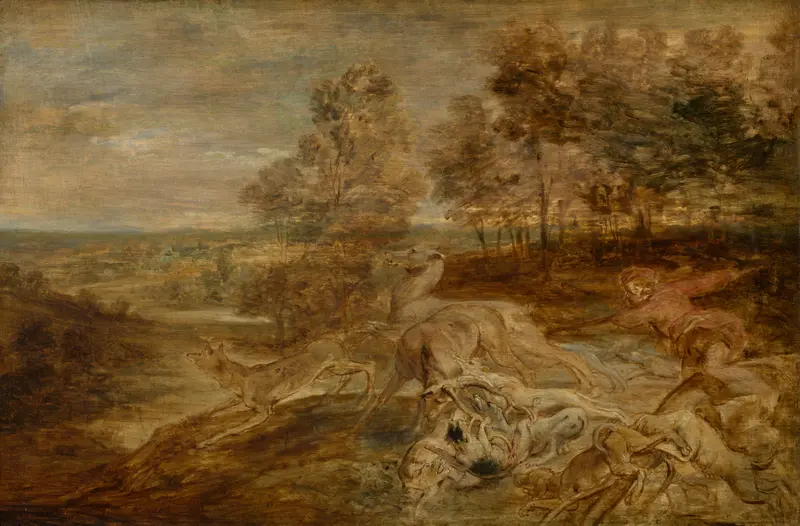
The Hippopotamus and Crocodile Hunt by Peter Paul Rubens
Animal: A hippopotamus and a crocodile
c. 1616 · Oil on canvas · 248.3 × 321.3 cm
Alte Pinakothek, Munich
Mounted hunters with spears and dogs attack a hippopotamus and a crocodile. Rubens painted it around 1616 for a cycle of four hunting scenes commissioned by Elector Maximilian I of Bavaria, and the strikingly real hippo was probably based on a stuffed animal shown in Rome in 1601. Napoleon's troops seized the cycle, and this is the only one that came back to Munich. It is in the Alte Pinakothek.
Sources: Alte Pinakothek
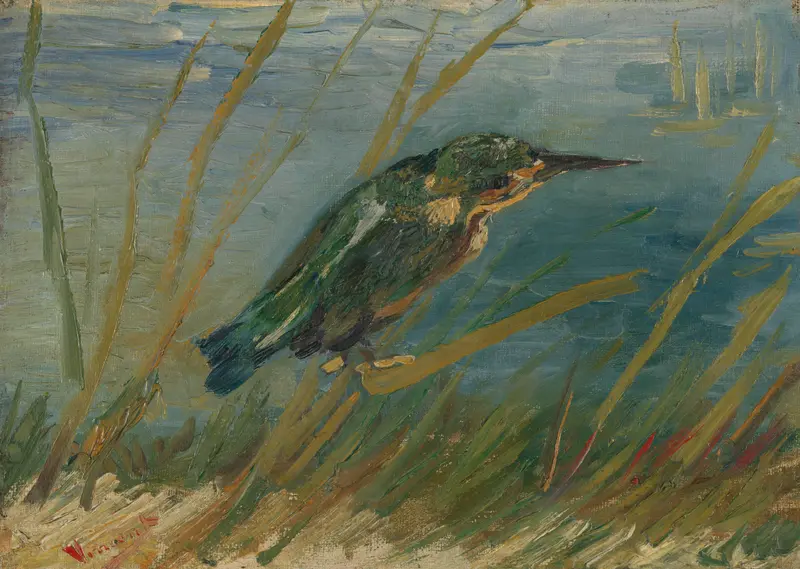
No. 14Post-Impressionism
Kingfisher by the Waterside by Vincent van Gogh
Animal: A kingfisher
1887 · Oil on canvas · 19.1 × 26.6 cm
Van Gogh Museum, Amsterdam
A kingfisher watches for fish from a reed by the water. Van Gogh owned a stuffed kingfisher, which still survives, so we can see what he changed: he gave the painted bird a slightly longer tail to balance its raised beak, and feet to grip the reed. He painted this small canvas in Paris in summer 1887. It is in the Van Gogh Museum in Amsterdam.
Sources: Van Gogh Museum
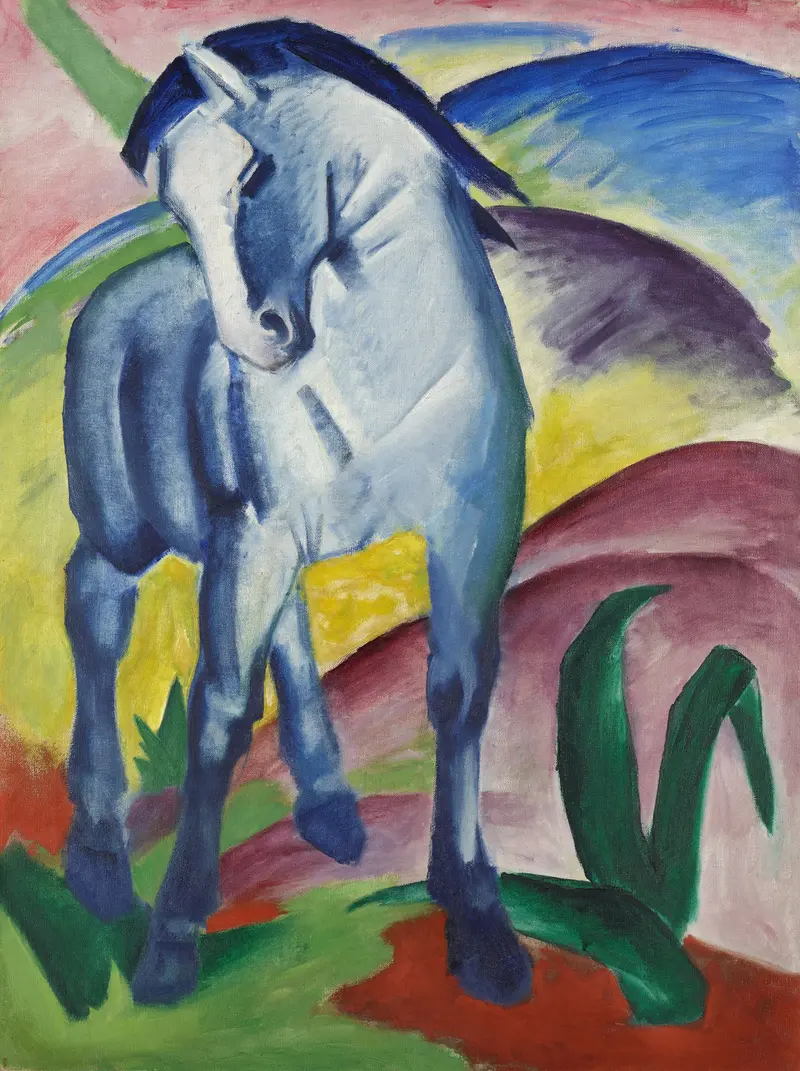
No. 15
Blue Horse I by Franz Marc
Animal: A horse
1911 · Oil on canvas · 112 × 84.5 cm
Lenbachhaus, Munich
A young blue horse stands in a hilly landscape, head tilted as if lost in thought. Franz Marc painted it in 1911, and the Lenbachhaus calls it one of the best-known pictures of the Blue Rider group. In Marc's color theory blue was the masculine, spiritual principle, so the color shows the horse's essence, not its real coat. Look for the darkest blue in the hooves and mane. It is in the Lenbachhaus in Munich.
Sources: Lenbachhaus
No. 16
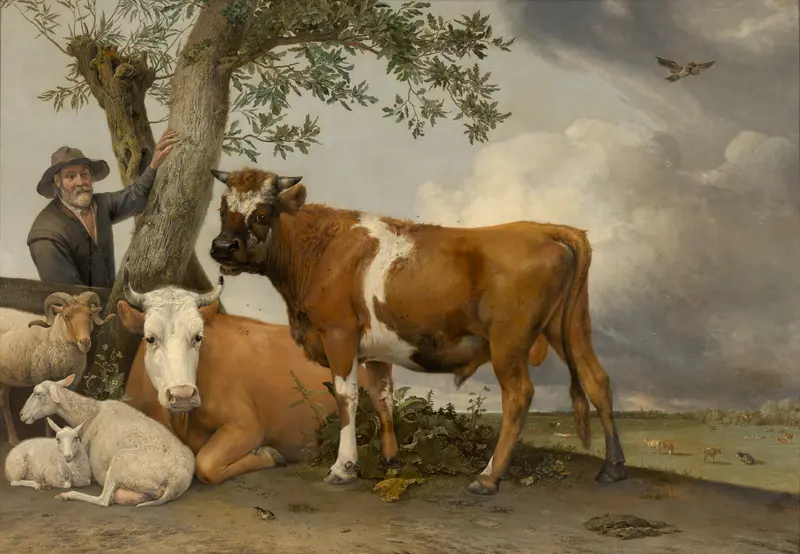
The Bull by Paulus Potter
Animal: A bull
1647 · Oil on canvas · 235.5 × 339 cm
Mauritshuis, The Hague
A bull stands life-size in a sunlit meadow beside a cow, sheep and a farmer. Nobody had painted something as ordinary as a bull on such a grand scale before. Seams show that Paulus Potter first planned only the bull and later added strips of canvas for the rest, yet he still painted flies on its back and a lark in the sky. Taken to Paris in 1795 and recovered in 1815, it is in the Mauritshuis in The Hague.
Sources: Mauritshuis
No. 17
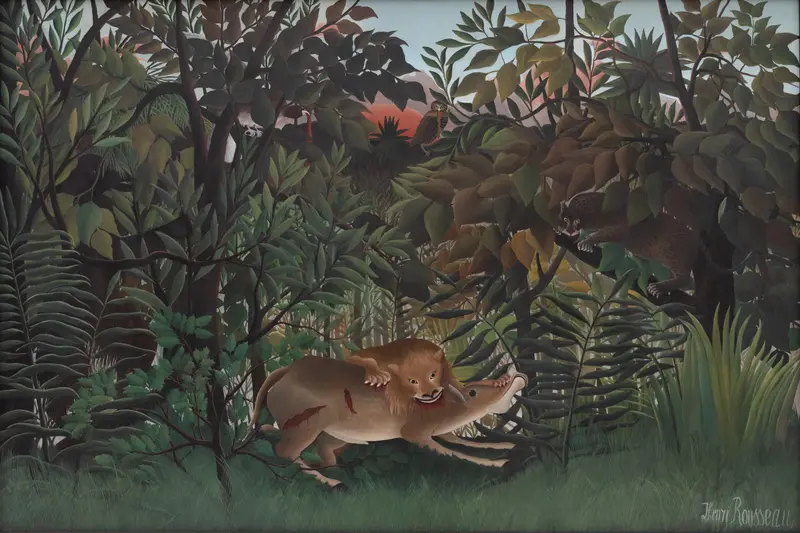
The Hungry Lion Throws Itself on the Antelope by Henri Rousseau
Animal: A lion and an antelope
1898/1905 · Oil on canvas · 200 × 301 cm
Fondation Beyeler, Riehen
A lion mauls an antelope while a panther waits its turn and birds tear at the meat. Rousseau's long title at the 1905 Salon d'Automne ends: “the poor animal sheds a tear! Sunset.” It was his first painting accepted by a jury, hung while the Fauves made their debut in the next room, and the dealer Ambroise Vollard bought it in 1906 for 200 francs. It is in the Fondation Beyeler near Basel.
Sources: Fondation Beyeler
No. 18
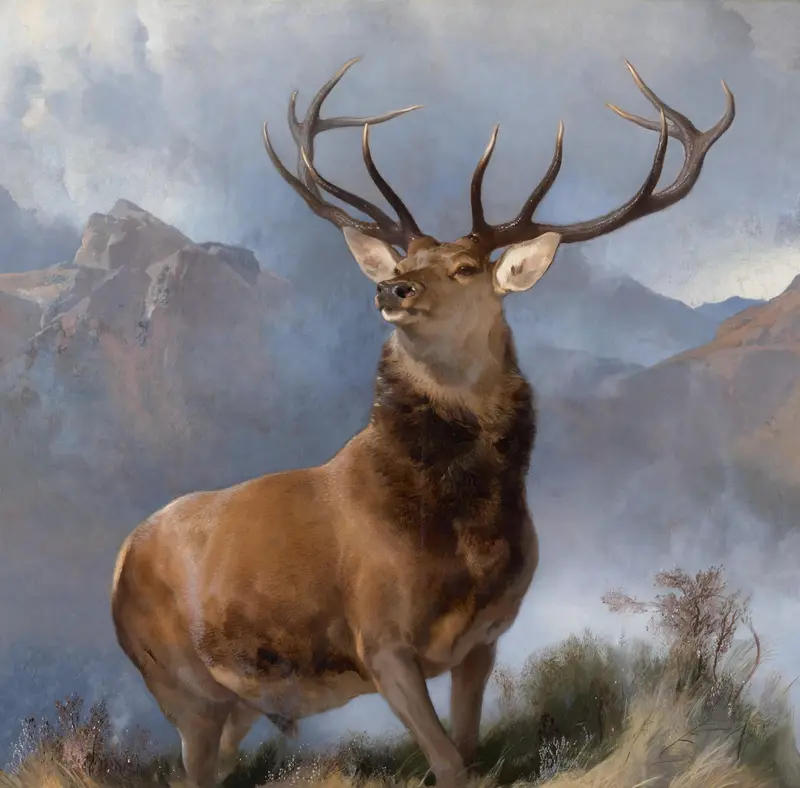
The Monarch of the Glen by Edwin Landseer
Animal: A stag
c. 1851 · Oil on canvas · 163.8 × 168.9 cm
Scottish National Gallery, Edinburgh
A twelve-point stag stands alone in the Scottish Highlands, head raised. Edwin Landseer painted it around 1851 for a series meant for the House of Lords Refreshment Room, but it never hung there. From 1916 it became an advertising image, first for Pears Soap, later for whisky, Nestlé and Baxters soup. The National Galleries of Scotland bought it in 2017 for £4 million, and it is in Edinburgh.
Sources: Scottish National Gallery
No. 19Expressionism
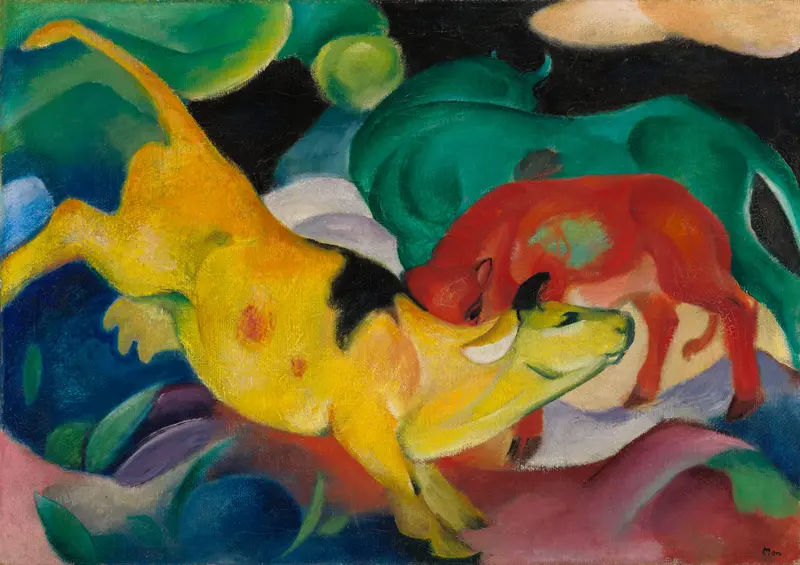
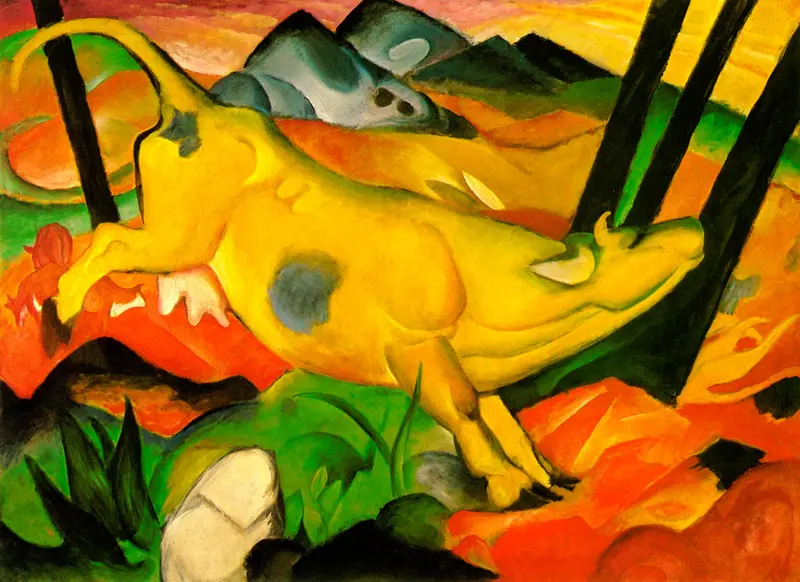
The Yellow Cow by Franz Marc
Animal: A cow
1911 · Oil on canvas · 140.7 × 189.2 cm
Solomon R. Guggenheim Museum, New York
A yellow cow kicks up its heels in front of triangular blue mountains. Franz Marc painted it in 1911, the year he founded the Blue Rider group with Vasily Kandinsky and married Maria Franck. In his color theory yellow stood for the feminine and blue for the masculine, and one art historian reads the cow as a veiled portrait of his bride and the blue mountains as Marc himself. It is in the Guggenheim Museum in New York.
Sources: Solomon R. Guggenheim Museum
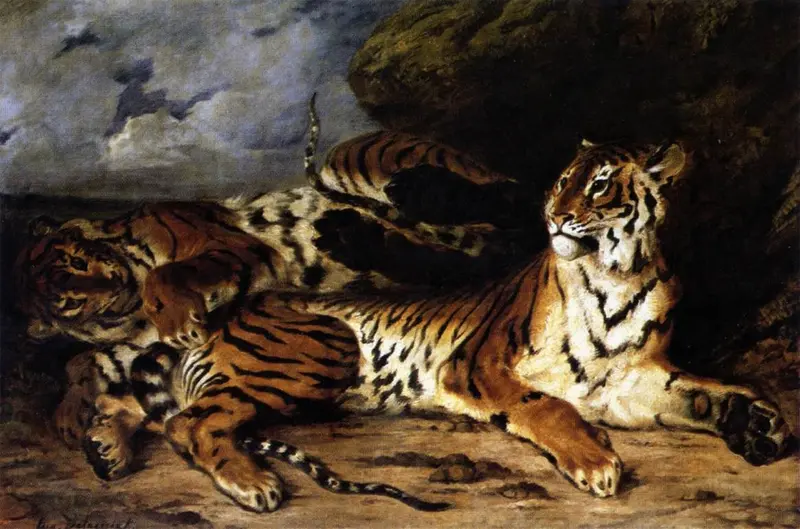
No. 20
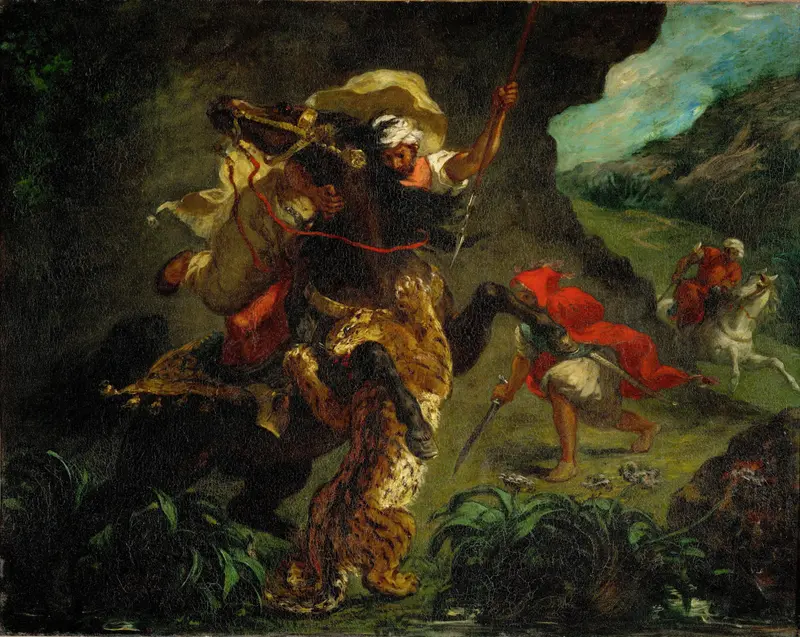
A Young Tiger Playing with Its Mother by Eugène Delacroix
Animal: Tigers
1830 · Oil on canvas · 130.5 × 195 cm
Louvre, Paris
A tigress lies stretched out while her cub plays against her. Delacroix lent it in 1830 to an exhibition for the wounded of the July Revolution, then showed it at the Salon of 1831 under the plainer title Study of Two Tigers. The collector Auguste Thuret paid 1,500 francs for it. It has been in the Louvre in Paris since 1903.
Sources: Louvre
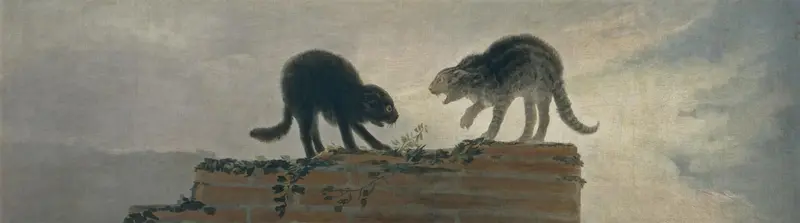
No. 21Romanticism
Cat Fight by Francisco de Goya
Animal: Cats
1786 · Oil on canvas · 56.5 × 196.5 cm
Museo del Prado, Madrid
Two cats arch their backs and bristle on top of a brick wall. Goya designed this long, narrow picture in 1786 as a tapestry cartoon to hang above a door in the royal palace of El Pardo. When it reached the Prado in 1870 it was dismissed and credited to no one, and it lay rolled up in storage until 1984, when it was recognized as Goya's; a few scholars still doubt it. It is in the Prado in Madrid.
Sources: Museo del Prado
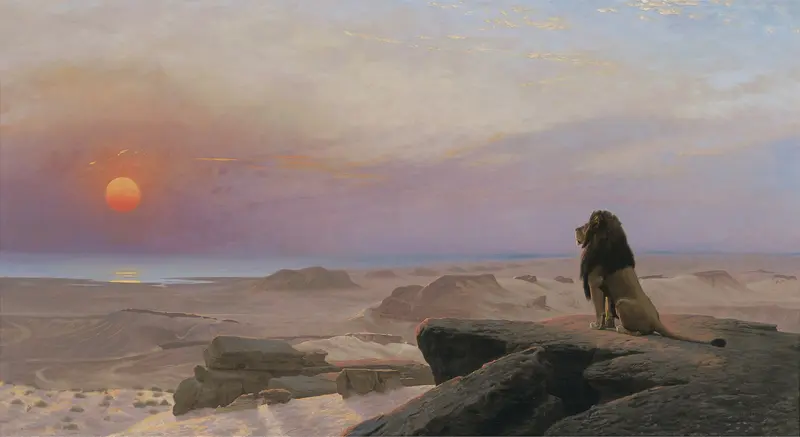
No. 22Orientalism
The Two Majesties by Jean-Léon Gérôme
Animal: A lion
1883 · Oil on canvas · 69.2 × 128.9 cm
Milwaukee Art Museum, Milwaukee
A lone lion gazes across the desert at the setting sun: the two majesties are the king of beasts and the sun itself. Jean-Léon Gérôme built the scene from one vertical, the lion's profile, set against the flat bands of the desert. Painted in 1883, it came third among 186 works in the Milwaukee Art Museum's 2013 visitors' vote. It is in Milwaukee.
Sources: Milwaukee Art Museum
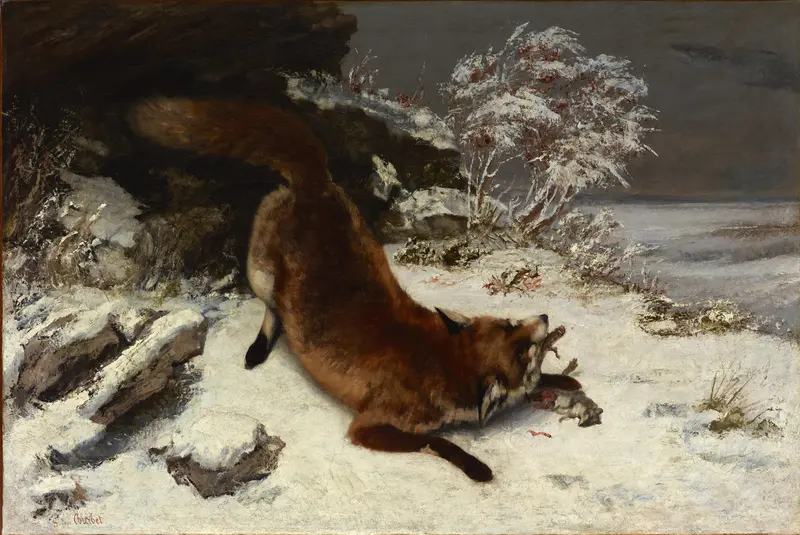
No. 23Realism
Fox in the Snow by Gustave Courbet
Animal: A fox
1860 · Oil on canvas · 85.7 × 128 cm
Dallas Museum of Art, Dallas
A fox tears at a rodent it has caught, the blood spilling onto the snow. Courbet used both brush and palette knife to set the soft fur against the frozen ground, and the Dallas Museum of Art calls it a quintessential example of his Realism, which turned from myth and history to everyday life. Look at the lower left for his signature and the date, 1860. It is in the Dallas Museum of Art.
Sources: Dallas Museum of Art
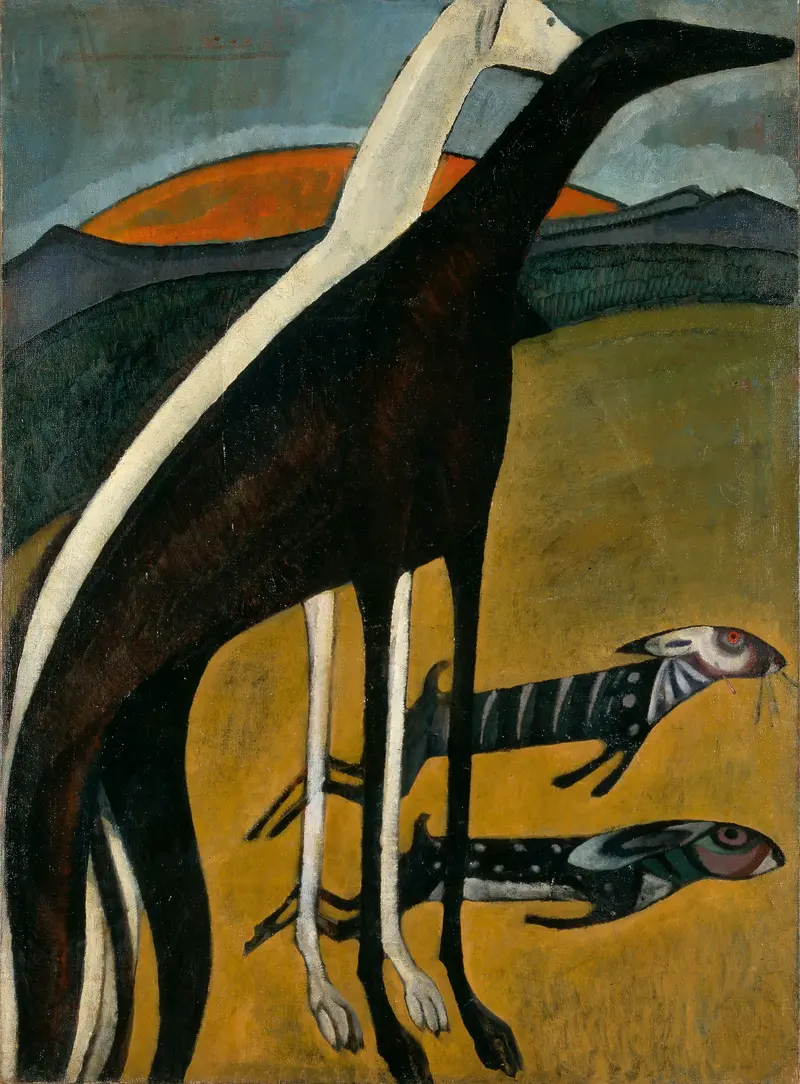
No. 24Modernism
Greyhounds by Amadeo de Souza-Cardoso
Animal: Greyhounds
c. 1911 · Oil on canvas · 100 × 73 cm
Centro de Arte Moderna Gulbenkian, Lisbon
A white and a black greyhound stand poised in profile as two rabbits leap away. Amadeo de Souza-Cardoso showed it at the Salon des Indépendants in Paris in 1911, among the first paintings he ever exhibited, and according to a friend, Modigliani was thrilled by it. Technical studies found two earlier paintings hidden beneath it. It is in the Centro de Arte Moderna Gulbenkian in Lisbon.
Sources: Centro de Arte Moderna Gulbenkian
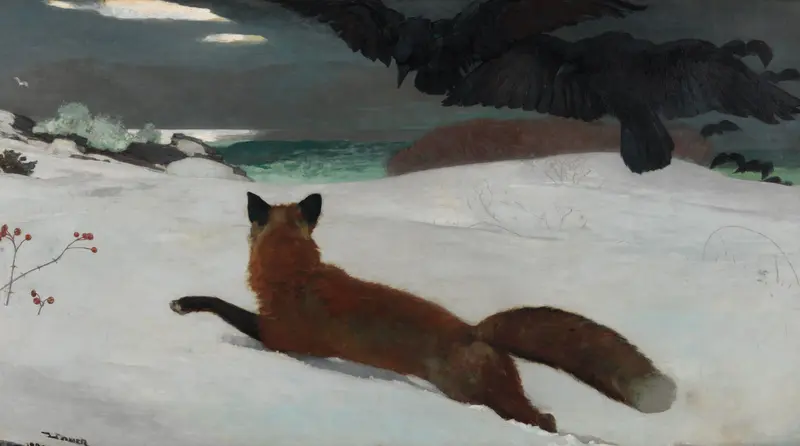
No. 25Realism
The Fox Hunt by Winslow Homer
Animal: A fox and crows
1893 · Oil on canvas · 96.5 × 174 cm
Pennsylvania Academy of the Fine Arts, Philadelphia
A fox struggles through deep snow on the Maine coast as half-starved crows close in: Winslow Homer turns the hunter into the hunted. Drawing on Japanese prints, he splashes the fox's red across the flat white snow. It was his largest painting at the time, and when the Pennsylvania Academy of the Fine Arts bought it in 1893, it became the first Homer in a public collection. It is in Philadelphia.
Want to see more? Browse every animal painting in the collection.
Browse all 2,434 animal paintingsFamous cat paintings
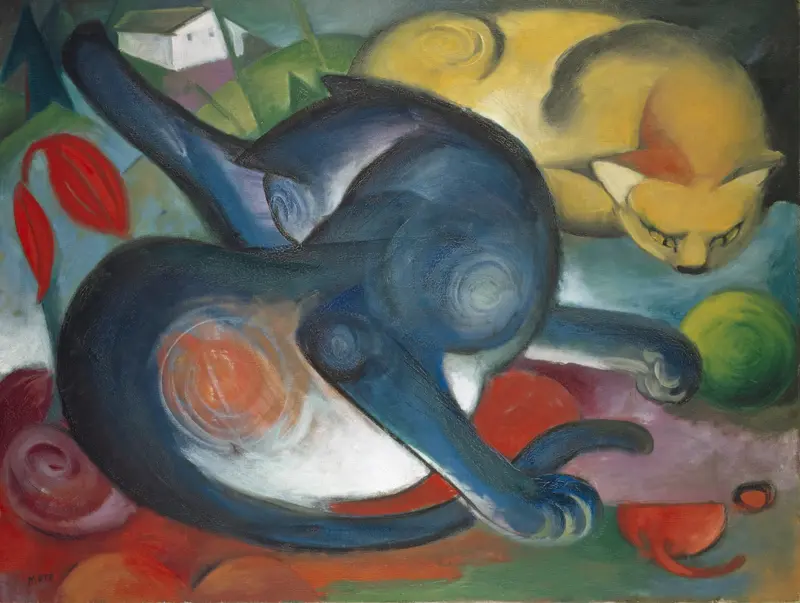
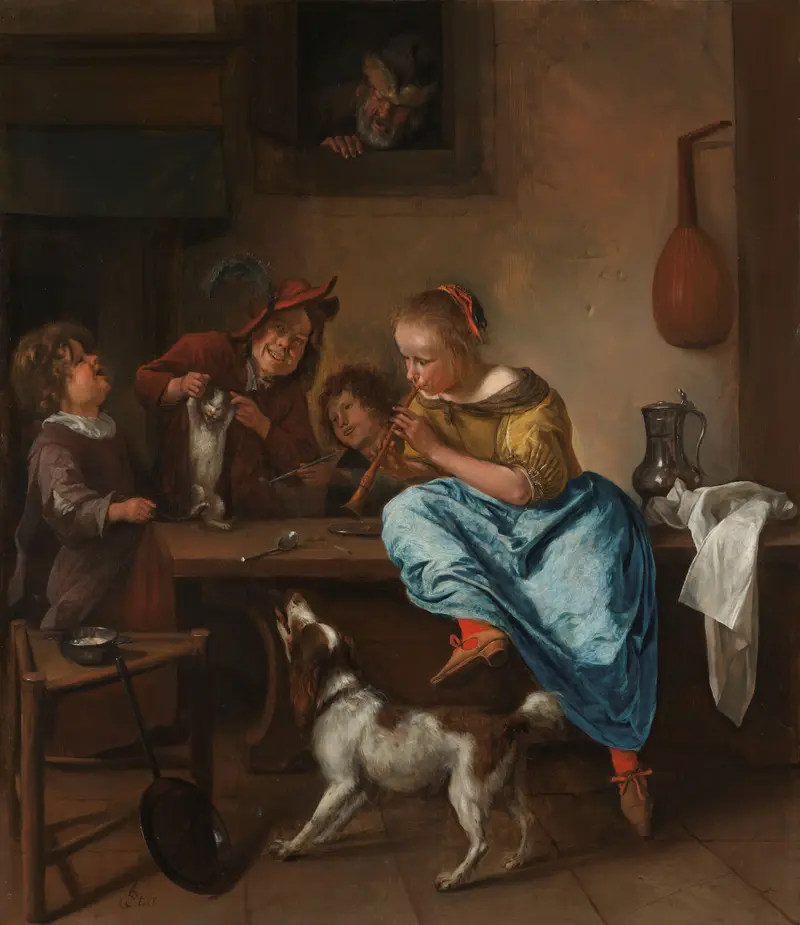
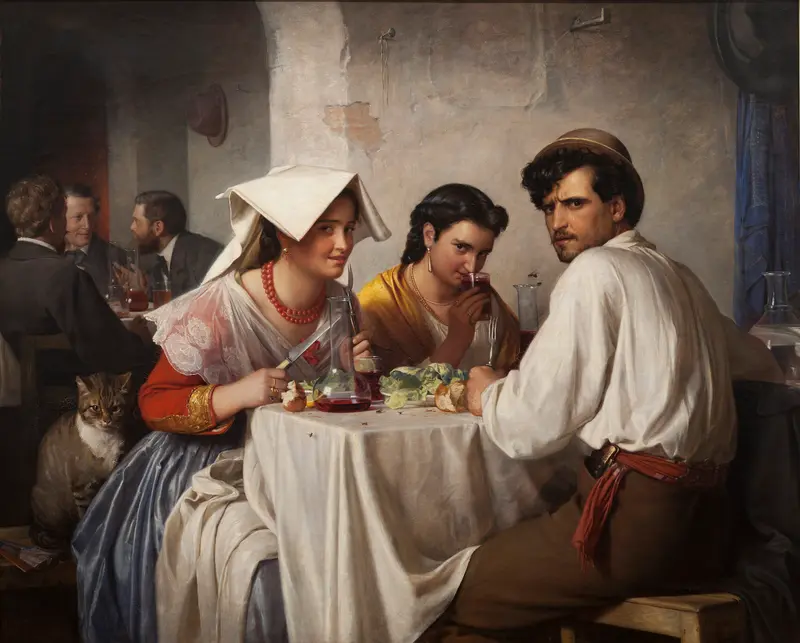
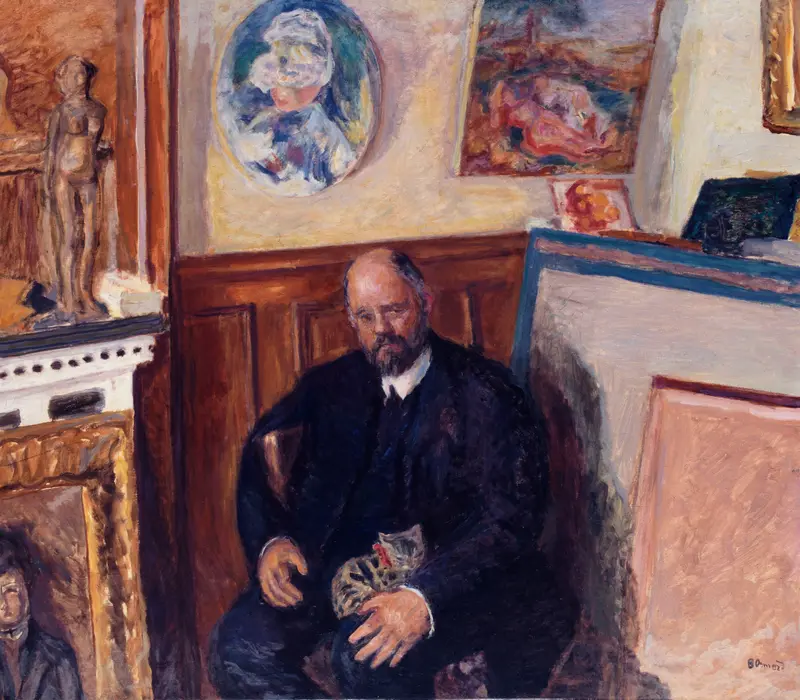
Cats slip into great paintings and often steal the scene. Six famous cat paintings, from Goya and Jan Steen to Renoir, Franz Marc and Bonnard.
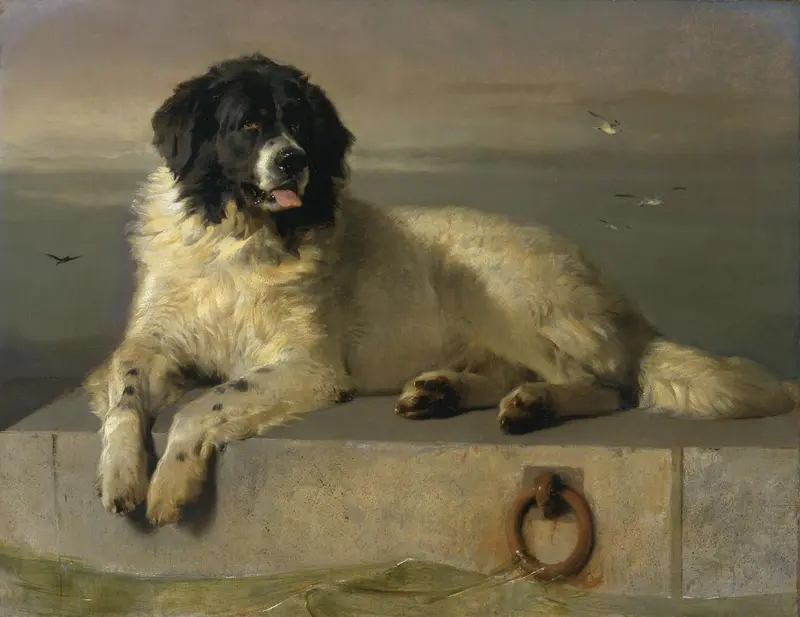
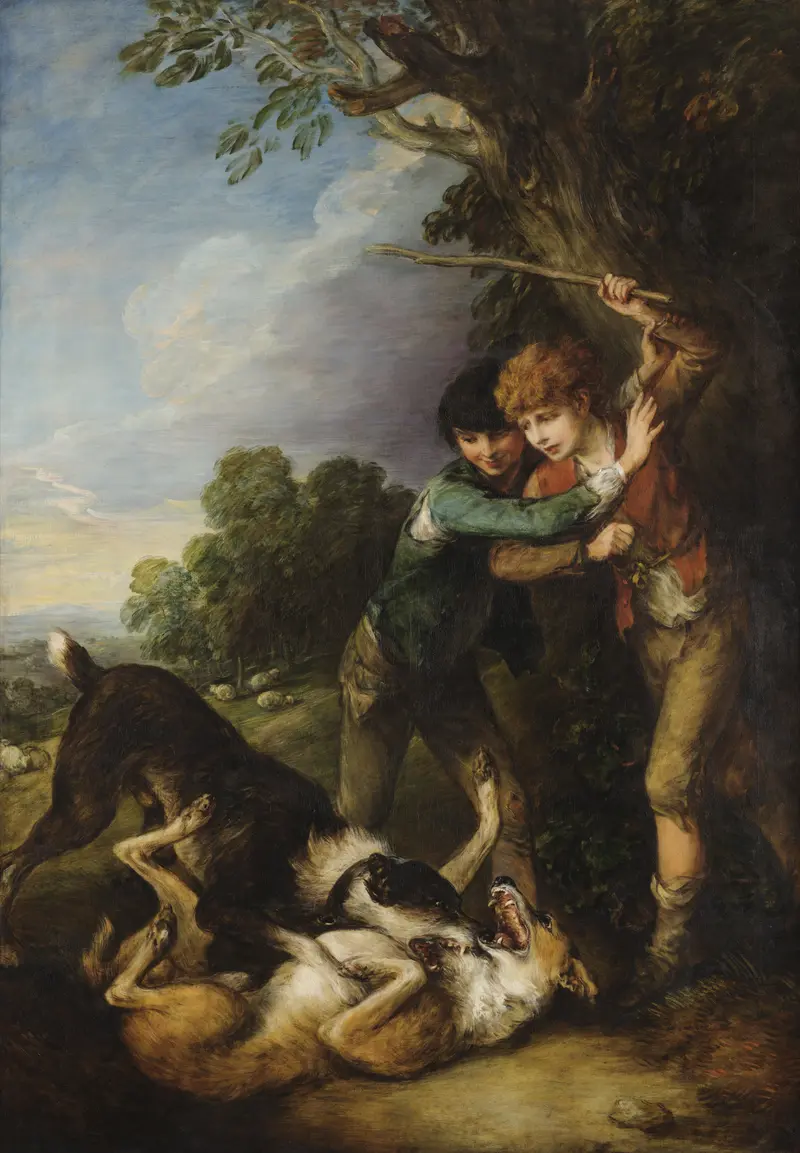
Famous dog paintings
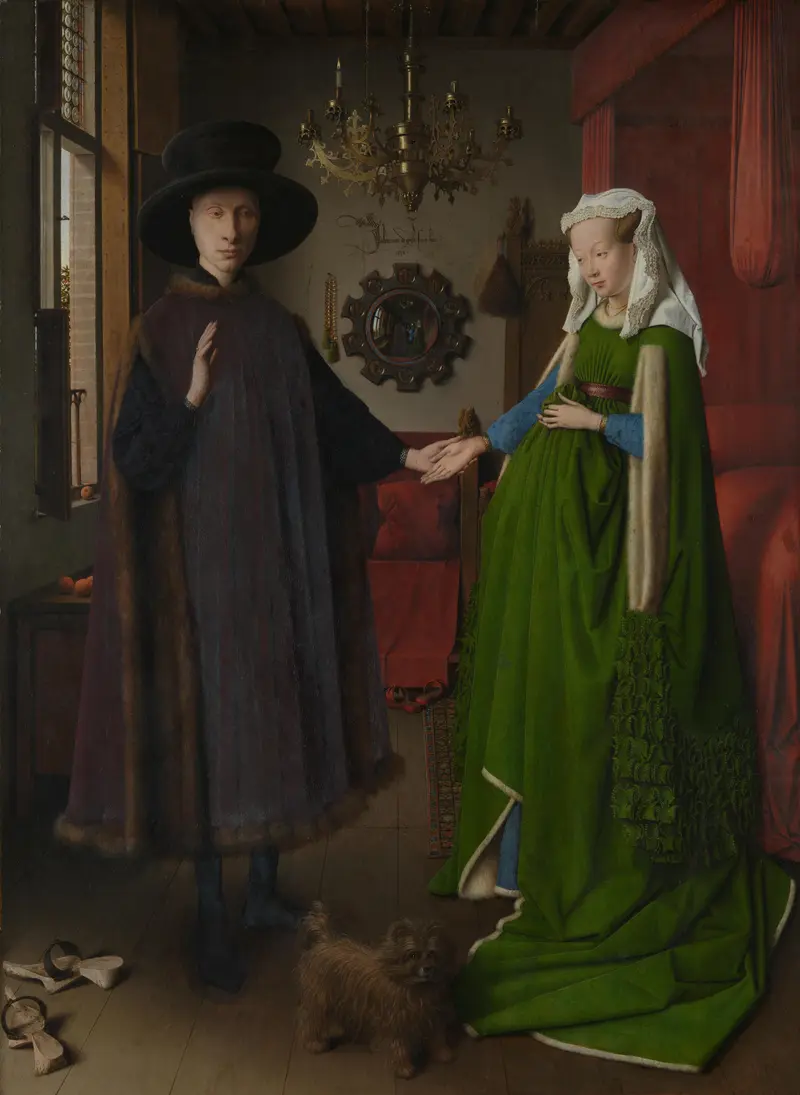
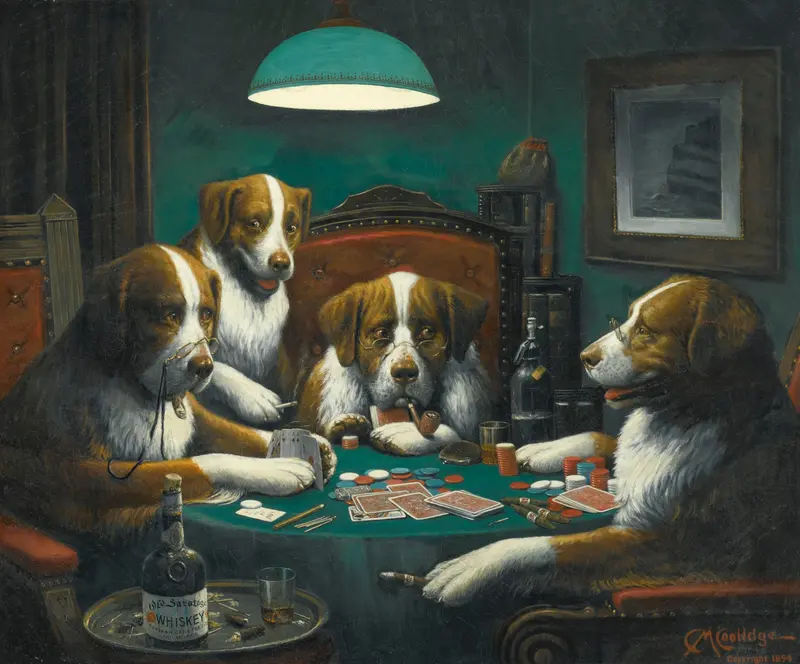
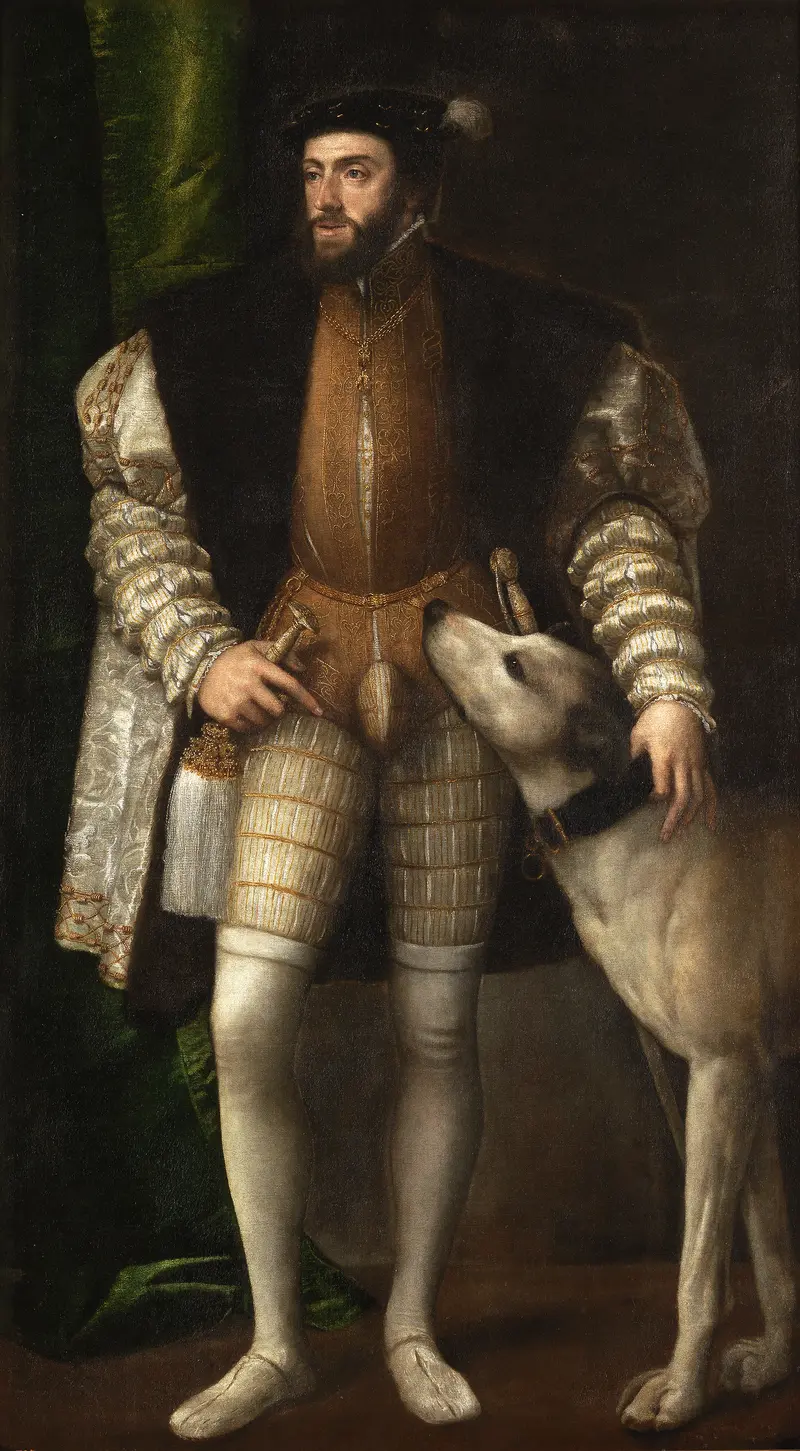
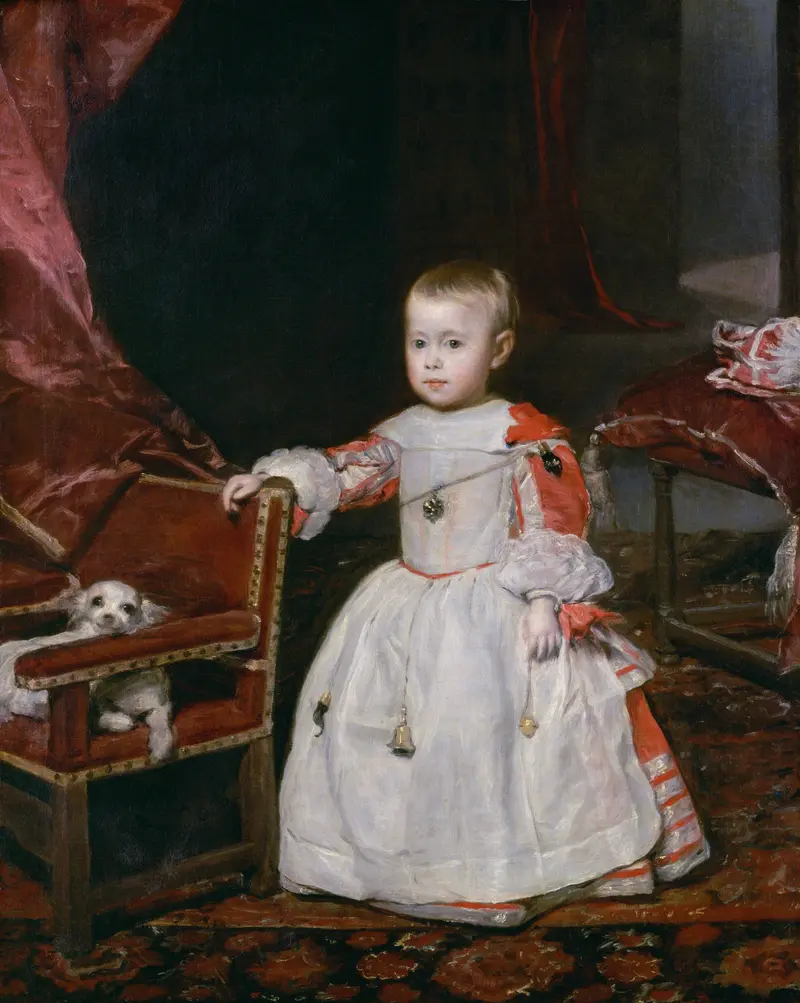
From the little dog in the Arnolfini Portrait to Coolidge's poker players: six more famous dog paintings, by van Eyck, Titian, Velázquez, Gainsborough and Landseer.
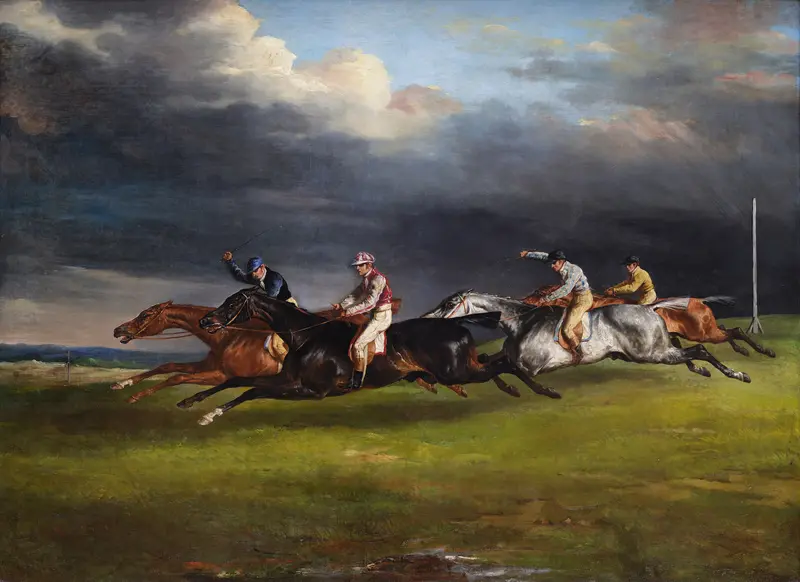
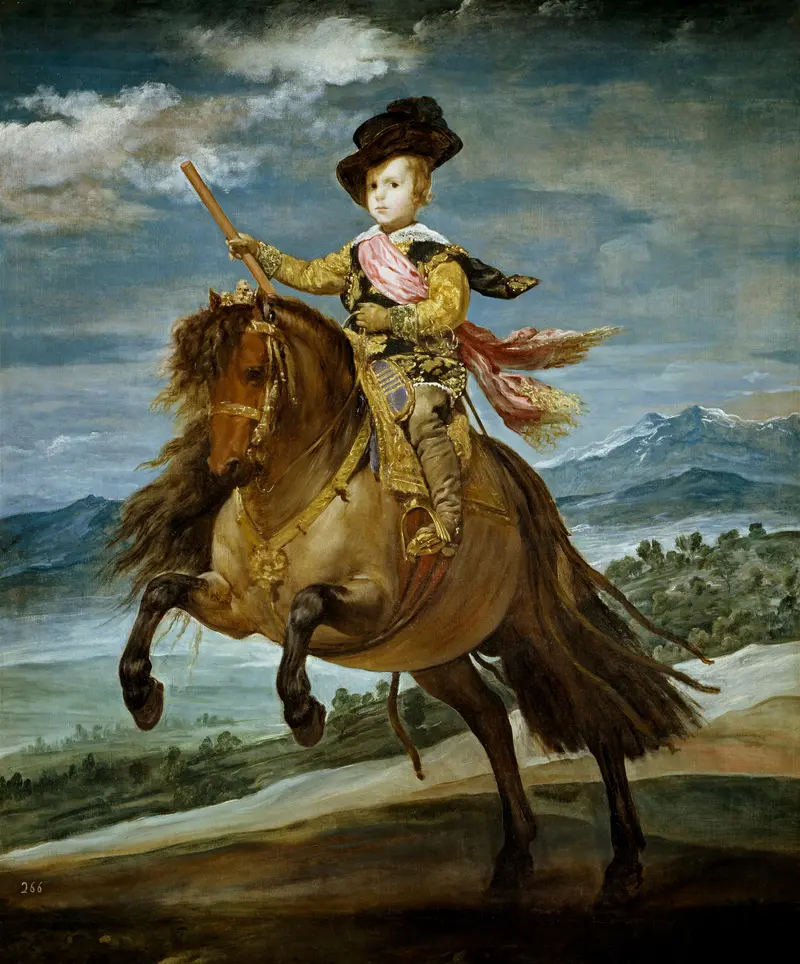
Famous horse paintings
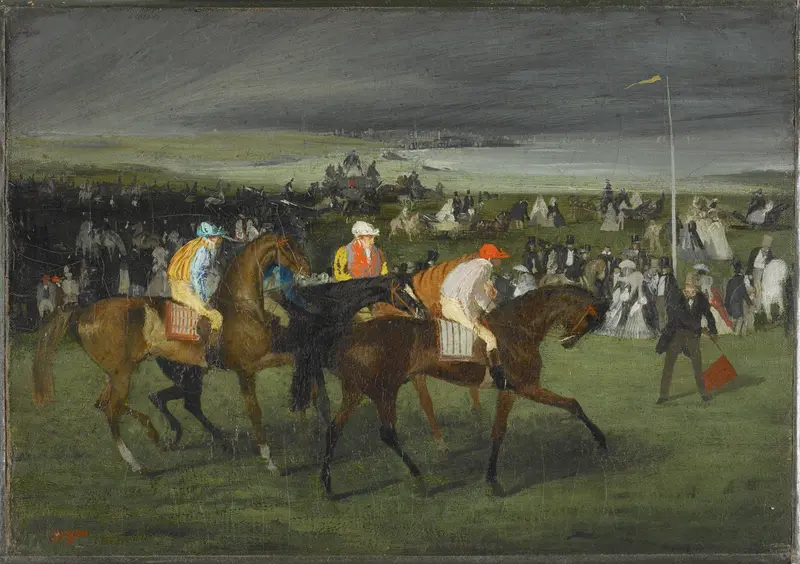
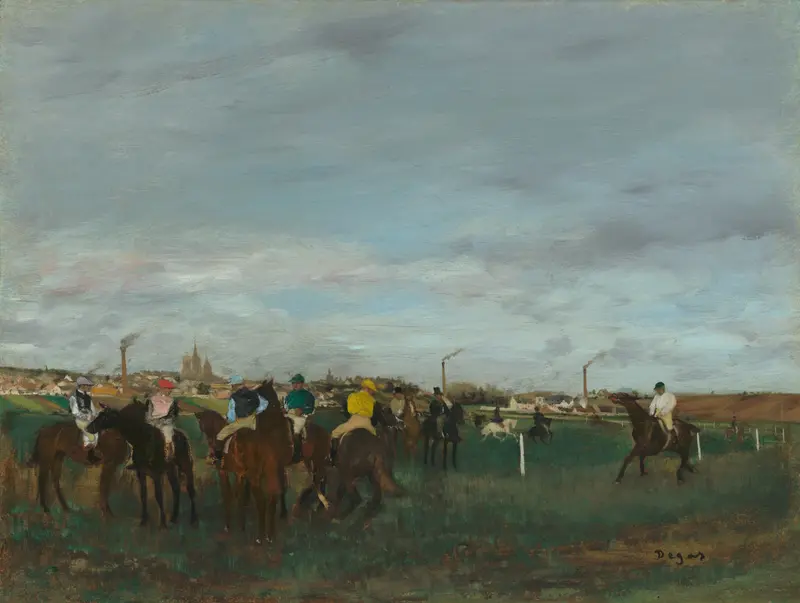
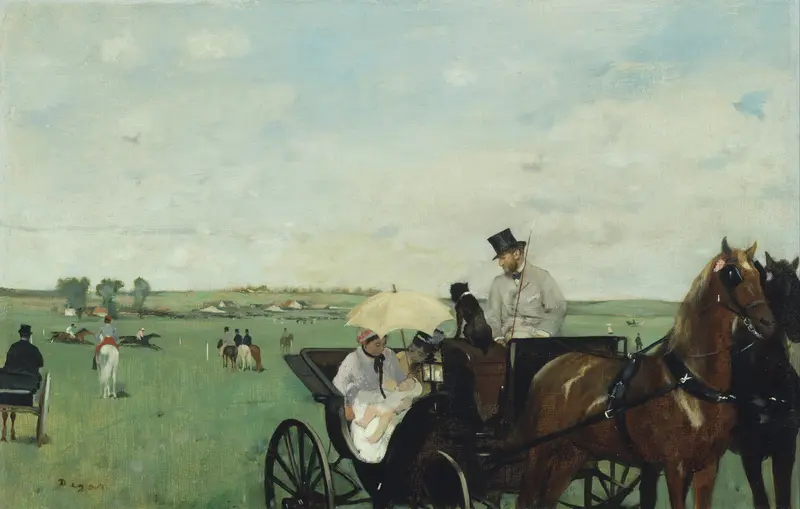
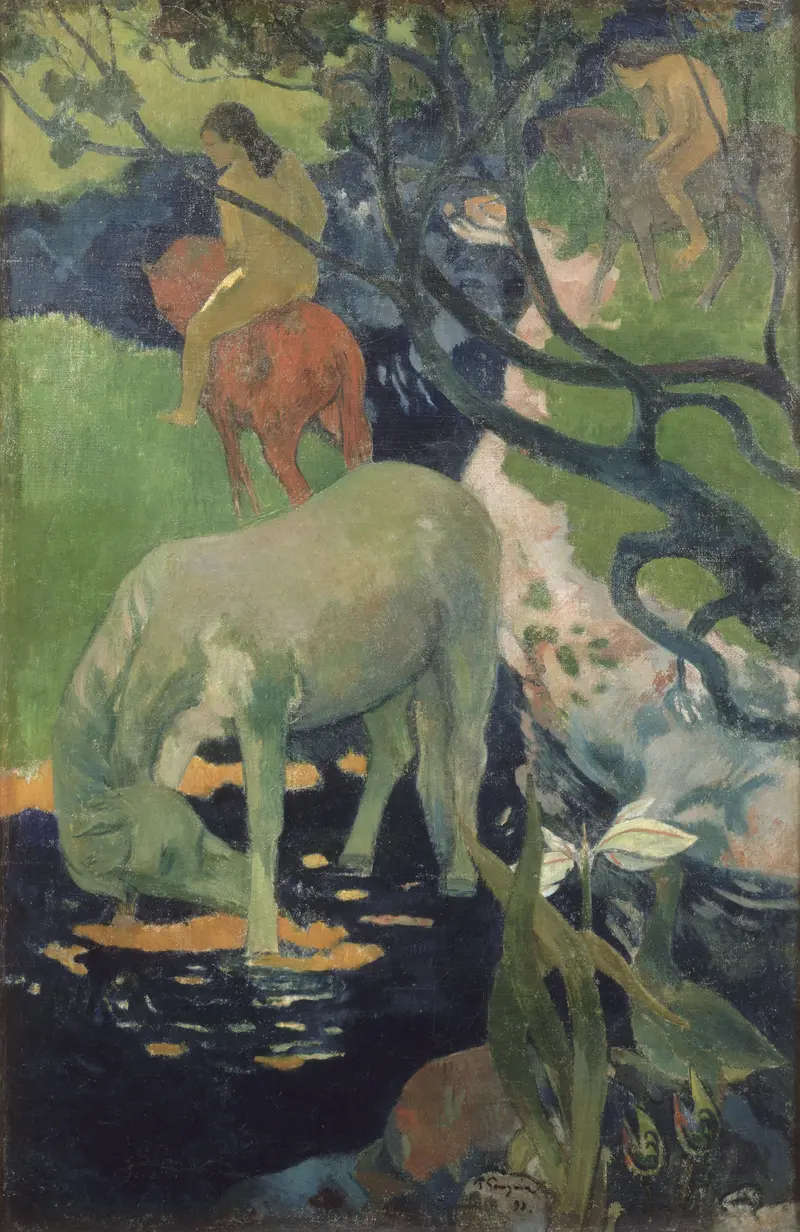
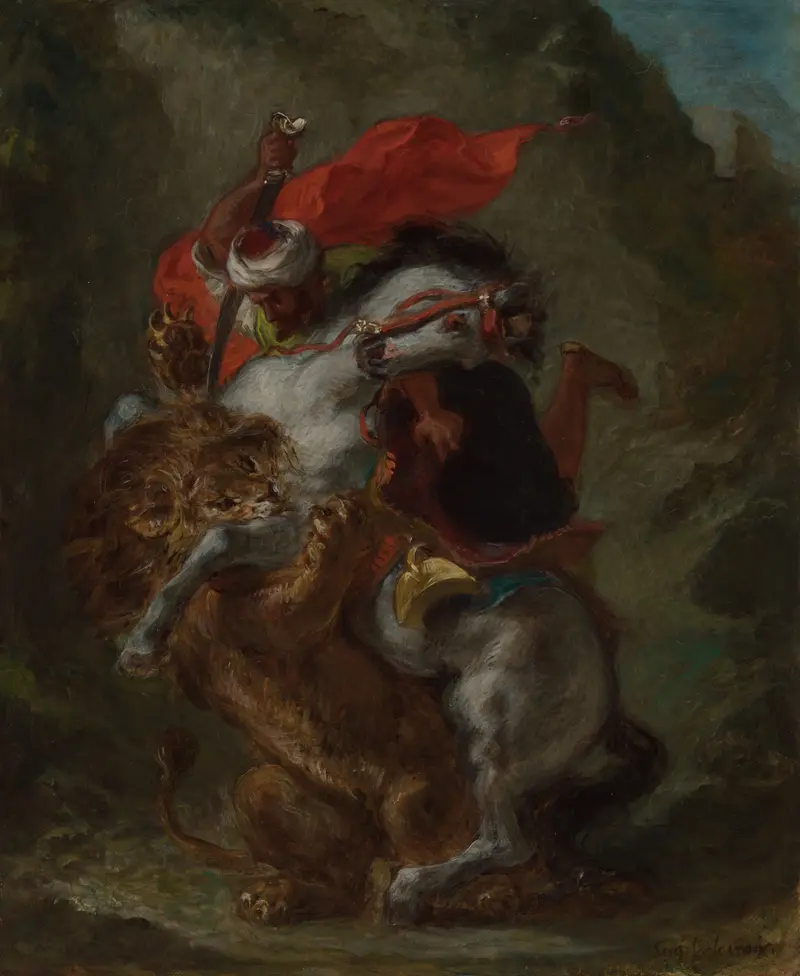
Whistlejacket and The Horse Fair are only the start. Six more famous horse paintings, from Géricault's flying racehorses to Degas at the races and Franz Marc's blue horses.
Famous bird paintings
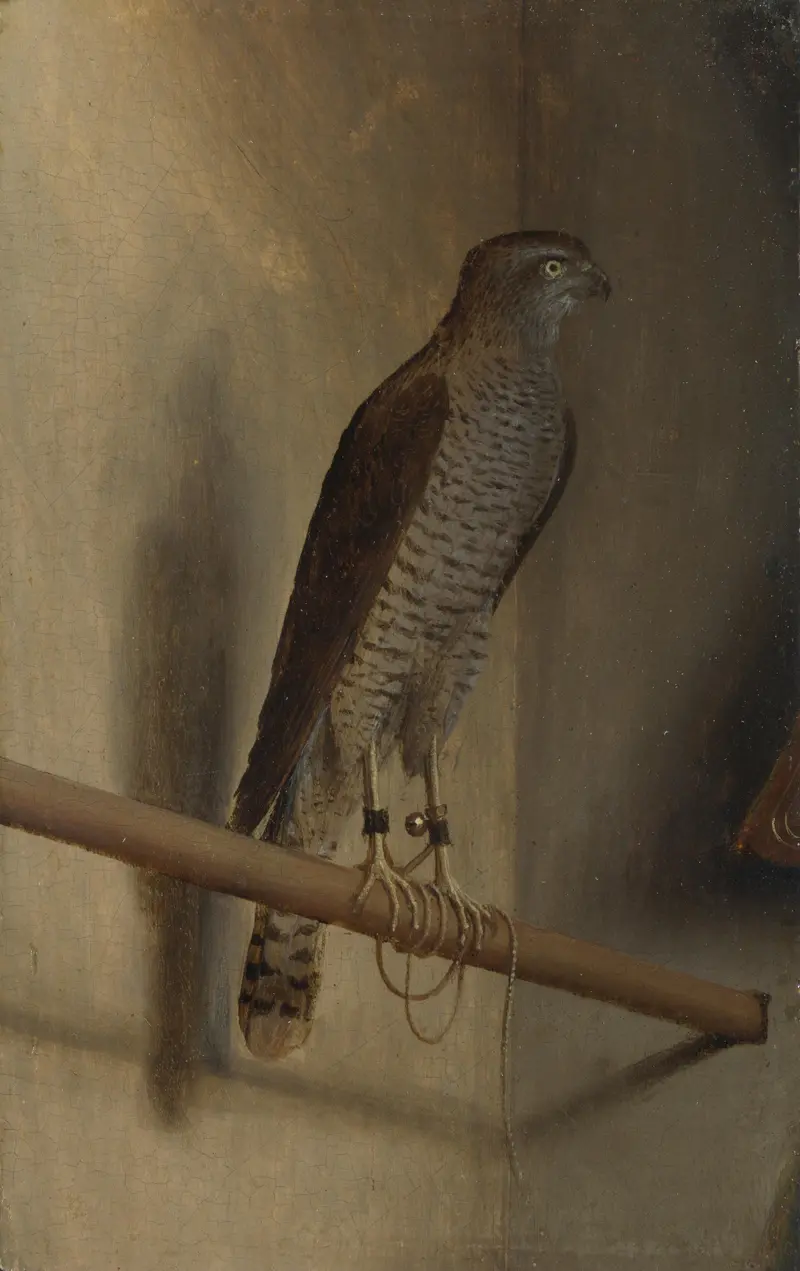
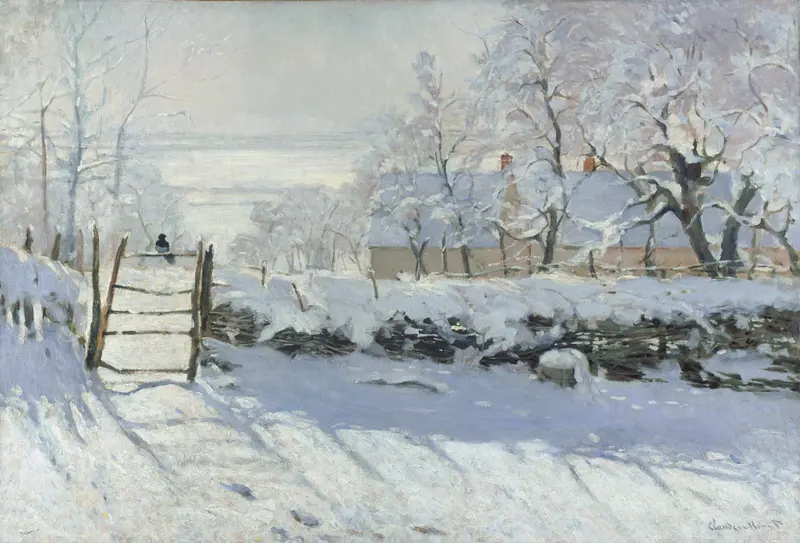
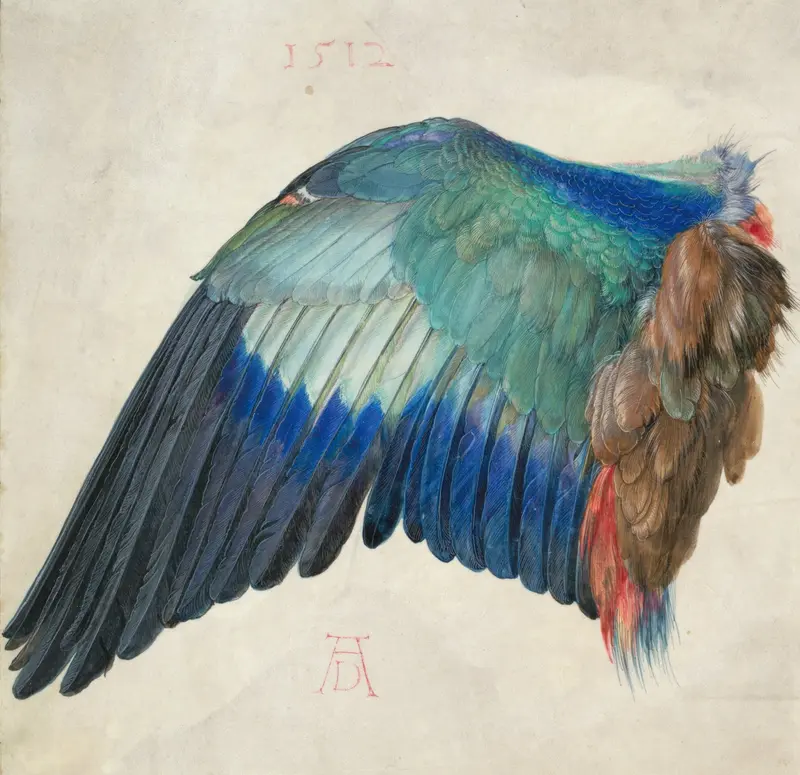
After Fabritius's Goldfinch, six more famous bird paintings: a hawk, a pelican, a magpie in the snow, a single wing, a choir of birds and Audubon's turkeys.
Famous animal painters
Famous animal painters, from Frans Snyders's hunts and Paulus Potter's cattle to Franz Marc's blue horses. Each link opens all their paintings.
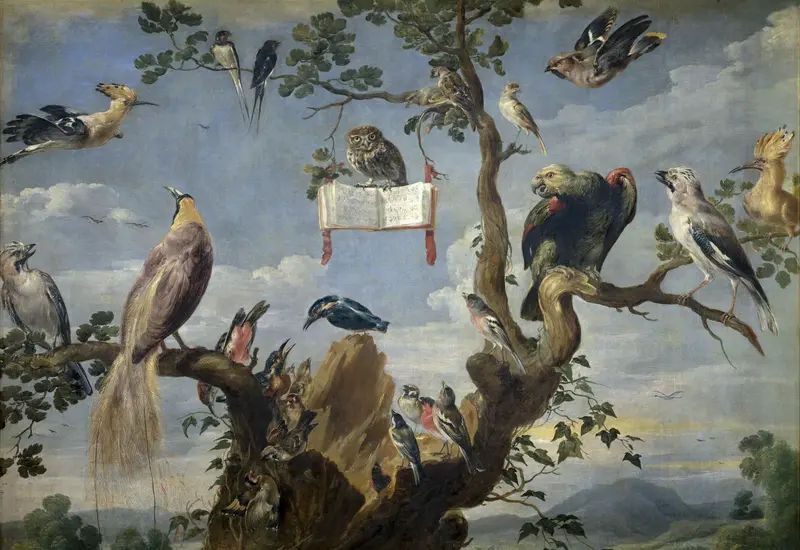 Frans SnydersFlemish master of hunts, markets and animals, who also painted animals and fruit in some of Rubens's pictures.
- Paulus PotterDutch painter of cattle and meadows, who painted The Bull in his early twenties and died at 28.
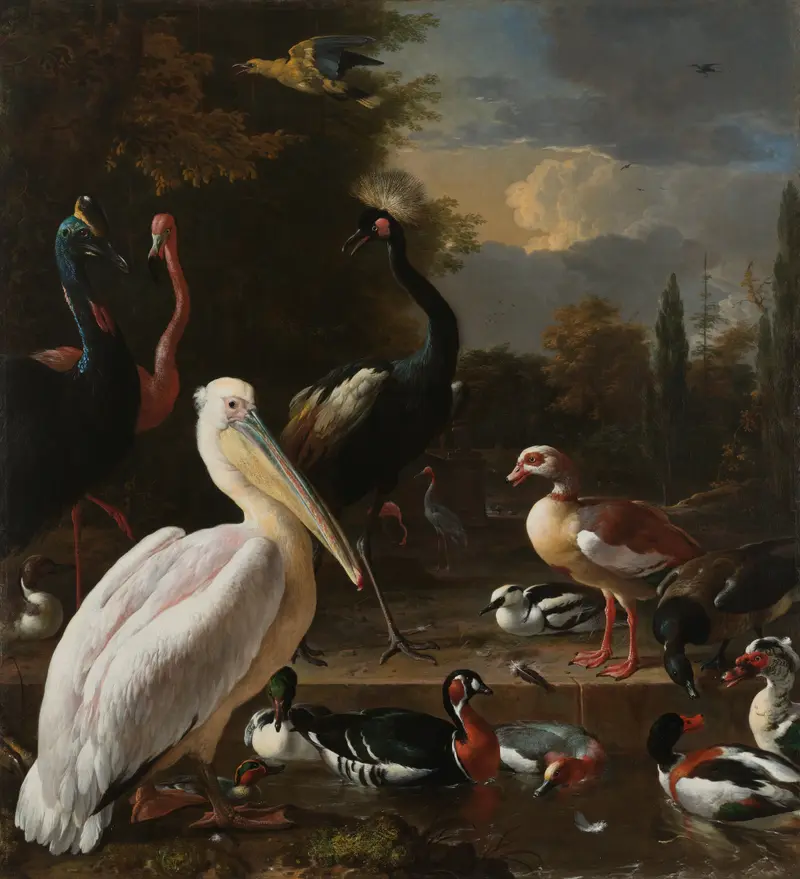 Melchior d'HondecoeterThe 17th-century bird painter par excellence, in the Rijksmuseum's words, from barnyard poultry to pelicans.
- George StubbsDissected horses for 18 months to learn their anatomy, and published The Anatomy of the Horse in 1766.
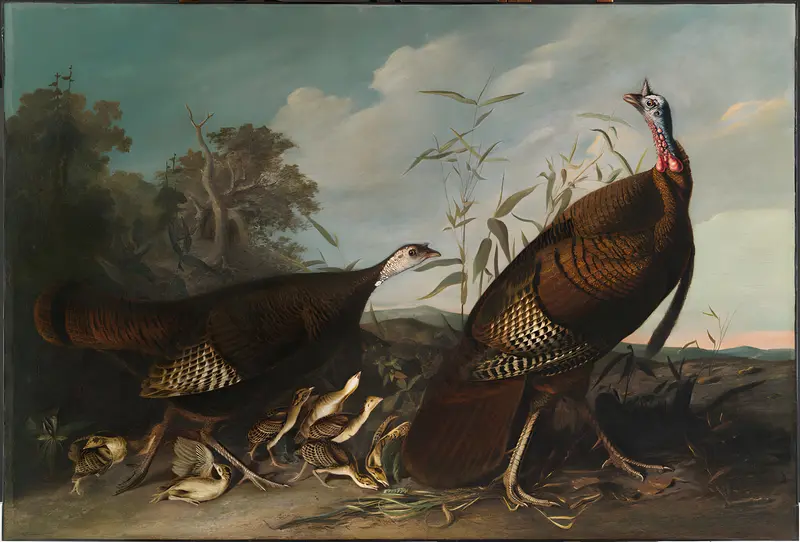 John James AudubonSet out to paint the birds of North America life-size for The Birds of America, with its 435 plates.
- Edwin LandseerQueen Victoria's favorite artist, who also modeled the bronze lions in London's Trafalgar Square.
- Rosa BonheurWon worldwide fame with The Horse Fair and kept a menagerie of animals to study at her home near Fontainebleau.
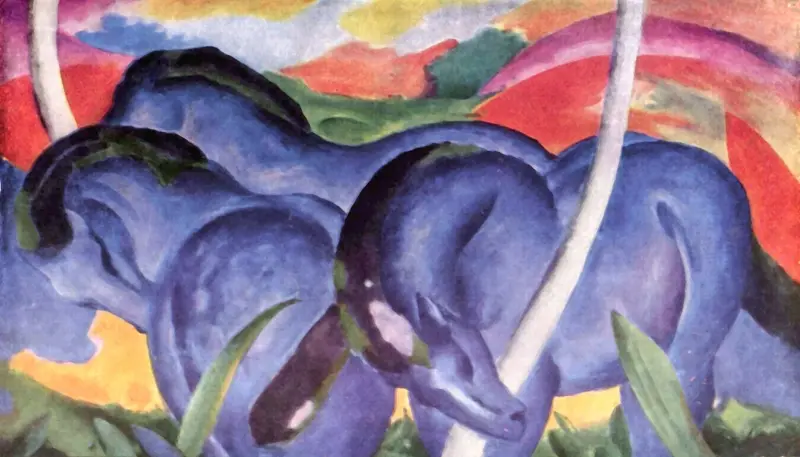 Franz MarcCo-founder of the Blue Rider, who painted animals in symbolic colors; he was killed at Verdun in 1916.
List of famous animal paintings and their artists
The 25 most famous animal paintings: who painted them, which animals they show, when, and where each one is today.
Show the list of 25 animal paintingsHide the list
| # | Painting | Animal | Painted by | Year | Medium | Size | Located in | City |
|---|---|---|---|---|---|---|---|---|
| 1 | The Goldfinch | A goldfinch | Carel Fabritius | 1654 | Oil on panel | 33.5 × 22.8 cm (13.2 × 9 in) | Mauritshuis | The Hague |
| 2 | The Dog | A dog | Francisco de Goya | 1820–1823 | Mixed method on mural transferred to canvas | 131.5 × 79.2 cm (51.8 × 31.2 in) | Museo del Prado | Madrid |
| 3 | Tiger in a Tropical Storm (Surprised!) | A tiger | Henri Rousseau | 1891 | Oil on canvas | 129.8 × 161.9 cm (51.1 × 63.7 in) | National Gallery | London |
| 4 | Young Hare | A hare | Albrecht Dürer | 1502 | Watercolor and body color, heightened with white | 25.1 × 22.6 cm (9.9 × 8.9 in) | Albertina | Vienna |
| 5 | The Horse Fair | Horses | Rosa Bonheur | 1852–55 | Oil on canvas | 244.5 × 506.7 cm (96.3 × 199.5 in) | Metropolitan Museum of Art | New York |
| 6 | Agnus Dei | A lamb | Francisco de Zurbarán | 1635–1640 | Oil on canvas | 37.3 × 62 cm (14.7 × 24.4 in) | Museo del Prado | Madrid |
| 7 | Ploughing in the Nivernais | Oxen | Rosa Bonheur | 1849 | Oil on canvas | 133 × 260 cm (52.4 × 102.4 in) | Musée d'Orsay | Paris |
| 8 | The Threatened Swan | A swan and a dog | Jan Asselijn | c. 1650 | Oil on canvas | 144 × 171 cm (56.7 × 67.3 in) | Rijksmuseum | Amsterdam |
| 9 | The Scapegoat | A goat | William Holman Hunt | 1854–1855 | Oil on canvas | 86.5 × 139.8 cm (34.1 × 55 in) | Lady Lever Art Gallery | Port Sunlight |
| 10 | Man Proposes, God Disposes | Polar bears | Edwin Landseer | 1864 | Oil on canvas | 91.4 × 243.7 cm (36 × 95.9 in) | Royal Holloway, University of London | Egham |
| 11 | Whistlejacket | A horse | George Stubbs | c. 1762 | Oil on canvas | 296.1 × 248 cm (116.6 × 97.6 in) | National Gallery | London |
| 12 | Cart with Black Ox | An ox | Vincent van Gogh | 1884 | Oil on canvas | 57.8 × 77.5 cm (22.8 × 30.5 in) | Portland Art Museum | Portland, Oregon |
| 13 | The Hippopotamus and Crocodile Hunt | A hippopotamus and a crocodile | Peter Paul Rubens | c. 1616 | Oil on canvas | 248.3 × 321.3 cm (97.8 × 126.5 in) | Alte Pinakothek | Munich |
| 14 | Kingfisher by the Waterside | A kingfisher | Vincent van Gogh | 1887 | Oil on canvas | 19.1 × 26.6 cm (7.5 × 10.5 in) | Van Gogh Museum | Amsterdam |
| 15 | Blue Horse I | A horse | Franz Marc | 1911 | Oil on canvas | 112 × 84.5 cm (44.1 × 33.3 in) | Lenbachhaus | Munich |
| 16 | The Bull | A bull | Paulus Potter | 1647 | Oil on canvas | 235.5 × 339 cm (92.7 × 133.5 in) | Mauritshuis | The Hague |
| 17 | The Hungry Lion Throws Itself on the Antelope | A lion and an antelope | Henri Rousseau | 1898/1905 | Oil on canvas | 200 × 301 cm (78.7 × 118.5 in) | Fondation Beyeler | Riehen |
| 18 | The Monarch of the Glen | A stag | Edwin Landseer | c. 1851 | Oil on canvas | 163.8 × 168.9 cm (64.5 × 66.5 in) | Scottish National Gallery | Edinburgh |
| 19 | The Yellow Cow | A cow | Franz Marc | 1911 | Oil on canvas | 140.7 × 189.2 cm (55.4 × 74.5 in) | Solomon R. Guggenheim Museum | New York |
| 20 | A Young Tiger Playing with Its Mother | Tigers | Eugène Delacroix | 1830 | Oil on canvas | 130.5 × 195 cm (51.4 × 76.8 in) | Louvre | Paris |
| 21 | Cat Fight | Cats | Francisco de Goya | 1786 | Oil on canvas | 56.5 × 196.5 cm (22.2 × 77.4 in) | Museo del Prado | Madrid |
| 22 | The Two Majesties | A lion | Jean-Léon Gérôme | 1883 | Oil on canvas | 69.2 × 128.9 cm (27.2 × 50.7 in) | Milwaukee Art Museum | Milwaukee |
| 23 | Fox in the Snow | A fox | Gustave Courbet | 1860 | Oil on canvas | 85.7 × 128 cm (33.7 × 50.4 in) | Dallas Museum of Art | Dallas |
| 24 | Greyhounds | Greyhounds | Amadeo de Souza-Cardoso | c. 1911 | Oil on canvas | 100 × 73 cm (39.4 × 28.7 in) | Centro de Arte Moderna Gulbenkian | Lisbon |
| 25 | The Fox Hunt | A fox and crows | Winslow Homer | 1893 | Oil on canvas | 96.5 × 174 cm (38 × 68.5 in) | Pennsylvania Academy of the Fine Arts | Philadelphia |
Famous animal paintings: questions and answers
What is the most famous animal painting?
There's no official answer, but a few pictures are strong candidates. London's National Gallery calls Edwin Landseer's The Monarch of the Glen "arguably the world's best known animal painting," and says George Stubbs's Whistlejacket is probably the best-known portrait of a horse. Other favorites include Carel Fabritius's The Goldfinch, a highlight of the Mauritshuis; Albrecht Dürer's Young Hare, the work at the heart of Vienna's Albertina; and Henri Rousseau's jungle tiger in Surprised!, also at the National Gallery.
Sources: National Gallery, London: Landseer's Monarch of the Glen (press release) · National Gallery, London: Whistlejacket · Mauritshuis via Google Arts & Culture: Top 10 Masters of the Mauritshuis · Albertina via Google Arts & Culture: Hare · National Gallery, London: Surprised!
Who are the most famous animal painters?
There's no official ranking, but a few names stand out. George Stubbs (1724–1806) studied anatomy so closely that his horses are among the most accurate ever painted. Sir Edwin Landseer (1802–1873) was Queen Victoria's favorite artist. Rosa Bonheur (1822–1899), "a famous animal painter" in the National Gallery's words, won international fame with The Horse Fair. The Dutch painter Paulus Potter specialized in livestock, and Franz Marc, a co-founder of the Blue Rider group, painted the iconic Blue Horse I.
Sources: National Gallery, London: George Stubbs · National Gallery, London: Landseer's Monarch of the Glen (press release) · National Gallery, London: Rosa Bonheur · National Gallery, London: The Horse Fair · Mauritshuis via Google Arts & Culture: Top 10 Masters of the Mauritshuis · Lenbachhaus, Munich: The Blue Rider
What is the most famous horse painting?
There's no official answer, but George Stubbs's Whistlejacket (about 1762) is a top contender: London's National Gallery calls it "probably the most well-known portrait of a horse." Painted life-size for the Marquess of Rockingham, it shows his Arabian stallion rearing against a plain gold background, with no rider. Other famous contenders are Rosa Bonheur's huge The Horse Fair (1852–55, the Met), a sensation at the 1853 Paris Salon, and Franz Marc's Blue Horse I and The Large Blue Horses (both 1911).
Sources: National Gallery, London: Whistlejacket · The Met: The Horse Fair (Open Access API record) · National Gallery, London: The Horse Fair · Lenbachhaus, Munich: Blue Horse I · Walker Art Center: The Large Blue Horses
What is the most famous dog painting?
There's no single answer, but Goya's The Dog, one of his Black Paintings at the Prado in Madrid, is a strong candidate. The Guggenheim Bilbao calls it "highly enigmatic, starkly reductive": just a dog's head rising from behind a dark slope, under an empty ocher sky that fills most of the picture. Other famous dogs include the little brown dog in Jan van Eyck's Arnolfini Portrait (National Gallery, London), a common sign of faithfulness in marriage, and Cassius Marcellus Coolidge's poker-playing dogs.
Sources: Guggenheim Museum Bilbao via Google Arts & Culture: Saura, Imaginary Portrait of Goya · National Gallery, London: The Arnolfini Portrait · Sotheby's: Cassius Marcellus Coolidge, The Poker Game (2008)
What is the famous painting of dogs playing poker?
The dogs-playing-poker pictures are by Cassius Marcellus Coolidge (1844–1934), an American artist who painted dogs living like successful middle-class men, at the all-night card game, the ballpark and on the commuter train. Cigar companies were his first customers, but the printers Brown & Bigelow made his dogs famous, turning out hundreds of thousands of copies as advertising posters, calendars and prints. His 1894 canvas Poker Game, shown on this page, sold at Sotheby's in 2015 for $658,000 and is now on view at the Lucas Museum of Narrative Art in Los Angeles.
Sources: Sotheby's: Cassius Marcellus Coolidge, Poker Game (2015, lot 78) · Sotheby's: Celebrate the Year of the Dog with Canine-Themed Art · Associated Press (via PBS NewsHour): the Lucas Museum of Narrative Art, Sept. 21, 2026
What are the most famous cat paintings?
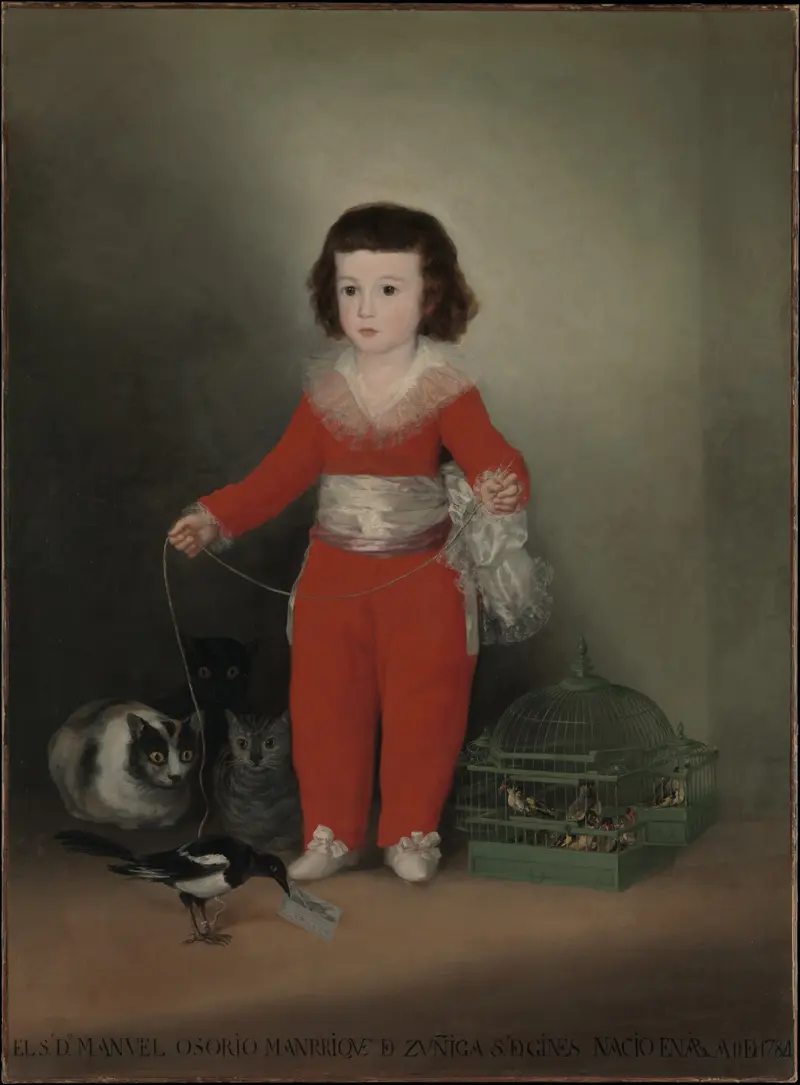
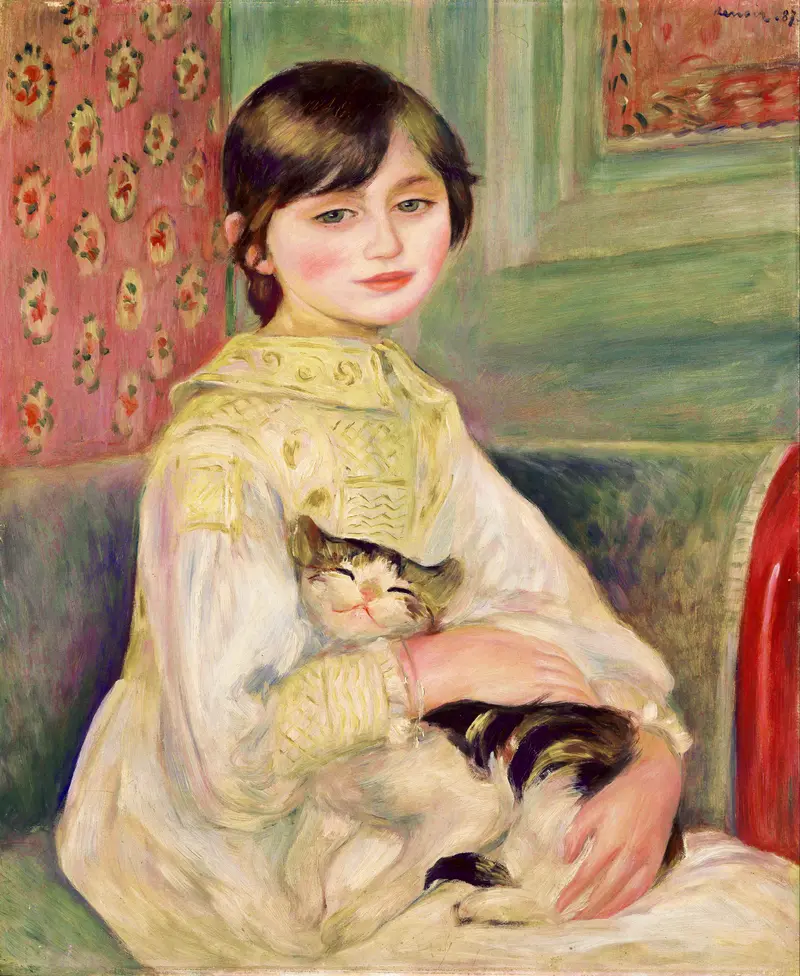
There's no official list, but these stand out. In Goya's portrait of the boy Manuel Osorio (the Met), three wide-eyed cats stare at the pet magpie he holds on a string. Goya's Cat Fight (Prado), a tapestry design, is a close study of the cats' postures. Jan Steen's painting at the Rijksmuseum shows children teaching a cat to dance, and Renoir's Julie Manet (Musée d'Orsay) is also called The Child with the Cat. Franz Marc's Two Cats, Blue and Yellow (Kunstmuseum Basel) was shown in the 1937 Degenerate Art exhibition in Munich.
Sources: The Met: Manuel Osorio Manrique de Zuñiga · Museo del Prado: Cats Fighting · Rijksmuseum: Children Teaching a Cat to Dance · Musée d'Orsay: Julie Manet; L'enfant au chat (IIIF record) · Kunstmuseum Basel: Castaway Modernism exhibition booklet
What are the most famous bird paintings?
There's no official list, but these stand out. Carel Fabritius's The Goldfinch (1654, Mauritshuis) shows a goldfinch chained to its feeder. In Jan Asselijn's The Threatened Swan (Rijksmuseum), a swan defends its nest against a dog; it was the very first acquisition of the Rijksmuseum's forerunner, in 1800. Monet's The Magpie (Musée d'Orsay), a lone magpie on a gate in the snow, was rejected by the 1869 Salon, and the Albertina says Dürer's Wing of a European Roller shows every detail "with great zoological accuracy."
Sources: Mauritshuis via Google Arts & Culture: The Goldfinch · Rijksmuseum: The Threatened Swan · Musée d'Orsay via Google Arts & Culture: The Magpie · Musée d'Orsay: La Pie (IIIF record) · Albertina, Vienna: Wing of a European Roller
What is the oldest animal painting?
The oldest dated animal painting found so far is a cave scene on the Indonesian island of Sulawesi: three human-like figures with a wild pig, painted at least 51,200 years ago in the cave of Leang Karampuang, according to a 2024 study in Nature. Before that, the record holder was a red-ocher painting of a Sulawesi warty pig in nearby Leang Tedongnge, dated in 2021 to at least 45,500 years ago. Both ages are minimums, so the art may be older.
Sources: Nature (2024): Narrative cave art in Indonesia by 51,200 years ago · Griffith University: Cave painting in Indonesia is the oldest known 'picture story' · Griffith University: World's oldest cave art discovered in Indonesia
What is animal art called?
It's usually just called animal art, or animal painting for pictures. The Getty's Art & Architecture Thesaurus describes animal painting as a genre "highly developed in 18th-century European painting," often showing prized dogs, horses, livestock or exotic wild animals. Pictures of hunting, racing and other country pursuits are called sporting art; George Stubbs was classed in his lifetime as a sporting painter. The French term animalier refers to a group of mid-19th-century French sculptors of small animal figures.
Sources: Getty Art & Architecture Thesaurus: animal art · Getty Art & Architecture Thesaurus: animal paintings · Getty Art & Architecture Thesaurus: sporting art · National Gallery, London: George Stubbs · Getty Art & Architecture Thesaurus: Animalier
Why did artists paint animals?
Artists painted animals for many reasons. Patrons paid for portraits of prized animals: the Marquess of Rockingham, a horse breeder, commissioned Stubbs's life-size Whistlejacket. Animals also carried meaning, like the little dog in van Eyck's Arnolfini Portrait, a common sign of faithfulness in marriage, or Asselijn's swan, later read as a political allegory. Some artists studied nature closely, as Dürer did with his lifelike hare, and in the 17th century, paintings of livestock were simply very popular.
Sources: National Gallery, London: Whistlejacket · National Gallery, London: The Arnolfini Portrait · Rijksmuseum: The Threatened Swan · Albertina, Vienna: Feldhase (Young Hare) · Mauritshuis via Google Arts & Culture: Top 10 Masters of the Mauritshuis
Who painted the famous blue horses?
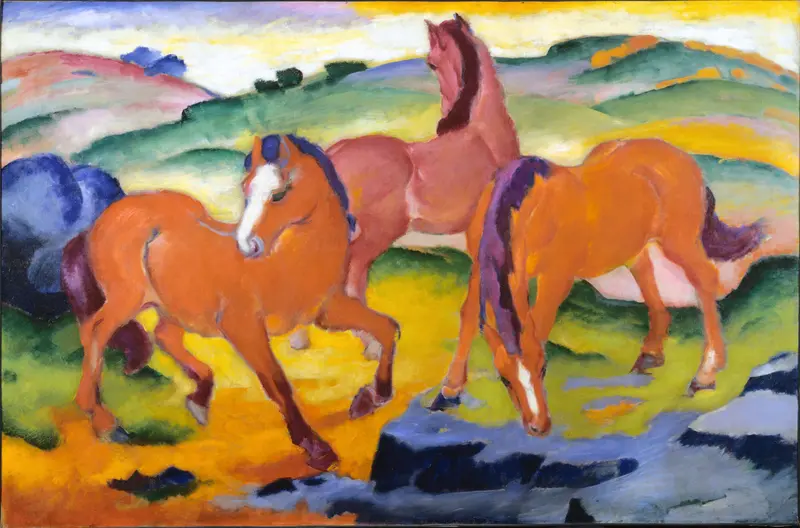
The famous blue horses were painted by Franz Marc (1880–1916), a Munich-born artist and co-founder of the Blue Rider group. His Blue Horse I (1911) at Munich's Lenbachhaus is one of his best-known pictures, and The Large Blue Horses (1911) belongs to the Walker Art Center in Minneapolis. For Marc, blue stood for the masculine and the spiritual. His Tower of Blue Horses has been missing since World War II, and Marc himself was killed in World War I.
Sources: Lenbachhaus, Munich: Blue Horse I · Walker Art Center: The Large Blue Horses · Lenbachhaus, Munich: The Blue Rider · Lenbachhaus, Munich: August Macke and Franz Marc · Kunstmuseum Basel: Castaway Modernism exhibition booklet
Are famous animal paintings in the public domain, and can I download them for free?
Yes, for paintings as old as these. In the U.S., works published before 1931 are in the public domain, as are unpublished works by artists who died before 1956, according to Cornell University Library's copyright chart. A faithful photo adds no new copyright: the U.S. Copyright Office won't register a "slavish copy" of a painting, and EU Directive 2019/790, Article 14, says much the same for Europe. Every painting here is public domain, and standard downloads are free for any use, including commercial.
Sources: Cornell University Library: Copyright Term and the Public Domain · U.S. Copyright Office, Compendium III, ch. 900, §909.3(A) · Directive (EU) 2019/790, Article 14 (text via legislation.gov.uk)
How we chose the most famous animal paintings
We ranked the paintings by how widely each one is known around the world: the number of languages that have an encyclopedia entry about it, checked in October 2026. The more cultures write about an animal painting, the higher it ranks.
A few rules keep the list useful. Every painting is in the public domain, so you can download and use it freely. No painter has more than two places. An animal painting is one where an animal is the subject, so famous pictures in which an animal plays a smaller part, such as the dog in the Arnolfini Portrait, appear in the cat, dog, horse and bird sections instead. Lost works, such as Franz Marc's Tower of Blue Horses, are left out.
Dates, sizes and locations come from the museums' own records, and each entry links to its sources.
Spotted a mistake? Tell us and we will correct it.
Browse all 2,434 animal paintings
Every one is public domain and free to download, most famous first: paintings of animals by famous artists, from the 1500s to the 1900s.