
Apostel Paulus — History & Facts
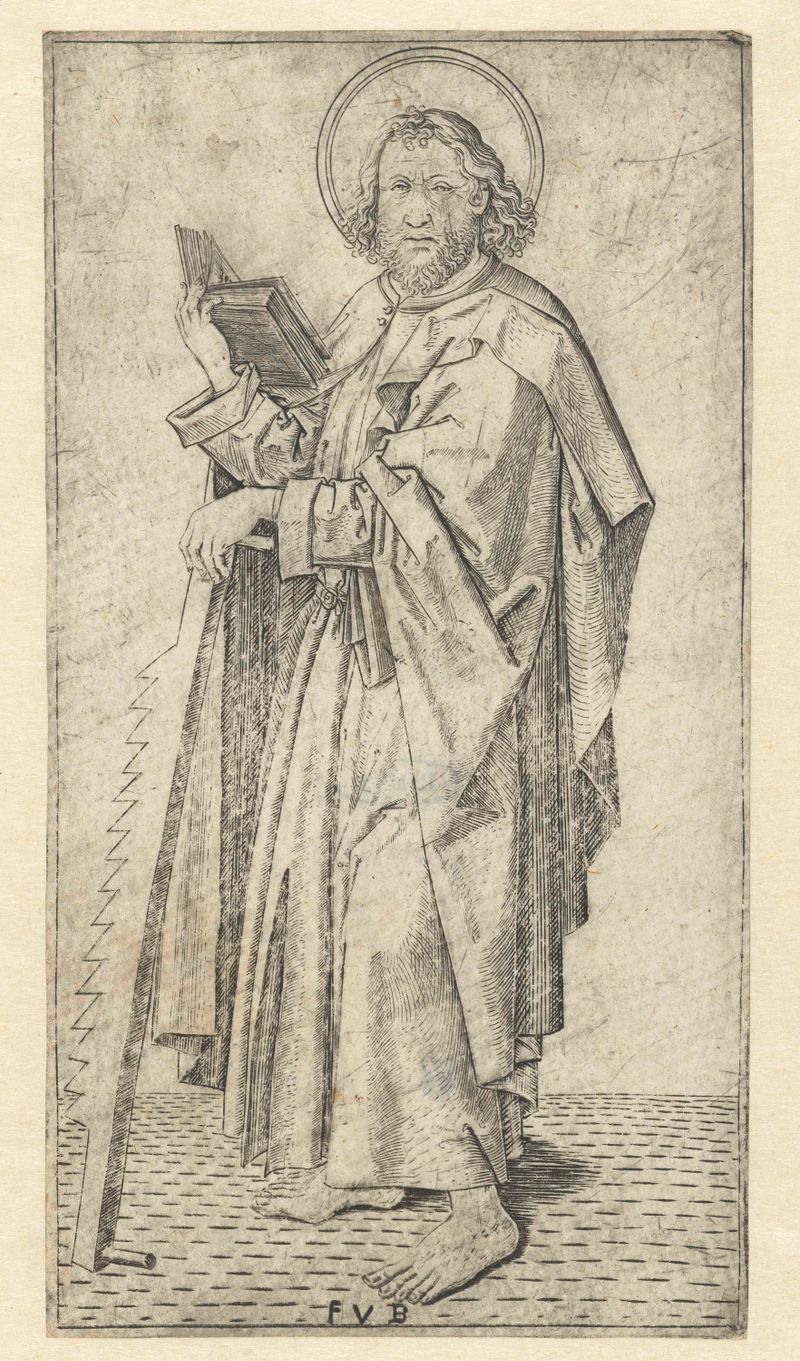
Can paint confess what words never could? In the stillness of Apostel Paulus, we encounter a figure whose gaze pierces the veil of existence, inviting us to confront our own mortality. Look to the center of the canvas where the Apostle Paul stands, draped in rich hues of deep blues and warm earthy tones. His somber expression is framed by a halo of light that draws our attention and underscores his divine mission. Notice how the meticulous brushwork captures the intricate details of his robe, each fold suggesting the weight of knowledge and conviction he carries.
The background fades into a muted darkness, contrasting the figure and emphasizing his illuminated presence. The emotional tension in the artwork reveals itself through subtle contrasts. Paul's gestures—one hand raised in a gesture of teaching, the other holding a scroll—speak to the duality of wisdom and humility, knowledge and faith. The interplay of light and shadow creates a palpable sense of the transient nature of life, reflecting the struggles between the spiritual and the earthly.
This duality invites contemplation on the impermanence of our own lives and the legacies we leave behind. Created between 1475 and 1500, this work illustrates the Renaissance's fascination with humanism and the exploration of religious themes. During this period, Meester FVB was influenced by the growing interest in classical rhetoric and philosophy. As artists began to portray biblical figures with greater emotional depth, this painting serves as a poignant reminder of the enduring quest for truth that transcends time.
More Artworks by Meester FVB
Browse all →

More Religious Art
Browse all →
The Return of the Prodigal Son
Rembrandt van Rijn

The Garden of Earthly Delights
El Bosco

Count Orgaz’ funeral
El Greco

The Hundred Guilder Print: the central piece with Christ preaching, the plate arched
Rembrandt van Rijn

The Descent from the Cross
Rogier van der Weyden

The return of the prodigal son
Rembrandt van Rijn