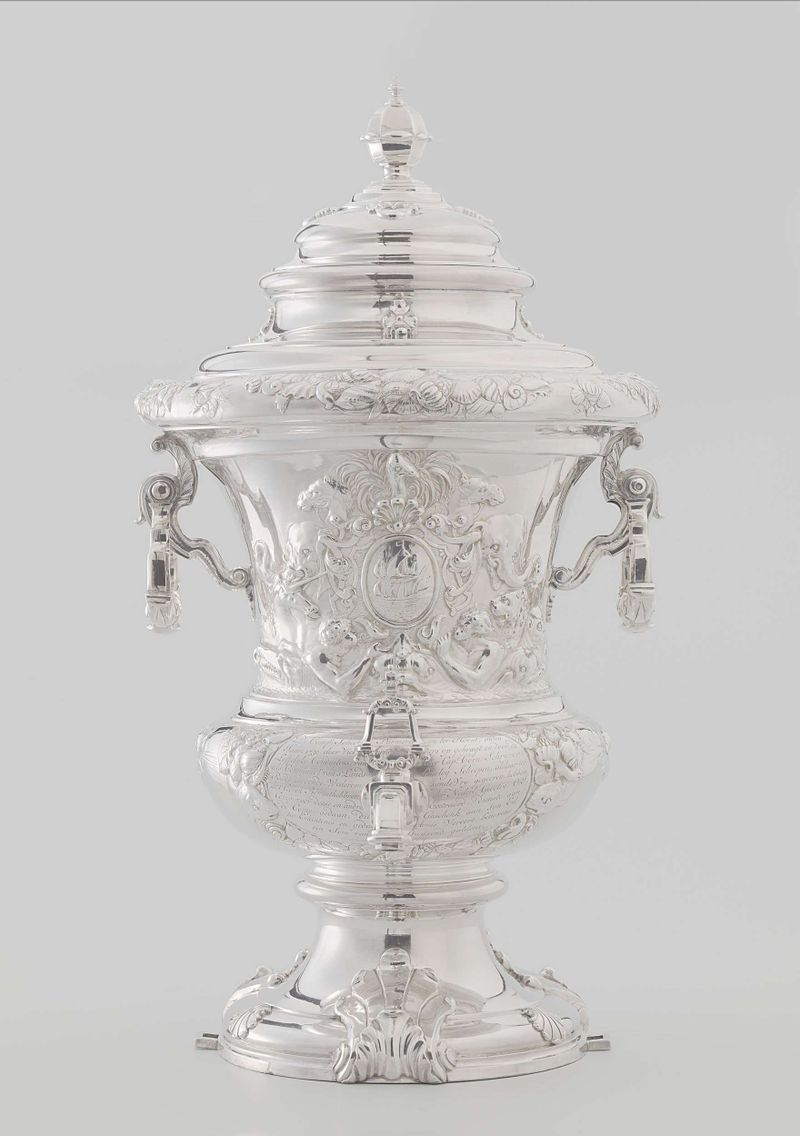
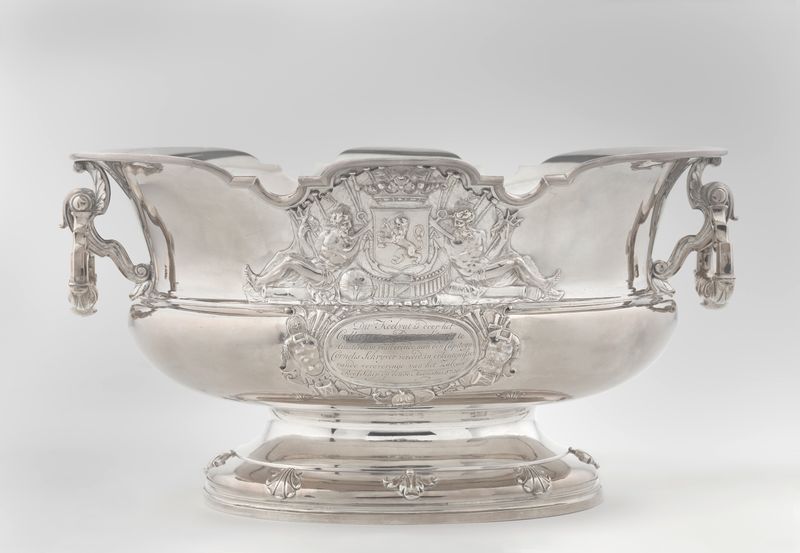
Brandewijnskom van zilver met hoge, achtkantige, gegraveerde cuppa en met twee gegoten horizontale rolwerk oren. Vals? — History & Facts
In Brandewijnskom van zilver met hoge, achtkantige, gegraveerde cuppa en met twee gegoten horizontale rolwerk oren. Vals?, the intricate interplay of form and craftsmanship invites a journey into the heart of illusion. This silver piece, at first glance an exquisite vessel, beckons the viewer to ponder its deeper significance beyond mere aesthetics. Look closely at the high, octagonal cup, where the engraved patterns swirl like whispers of a forgotten story, each line and curve meticulously crafted.
Focus on the gleaming surface, reflecting the ambient light in a dance of brilliance that captures the eye. Notice how the two cast horizontal handles rise elegantly, their rolework seemingly defying gravity, enhancing the illusion of weightlessness in a material often associated with permanence and solidity. Yet beneath the surface beauty lies a tension between authenticity and deception. The title questions the very nature of its existence—“Vals?” suggesting a deeper exploration into the essence of value, artifice, and identity.
The ornate details might evoke luxury, yet they challenge the viewer to confront what is real versus what is merely illusion—a fascinating commentary on status and perception. In the intricate engravings, one can sense the artist's desire to provoke thought on the nature of craftsmanship and its value in society. Alger Mensma created this remarkable work in 1668 amidst a flourishing period of Dutch art, marked by an increasing interest in still lifes and ornate decorative objects. Working in Amsterdam, he was part of a vibrant artistic community grappling with the evolving notions of wealth and beauty.
At that time, silverware was not merely functional but a statement of social status, making this piece a reflection of both personal and collective identity within a rapidly changing world.