
Buste van dr. Nicolaas Beets (1814-1903), letterkundige met sokkel van Rosso Asiago kalksteen — History & Facts
Did the painter know this moment would outlive them? The vibrant hues of Buste van dr. Nicolaas Beets encapsulate not just a likeness but an essence, immortalizing a life in color and form. Focus first on the rich, warm tones of the skin, where subtle variations in color breathe life into the marble. Notice how the light caresses the contours of dr.
Beets's face, casting gentle shadows that add depth and complexity. The choice of Rosso Asiago limestone enhances the warmth of the sculpture, suggesting both the dignity and the humanity of the subject. Surrounding the bust, the simplicity of the pedestal allows the eye to linger, inviting introspection on the legacy of the man captured in stone. Yet, beneath its classical veneer lies a tension between permanence and the transient nature of life.
The slight tilt of Beets’s head suggests contemplation, a hint of introspection reflecting the weight of his literary contributions. The polished surface of the stone contrasts sharply with the rough edges of mortality, echoing the human experience of striving for significance amid the inevitability of fading memory. Cornelis Beets created this bust in 1894, during a period of great innovation and discussion in the art world. As a member of the Dutch artistic community, he was influenced by the prevailing movements of realism and impressionism.
This particular work coincided with a time when many artists were exploring themes of identity and legacy, making dr. Beets a fitting subject for a sculpture that aims to bridge the gap between flesh and stone, memory and time.
More Artworks by Cornelis Beets
Browse all →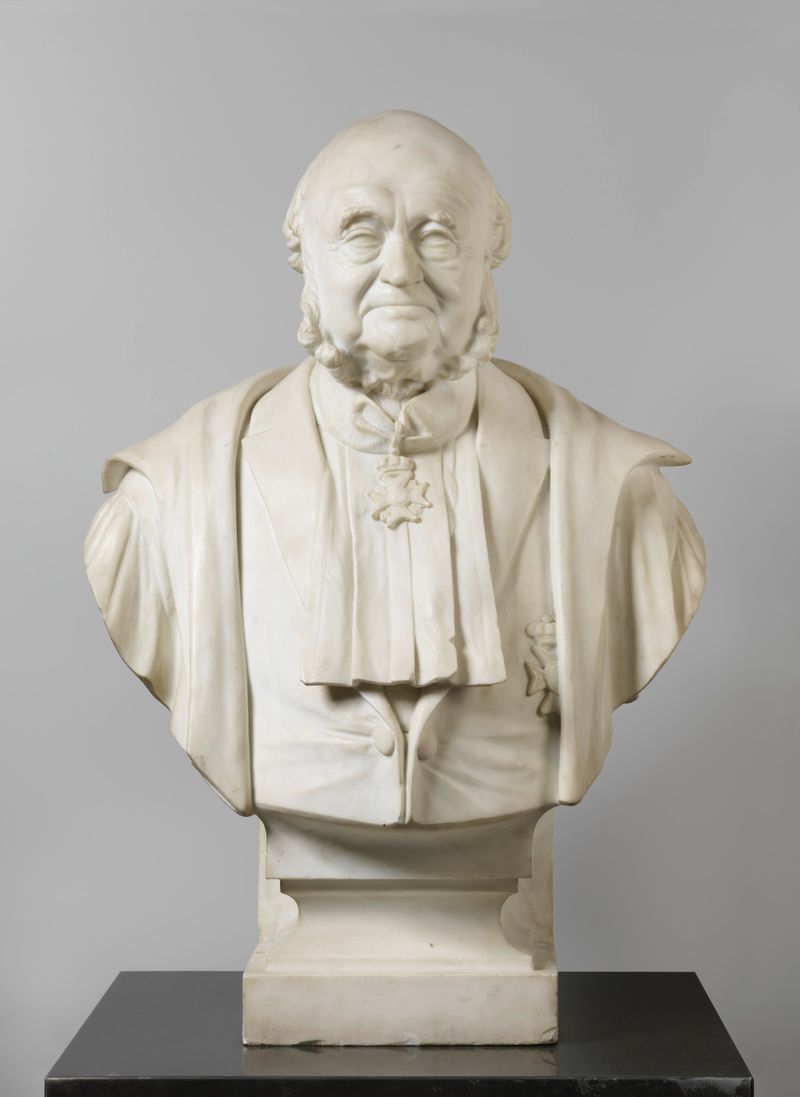
More Portrait Art
Browse all →
Las meninas
Diego Velázquez

Self-portrait with a Bandaged Ear and Pipe
Unidentified artist

Girl with a Pearl Earring
Johannes Vermeer

The Sampling Officials of the Amsterdam Drapers’ Guild, Known as ‘The Syndics’
Rembrandt van Rijn

The Hundred Guilder Print: the man seen on the back in the lower left corner
Rembrandt van Rijn

Portrait of Dr Gachet
Vincent van Gogh