
Buste van Dr. Petrus Josephus Hubertus Cuypers (1827-1921), architect met bijbehorende rechthoekige sokkel van zwart graniet met grijs mica — History & Facts
Did the painter know this moment would outlive them? In a world marked by transience, the act of rendering a single figure into permanence becomes a profound testament to human connection and memory. Focus first on the solemn visage of Dr. Petrus Josephus Hubertus Cuypers, captured in a moment of quiet contemplation. The artist employs a muted palette of earthy tones, allowing the deep shadows on the face to evoke a sense of weight and gravitas.
Notice how the light delicately caresses the contours of the cheek, enhancing the emotional depth of the character. The rectangular granite pedestal grounds the bust, offering a stark, contrasting texture that emphasizes the fragility of human existence against the solidity of stone. Delve into the subtle contrasts within the work: the tension between the life captured in the bust and the lifeless material that surrounds it. The delicate features of Cuypers reflect a blend of wisdom and vulnerability, revealing a deep connection to the human experience and a longing for remembrance.
This duality speaks volumes about loss — not just of individuals but of ideas and legacies, encapsulating a moment that transcends time while echoing the inevitability of absence. Toon Dupuis painted this work in 1912, during a period when he was navigating the complexities of an evolving art world. At this time, traditional forms of representation were being challenged, yet Dupuis chose to honor the legacy of a figure like Cuypers, an architect whose contributions shaped the landscape of Dutch architecture. This work stands as a bridge between eras, reflecting the artist's commitment to preserving memory even as the world around him transformed rapidly.
More Artworks by Toon Dupuis
Browse all →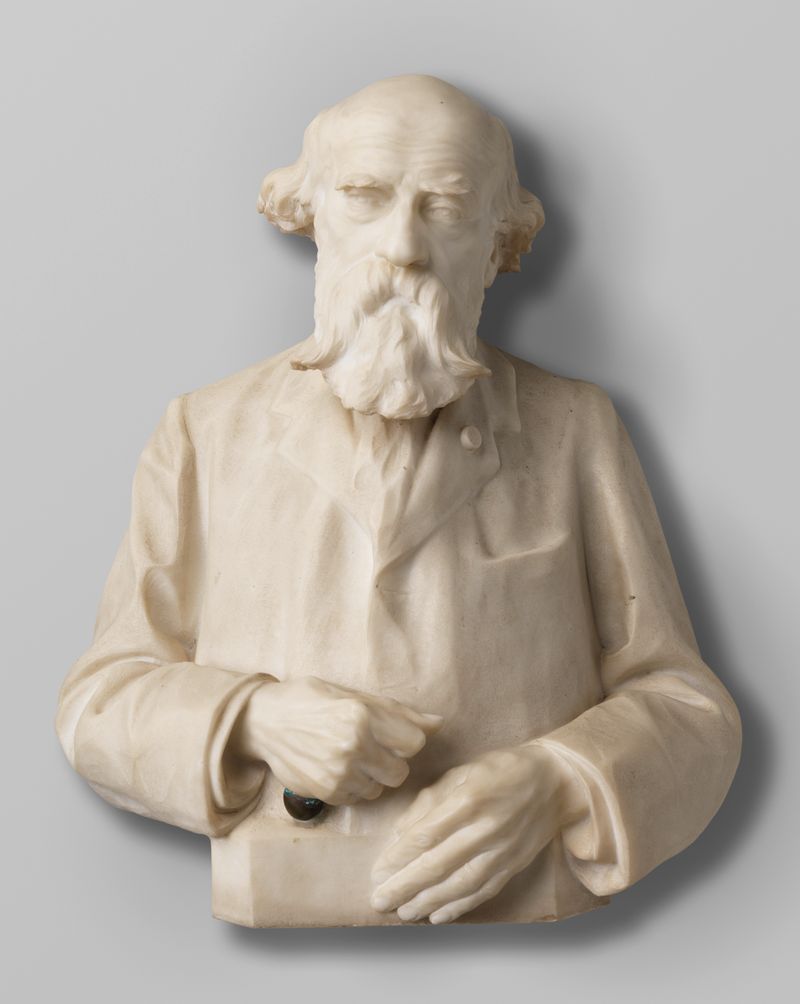
More Portrait Art
Browse all →
Las meninas
Diego Velázquez

Self-portrait with a Bandaged Ear and Pipe
Unidentified artist

Girl with a Pearl Earring
Johannes Vermeer

The Sampling Officials of the Amsterdam Drapers’ Guild, Known as ‘The Syndics’
Rembrandt van Rijn

The Hundred Guilder Print: the man seen on the back in the lower left corner
Rembrandt van Rijn

Portrait of Dr Gachet
Vincent van Gogh