
De bewening van Christus in een schrijn met zes andere voorstellingen uit het leven van Christus — History & Facts
In the haunting stillness of De bewening van Christus in een schrijn met zes andere voorstellingen uit het leven van Christus, a palpable emptiness permeates the air, echoing the weight of loss and reflection. The viewer finds themselves caught between the vividness of faith and the looming specter of mortality. Focus first on the central figure, the body of Christ, gracefully laid out and cradled in a tender embrace of muted tones. Notice how the soft light bathes His form, casting gentle shadows that evoke a sense of peace amidst sorrow.
The intricate details surrounding His lifeless body—each delicate expression and the ornate frame—draw the eye outward, guiding you to the smaller scenes, which unfold moments from His life like a visual liturgy, each imbued with its own narrative and richness. There lies a striking contrast between the serenity surrounding the deceased Christ and the emotional turmoil suggested by the figures encircling Him. The mourners’ faces are filled with grief, their gestures a blend of agony and reverence, yet all are subtly unified in their shared experience of loss. Each panel encapsulates a story of divinity intertwined with humanity, urging the viewer to ponder the ephemeral nature of life and faith amidst the backdrop of eternal hope. Created in 1507, this work emerges from the workshop of an anonymous artist known as Meester II met doodshoofd.
Working during the Northern Renaissance, a time of burgeoning humanism and exploration of the emotional power of religious themes, the artist sought to bridge the divine with the personal. The work reflects the era's characteristics, where artistry not only served a spiritual purpose but also invited introspection about human existence and the inevitability of mortality.
More Artworks by Meester II met doodshoofd
Browse all →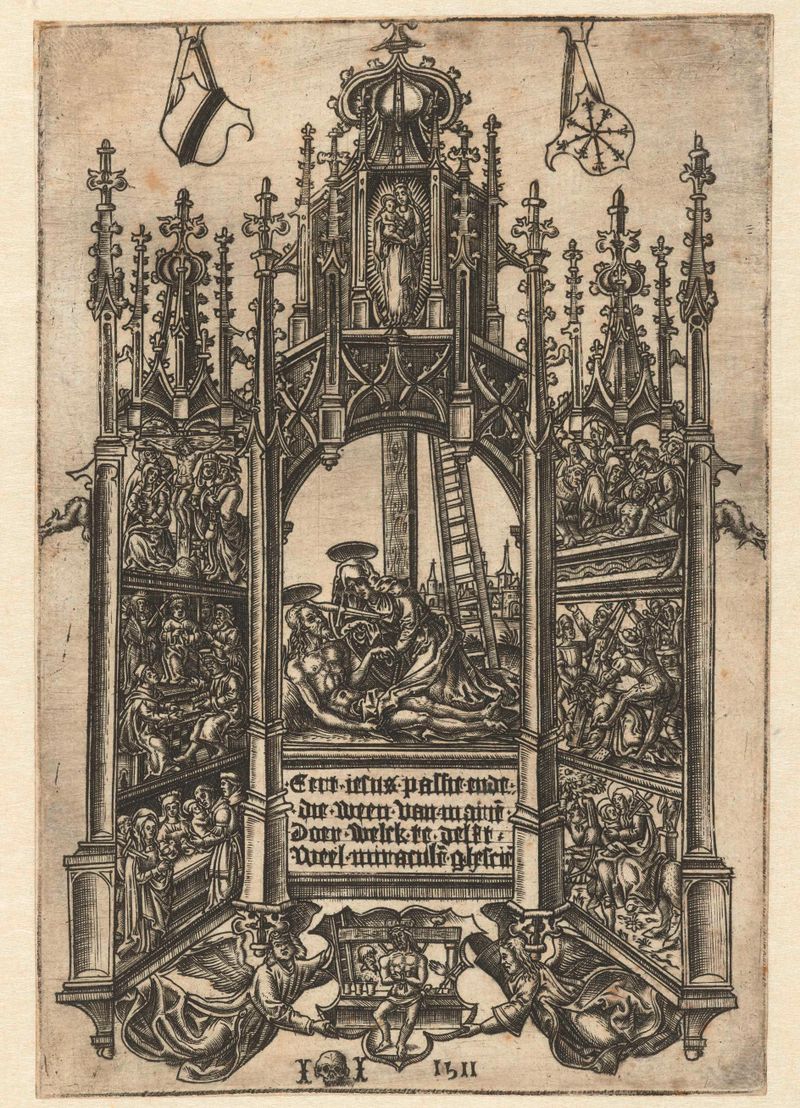
More Religious Art
Browse all →
The Return of the Prodigal Son
Rembrandt van Rijn

The Garden of Earthly Delights
El Bosco

Count Orgaz’ funeral
El Greco

The Hundred Guilder Print: the central piece with Christ preaching, the plate arched
Rembrandt van Rijn

The Descent from the Cross
Rogier van der Weyden

The return of the prodigal son
Rembrandt van Rijn