
Henry Flynt (1675-1760) — History & Facts
In a world where moments slip through our fingers like sand, art becomes our sanctuary against the relentless march of time. Focus on the striking gaze of Henry Flynt, whose confident expression seems to transcend the canvas. Notice the rich, deep colors that envelop his figure, expertly rendered by the artist. The delicate play of light across his attire deftly highlights the fine textures, drawing you in and inviting exploration of the intricate details in his clothing and the subtle shadows that contour his face.
Greenwood's meticulous attention to form and fabric captures not just a likeness but the very essence of a man poised at the intersection of duty and identity. As you delve deeper, hidden narratives unfold within the subdued palette and the dignified posture of Flynt. The juxtaposition of his calm demeanor against the backdrop hints at the complexities of status and aspiration during a time of burgeoning American identity. The painting bears silent witness to a world in flux, where the subject’s expression hints both at personal ambition and the broader historical currents shaping his reality. In the late 1740s, Greenwood was a prominent portraitist in Colonial America, navigating the cultural currents of his time.
Creating this work while residing in Boston, he was influenced by both European artistic traditions and the evolving American society around him. His portraits reflected not just individual identities, but also the shifting landscapes of power, wealth, and community in a pre-Revolutionary America.
More Artworks by John Greenwood
Browse all →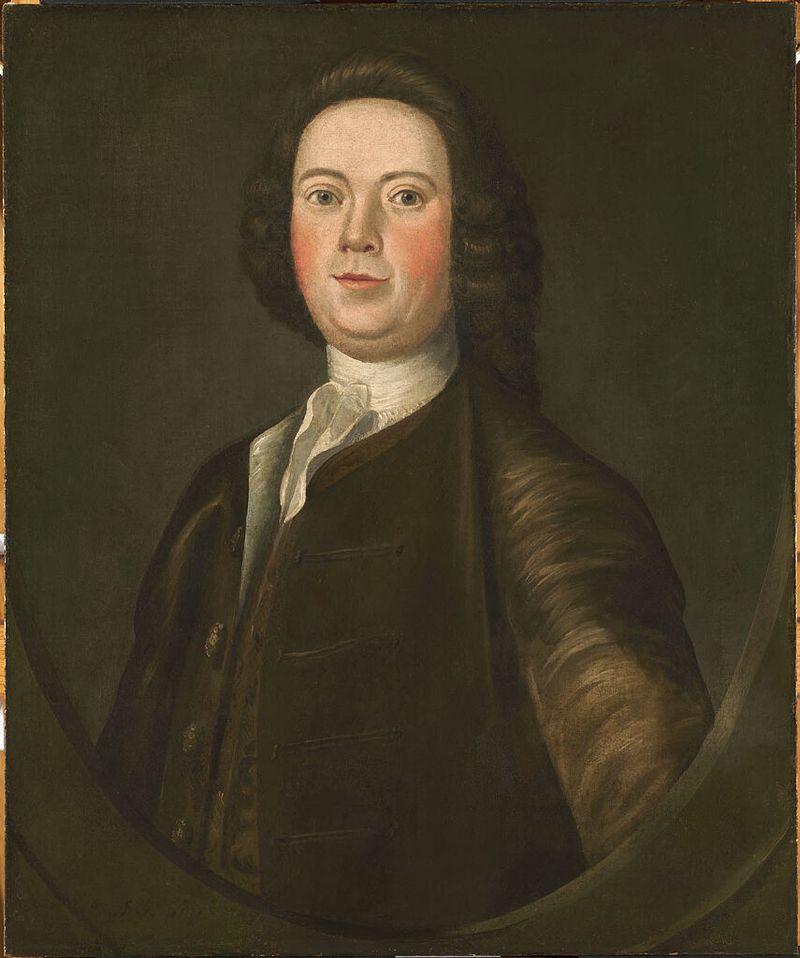

More Portrait Art
Browse all →
Las meninas
Diego Velázquez

Self-portrait with a Bandaged Ear and Pipe
Unidentified artist

Girl with a Pearl Earring
Johannes Vermeer

The Sampling Officials of the Amsterdam Drapers’ Guild, Known as ‘The Syndics’
Rembrandt van Rijn

The Hundred Guilder Print: the man seen on the back in the lower left corner
Rembrandt van Rijn

Portrait of Dr Gachet
Vincent van Gogh