
Henry Willard Williams (1821-1895) — History & Facts
In the quietude of artistry, where paint whispers secrets, the act of creation transcends mere representation, inviting the soul to linger in the delicate interplay of existence. Focus on the gentle contours of the subject's face, where light dances across the skin, revealing an introspective gaze that seems to pierce through time. The subtle play of shadow and light, enhanced by the artist's deft brushwork, draws your eye to the expressive eyes, reflecting a depth of character. The background, a muted blend of earth tones, humbly supports the figure, further emphasizing the centrality of the subject in this intimate portrayal. Every detail matters—the soft textures of fabric, the precise placement of the hands, which convey both strength and vulnerability.
This duality hints at the complexities of human experience, suggesting that transcendence often arises from the most ordinary moments of contemplation. The warm color palette evokes a sense of nostalgia, as if capturing a fleeting glimpse into a life filled with stories untold. In this stillness, there lies a profound connection to the past, bridging the gap between the viewer and the subject. In 1888, Wagner painted this portrait during a time when American art was transitioning toward a more personal and emotional expression.
It was a period marked by a growing interest in realism and portraiture, as artists sought to capture the essence of their subjects amidst a backdrop of industrial change. Wagner, having honed his skills in Europe, returned to America to reflect these influences within the context of his own cultural landscape, seeking to infuse his work with the intimacy and transcendence that characterize this poignant piece.
More Artworks by Jacob Dutweiler Wagner
Browse all →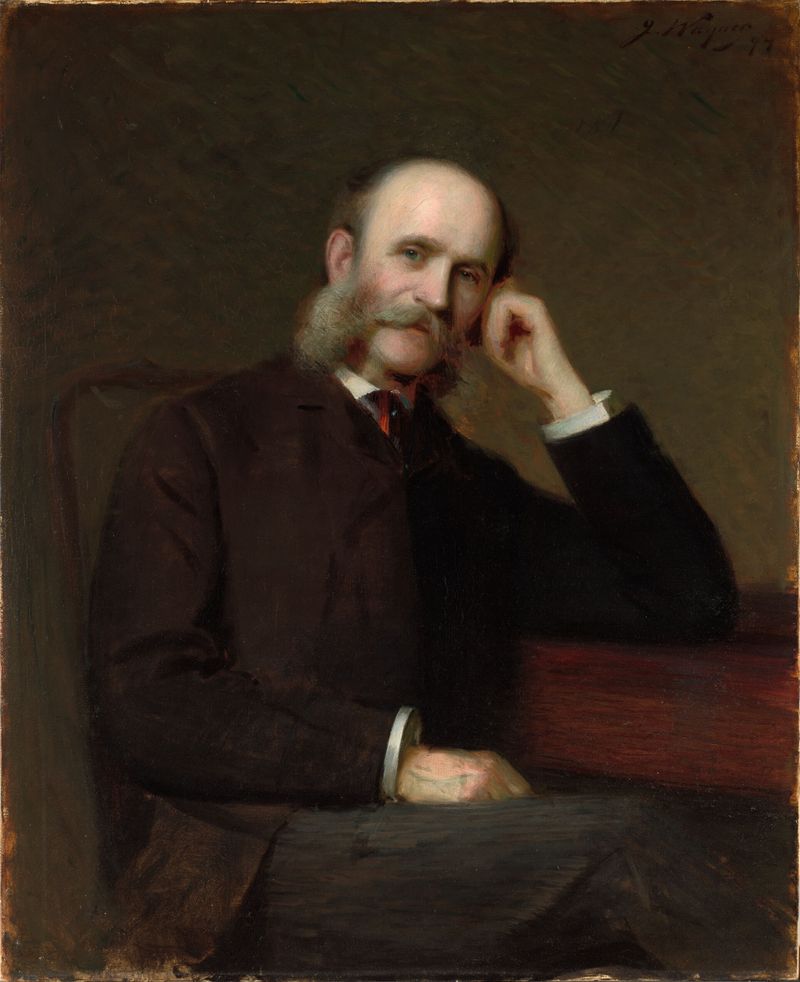
More Portrait Art
Browse all →
Las meninas
Diego Velázquez

Self-portrait with a Bandaged Ear and Pipe
Unidentified artist

Girl with a Pearl Earring
Johannes Vermeer

The Sampling Officials of the Amsterdam Drapers’ Guild, Known as ‘The Syndics’
Rembrandt van Rijn

The Hundred Guilder Print: the man seen on the back in the lower left corner
Rembrandt van Rijn

Portrait of Dr Gachet
Vincent van Gogh