
Jacques Journu, called Abbé Journu-Dumoncey (1733-1791) — History & Facts
Is this a mirror — or a memory? The essence of a person can be as elusive as the reflection cast by a fleeting light, shimmering and shifting with time. Look to the figure positioned slightly off-center, cloaked in deep, rich hues that contrast with the light background. Notice how the artist has skillfully captured the texture of the fabric, from the intricate lace at the collar to the soft folds of the garment. The gentle brushstrokes of ochre and umber create shadows that add depth, while a soft luminosity illuminates the subject's contemplative expression, inviting the viewer to ponder what lies behind those eyes. As you study the painting further, subtle contrasts emerge, revealing deeper layers of meaning.
There is a tension between the serene demeanor of the Abbé and the complexities of his era, reflected in the intricacies of his attire and the subtleties of his expression. This portrait transcends mere likeness; it embodies the nuances of identity and the interplay between the external appearance and internal reflection. The cloak's dark fabric seems to evoke secrecy, while the light gently bathes his visage, hinting at enlightenment against a backdrop of turbulent times. Jean-Baptiste Perronneau painted this portrait around 1769, during a period marked by a shift in artistic focus towards individual character and psychological insight.
It was a time when artists were increasingly exploring themes of identity, intellect, and societal roles, reflecting both personal narratives and broader cultural dynamics. Perronneau's work stands at the intersection of portraiture and introspection, capturing not just the likeness of the Abbé but the very spirit of his epoch.
More Artworks by Jean-Baptiste Perronneau
Browse all →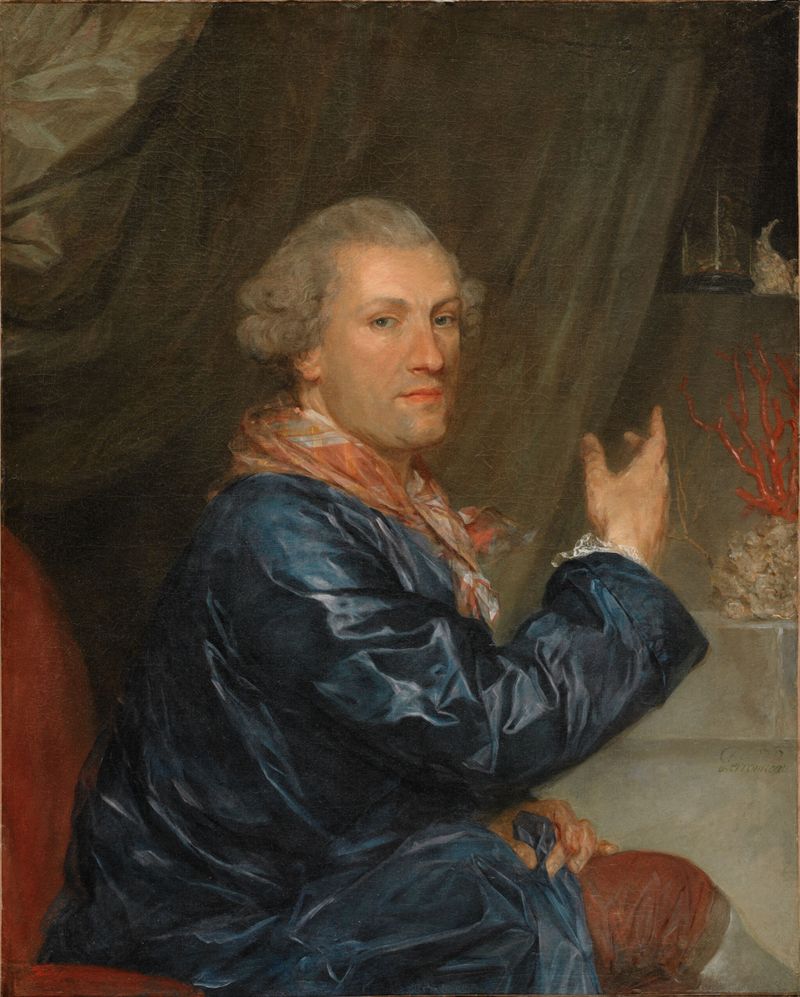
More Portrait Art
Browse all →
Las meninas
Diego Velázquez

Self-portrait with a Bandaged Ear and Pipe
Unidentified artist

Girl with a Pearl Earring
Johannes Vermeer

The Sampling Officials of the Amsterdam Drapers’ Guild, Known as ‘The Syndics’
Rembrandt van Rijn

The Hundred Guilder Print: the man seen on the back in the lower left corner
Rembrandt van Rijn

Portrait of Dr Gachet
Vincent van Gogh