
James Smith (1804-1877) — History & Facts
In this portrayal of a man, the layers of paint reveal not just a face but a testament to faith and resilience. Look to the center of the canvas where the subject stands, a figure poised in quiet contemplation. The rich, earthy tones of his attire suggest a humble existence, while the delicate interplay of light and shadow on his face captures the weight of experience. Notice how the subtle highlights on his forehead and cheekbones lend a sense of depth, evoking a silent dialogue between the viewer and the man.
The background, a soft blur of greens and browns, enhances the focus on him, inviting an intimate connection with his solemn expression. The tension between light and dark conveys the duality of hope and despair; it’s as if his eyes hold the stories of countless struggles. The slight furrow in his brow hints at the burdens he carries, yet the gentle tilt of his head suggests a quiet, steadfast faith. Every brushstroke resonates with the notion that his journey is not solitary but rather intertwined with the larger tapestry of human experience, reflecting the communal nature of belief and endurance. In 1855, Gray painted this insightful portrait during a period when American art was beginning to embrace more personal and introspective themes.
Living in Philadelphia, he was immersed in a city vibrant with artistic exploration, yet grappling with the socio-political challenges of the time. This work encapsulates a shift toward portraying individual character and emotion, marking a significant evolution in the artist's career and the wider artistic landscape.
More Artworks by Henry Peters Gray
Browse all →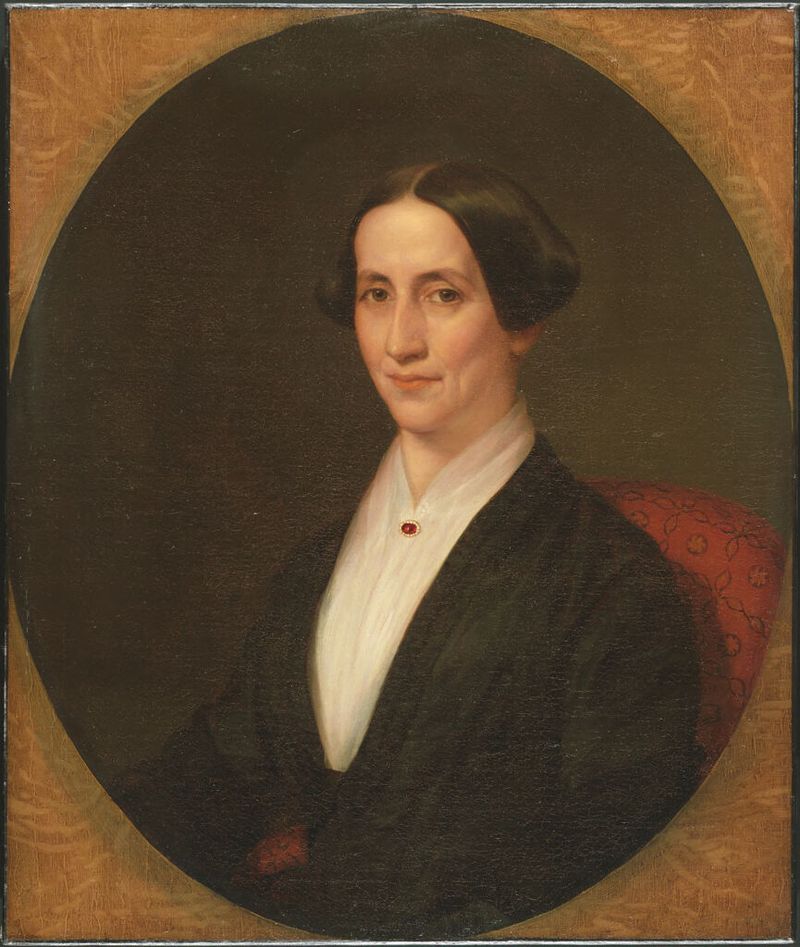
More Portrait Art
Browse all →
Las meninas
Diego Velázquez

Self-portrait with a Bandaged Ear and Pipe
Unidentified artist

Girl with a Pearl Earring
Johannes Vermeer

The Sampling Officials of the Amsterdam Drapers’ Guild, Known as ‘The Syndics’
Rembrandt van Rijn

The Hundred Guilder Print: the man seen on the back in the lower left corner
Rembrandt van Rijn

Portrait of Dr Gachet
Vincent van Gogh