
Jedidiah Morse (1761-1826) — History & Facts
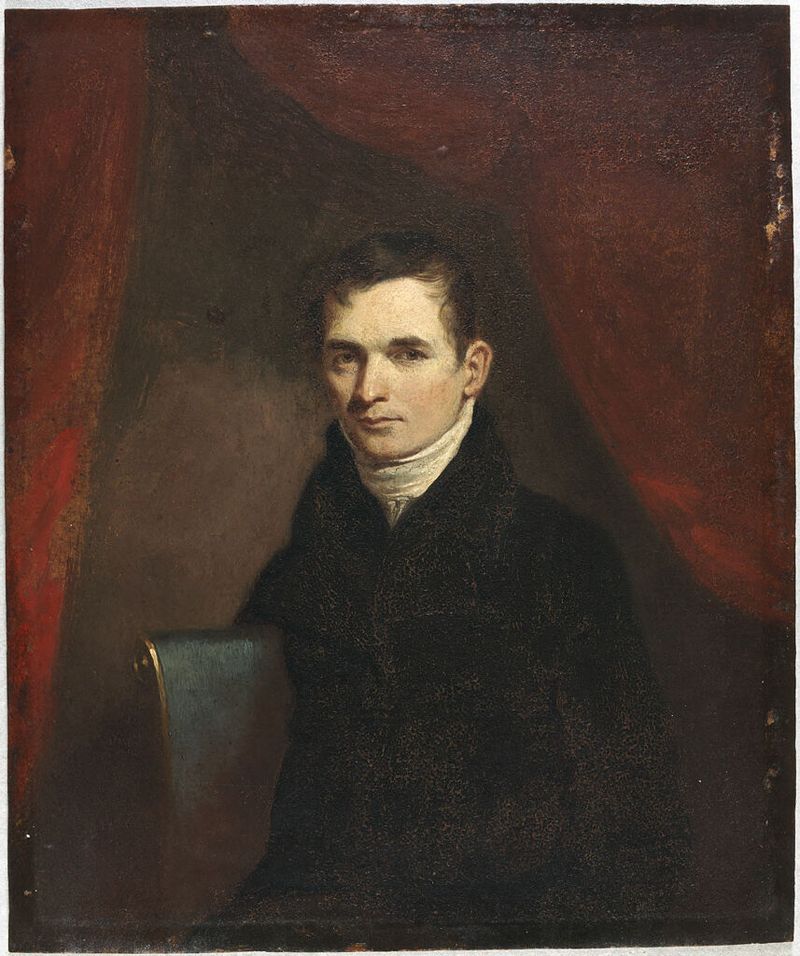
Is this a mirror — or a memory? The ethereal quality of the gaze in this portrait evokes an unsettling blend of reverence and fear, as if the viewer stands on the precipice of unveiling hidden truths. Focus on the piercing eyes of the subject, drawing you in with a depth that seems to transcend the canvas. Notice how the soft, yet deliberate brushstrokes create a warmth in the skin tones, contrasting with the dark background that envelops the figure. The rich hues of the fabric draping around his shoulders suggest nobility and knowledge, while also hinting at an underlying fragility.
It's as if the artist has captured not just the likeness, but the very essence of the man, inviting us to decipher the complexities within. Within the details lies a narrative fraught with tension. The way the light plays upon his forehead could symbolize enlightenment or the burdens of intellectual pursuit, while the shadowed areas evoke a sense of encroaching doubt. The careful rendering of the hands, poised in a moment of stillness, communicates both strength and vulnerability, illustrating the duality of the figure’s existence as a learned man and a mortal being facing the fragility of life and legacy. Samuel Finley Breese Morse painted this notable portrait in 1823, during a transformative period when he was also establishing himself as a pioneer of the telegraph.
At this time, the art world was experiencing shifts toward realism and a growing interest in capturing the human condition. His relationship with the subject, a prominent geographer and clergyman, was not only one of admiration but also one of exploration into the minds that shaped American thought, reflecting the intellectual currents of an evolving nation.
More Artworks by Samuel Finley Breese Morse
Browse all →
More Portrait Art
Browse all →
Las meninas
Diego Velázquez

Self-portrait with a Bandaged Ear and Pipe
Unidentified artist

Girl with a Pearl Earring
Johannes Vermeer

The Sampling Officials of the Amsterdam Drapers’ Guild, Known as ‘The Syndics’
Rembrandt van Rijn

The Hundred Guilder Print: the man seen on the back in the lower left corner
Rembrandt van Rijn

Portrait of Dr Gachet
Vincent van Gogh