
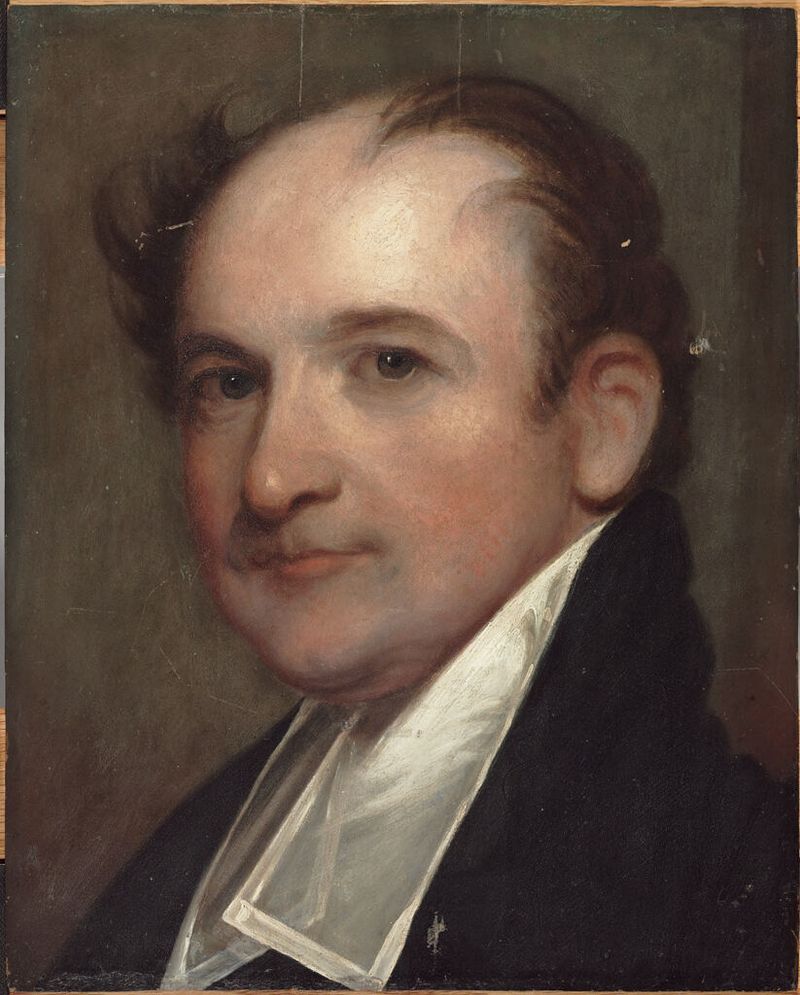
John Thornton Kirkland (1770-1840), after Gilbert Stuart — History & Facts
In a world where time slips away like grains of sand, how do we capture the essence of a moment forever lost? Look closely at the subject’s piercing gaze, set against a softly muted background that recalls fading memories. Notice how the light delicately outlines the contours of the face, accentuating the subtle textures and the furrows of emotion etched into the skin. The rich, warm tones of the portrait evoke a sense of intimacy, pulling the viewer gently into the depth of the character before them, inviting contemplation of their life, thoughts, and legacy. Hidden within the folds of the fabric lies a story woven with nostalgia—a longing for days gone by.
The positioning of the figure, slightly turned yet direct, creates a dynamic tension between presence and absence, as if he is both engaged and reflecting upon his past. The brushwork, though precise, carries an organic quality, suggesting a dance between memory and reality, where each detail contributes to a collective nostalgia, hinting at the weight of history and the passage of time. J. Whitfield created this portrait around 1828-1829, during a period of growing interest in American portraiture that sought to establish national identity.
Emerging from the influence of Gilbert Stuart, a renowned portraitist, Whitfield aimed to honor the legacy of his subject, John Thornton Kirkland, who was an influential figure in education and philosophy. This painting reflects the convergence of artistic ambition and cultural aspirations in early 19th-century America, as Whitfield captured not just a likeness, but the spirit of a man who shaped the minds of his time.
More Artworks by J. Whitfield
Browse all →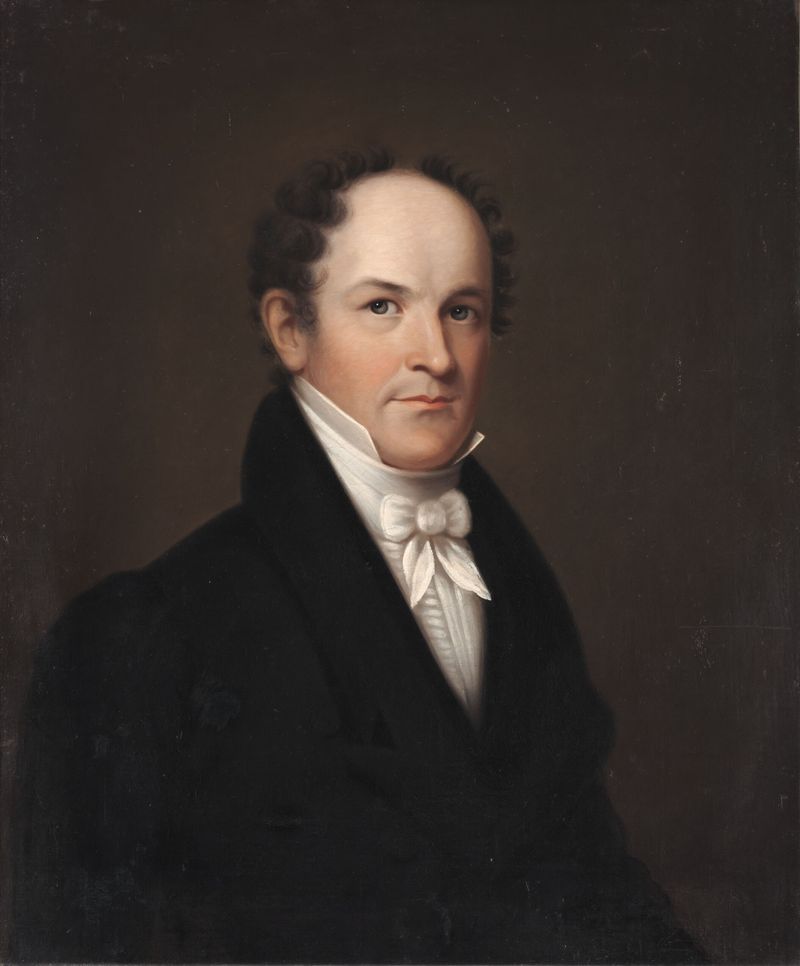
More Portrait Art
Browse all →
Las meninas
Diego Velázquez

Self-portrait with a Bandaged Ear and Pipe
Unidentified artist

Girl with a Pearl Earring
Johannes Vermeer

The Sampling Officials of the Amsterdam Drapers’ Guild, Known as ‘The Syndics’
Rembrandt van Rijn

The Hundred Guilder Print: the man seen on the back in the lower left corner
Rembrandt van Rijn

Portrait of Dr Gachet
Vincent van Gogh