
Judith Allijn (d 1702), Wife of Harmen Lijnslager — History & Facts
Within the frame of Judith Allijn (d 1702), Wife of Harmen Lijnslager, a woman of quiet strength stands poised between the realms of duty and desire, her fate intricately woven into the threads of history and identity. Look to the left, where Judith’s serene expression invites contemplation. Her soft, yet determined gaze captures a moment of introspection, framed by the rich texture of her dark attire. Notice how the light delicately illuminates the fabric, revealing subtle hints of color within the shadows, suggesting the layers of her life and the expectations placed upon her.
The artist’s careful brushwork creates an intimate connection, drawing the viewer into her world, while the background remains a gentle blur, focusing attention solely on her presence. Within the folds of her garment lies the tension of her dual existence. The deep, muted palette speaks to the somber realities of her life, hinting at societal constraints and personal sacrifices. Yet, the delicate lacing of her collar hints at a whisper of rebellion — a fine line between submission and strength.
Each element of the composition, from her poised posture to the intricacies of her jewelry, reflects a narrative of resilience, suggesting that destiny is both a burden and a choice. In 1699, Jan van Haensbergen painted this work amidst a flourishing era of portraiture in the Dutch Golden Age. He sought to capture not only the likeness of noblewomen but their intricate identities as well. The period was marked by evolving social norms and an increasing emphasis on individualism, which affected the portrayal of women in art.
Thus, this painting embodies a moment in time when personal stories began to emerge within the broader tapestry of history.
More Artworks by Jan van Haensbergen
Browse all →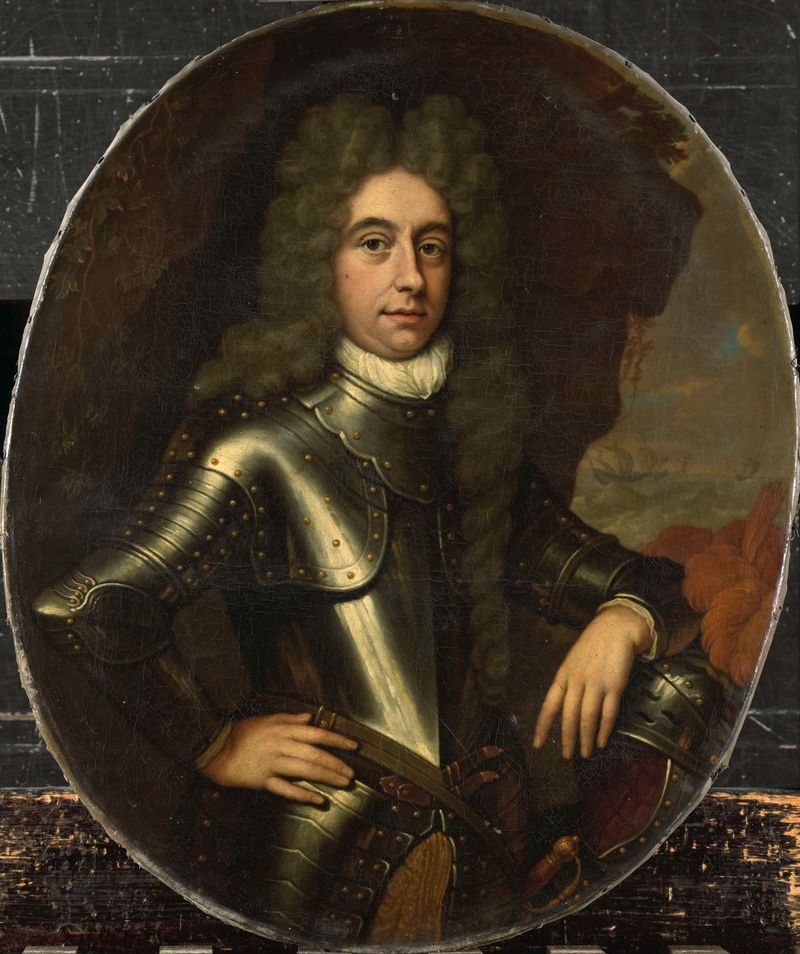
More Portrait Art
Browse all →
Las meninas
Diego Velázquez

Self-portrait with a Bandaged Ear and Pipe
Unidentified artist

Girl with a Pearl Earring
Johannes Vermeer

The Sampling Officials of the Amsterdam Drapers’ Guild, Known as ‘The Syndics’
Rembrandt van Rijn

The Hundred Guilder Print: the man seen on the back in the lower left corner
Rembrandt van Rijn

Portrait of Dr Gachet
Vincent van Gogh