
Judith met het hoofd van Holofernes — History & Facts
What if beauty was never meant to be finished? In the quiet tension of Judith met het hoofd van Holofernes, this question hangs in the air, inviting contemplation of victory intertwined with vulnerability. Look closely at the central figure of Judith, her poised grip on Holofernes’ severed head drawing the eye immediately. Notice how the light illuminates her alabaster skin, contrasting sharply with the deep crimson of her flowing robes, evoking a sense of both strength and sorrow. The background, shrouded in darkness, heightens the drama, allowing her radiance to dominate the composition.
Each brushstroke serves to accentuate the emotional complexity of the moment, where triumph dances precariously with the weight of consequence. Within this striking depiction lies a profound dichotomy. Judith embodies courage and resolve while simultaneously facing the haunting aftermath of her decision. The severed head, rendered with meticulous detail, serves as a grim reminder of the price of heroism.
The interplay of light and shadow enhances this tension, suggesting that the boundaries between savior and sinner are often blurred. It prompts reflection on the true nature of beauty and its haunting impermanence, as each viewer grapples with their interpretation of success and sacrifice. Created between 1500 and 1520, this artwork emerged during a time of social and political upheaval in Europe. Monogrammist RR was part of the Northern Renaissance, a movement characterized by a focus on realism and emotional depth.
The artist, working in an era marked by religious conflict and shifting power dynamics, captured a moment that resonates with the struggles of humanity, encapsulating both the strength and fragility of the human spirit.
More Artworks by Monogrammist RR
Browse all →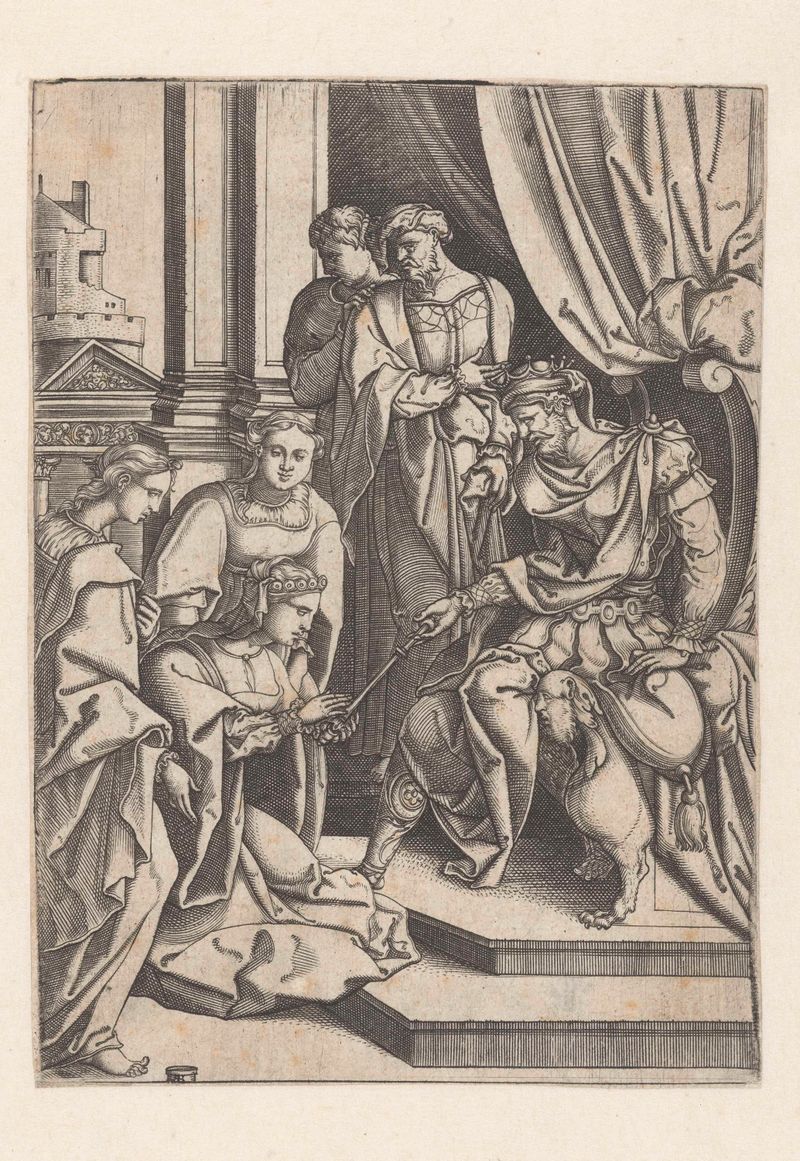
More Religious Art
Browse all →
The Return of the Prodigal Son
Rembrandt van Rijn

The Garden of Earthly Delights
El Bosco

Count Orgaz’ funeral
El Greco

The Hundred Guilder Print: the central piece with Christ preaching, the plate arched
Rembrandt van Rijn

The Descent from the Cross
Rogier van der Weyden

The return of the prodigal son
Rembrandt van Rijn