
Leonard W. Collmann (1816-1881) — History & Facts
Where does light end, and longing begin? In the delicate interplay of shadow and illumination, we find ourselves drawn into an exploration of divinity and desire. Look closely at the ethereal glow emanating from the central figure, whose upturned gaze and gently clasped hands evoke a yearning for the heavens. The soft, warm palette of golds and whites contrasts with the coolness of the background, inviting the eye to wander between the divine and the earthly. Notice how the meticulous brushwork captures the texture of the fabric, suggesting a weight of reverence and the implications of devotion, while the play of light accentuates the figure’s humble posture. Beneath the surface, hidden meanings ripple through the artwork.
The upward gaze suggests a hope that transcends the physical realm, while the surrounding darkness hints at the struggles we face in our search for the divine. The contrast of light and shadow plays out a narrative of faith amidst doubt, serving as a reminder that longing is often birthed in the depths of our despair. In 1854, Alfred George Stevens painted this work during a time when the Victorian era was thriving, marked by intense religious sentiment and the emergence of new artistic movements. Living in London, he was surrounded by the bustling artistic community that sought to express deeper emotional truths through their craft.
This painting reflects not only Stevens' personal journey but also the broader cultural exploration of spirituality during an era poised on the brink of modernity.
More Artworks by Alfred George Stevens
Browse all →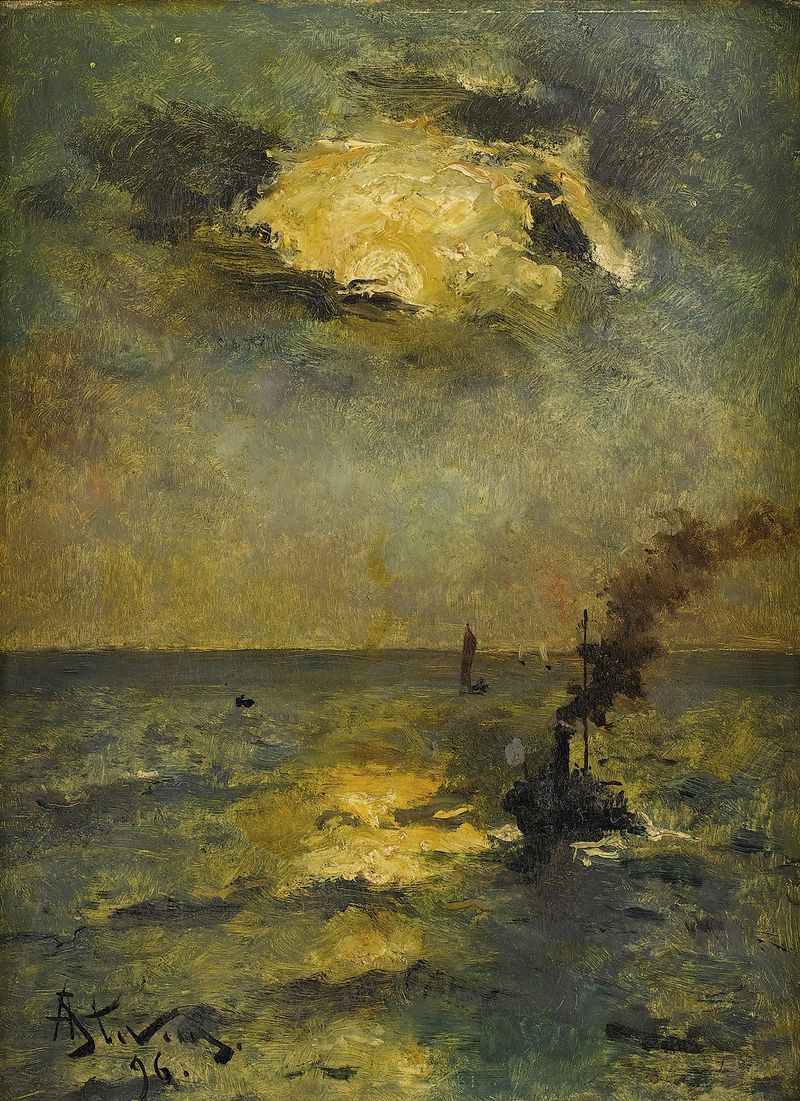
More Religious Art
Browse all →
The Return of the Prodigal Son
Rembrandt van Rijn

The Garden of Earthly Delights
El Bosco

Count Orgaz’ funeral
El Greco

The Hundred Guilder Print: the central piece with Christ preaching, the plate arched
Rembrandt van Rijn

The Descent from the Cross
Rogier van der Weyden

The return of the prodigal son
Rembrandt van Rijn