
Madonna met kind — History & Facts
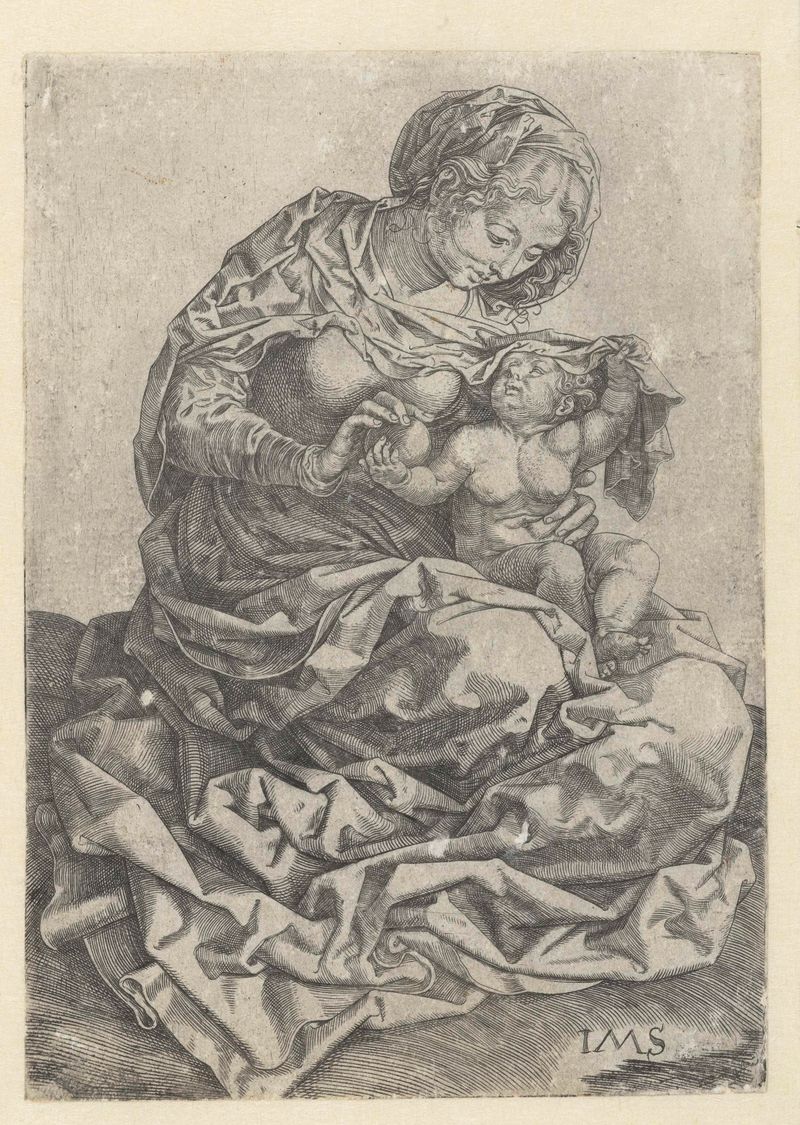
Within Madonna met Kind, fear lingers just beneath the surface, captured in the tender yet tense embrace of mother and child. The delicate rendering of their expressions speaks volumes, hinting at the fragility of safety and love in an uncertain world. Look to the left, where the Madonna cradles her infant son, the warm light illuminating her serene face and casting soft shadows that outline their figures. Notice the rich hues of deep blues and vibrant reds, which not only elevate the figures but also evoke a sense of both majesty and vulnerability.
The intricate details of their garments and the surrounding ethereal landscape draw you in, inviting contemplation on the sacred bond shared between them. Yet, amid the reverence, small elements whisper of unease; the child’s wide eyes reflect both innocence and an unspoken apprehension. The contrasting colors of the background, with darker undertones creeping in, suggest a world fraught with danger, hinting at the fears that accompany motherhood. This duality of protection and peril is palpable, reminding us that love often exists in the shadow of anxiety. Jan Gossart painted this work in 1522 during a time when European art was transitioning from the Gothic style to the Renaissance.
In the Netherlands, he was influenced by both classical themes and emerging humanist ideas. As he navigated these artistic shifts, Gossart’s exploration of religious subjects, such as the maternal relationship depicted here, reflected broader societal tensions and the complexities of human emotion during an era marked by change.
More Artworks by Jan Gossart
Browse all →


More Religious Art
Browse all →
The Return of the Prodigal Son
Rembrandt van Rijn

The Garden of Earthly Delights
El Bosco

Count Orgaz’ funeral
El Greco

The Hundred Guilder Print: the central piece with Christ preaching, the plate arched
Rembrandt van Rijn

The Descent from the Cross
Rogier van der Weyden

The return of the prodigal son
Rembrandt van Rijn