
Maria met kind en twee heiligen — History & Facts
When did color learn to lie? What happens when the divine is draped in earthly tones, beckoning us to question the truths we hold dear? Look to the center, where the serene visage of a mother and child radiates warmth amid cool, shadowed hues. The figures are framed by ethereal saints, their garments adorned in rich blues and vibrant reds that command attention. Notice how the light delicately illuminates the mother’s face, casting a soft glow that contrasts with the solemnity surrounding her, inviting contemplation on the nature of divinity and nurture. The tension between the heavenly and the mundane unfolds through small details: the child's hand reaching instinctively toward the saints, an innocent bridge between the human and the celestial.
The interaction of color plays a critical role — while the saints boast vibrant registers, their expressions are inscrutable, rendering them both guardians and spectators. This juxtaposition ignites a dialogue on faith, representation, and the duality of existence; the divine is not always resplendent but can also wear the vestiges of vulnerability. Created in 1519, this work emerged during a time of great transformation in Northern Renaissance art. The artist, known as the Monogrammist L, was navigating his own identity amid a shifting landscape of artistic expression.
The emphasis on detail and emotional resonance reflected the broader trends of the era, characterized by a growing devotion to realism and humanism. As such, the piece resonates with the cultural complexities of its time, capturing both the weight of spiritual aspiration and the tender reality of maternal love.
More Artworks by Monogrammist L (graveur, Nederland)
Browse all →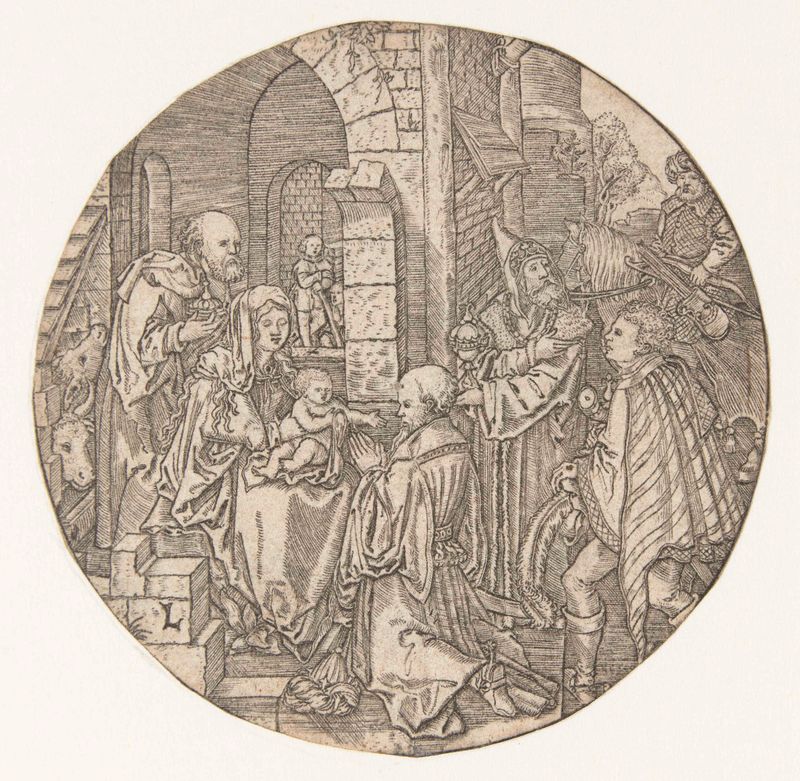


More Religious Art
Browse all →
The Return of the Prodigal Son
Rembrandt van Rijn

The Garden of Earthly Delights
El Bosco

Count Orgaz’ funeral
El Greco

The Hundred Guilder Print: the central piece with Christ preaching, the plate arched
Rembrandt van Rijn

The Descent from the Cross
Rogier van der Weyden

The return of the prodigal son
Rembrandt van Rijn