
Mary Smith Clark (Mrs. Benjamin Clark) (1782-1858) — History & Facts
Can beauty exist without sorrow? In Asahel Lynde Powers’ Mary Smith Clark (Mrs. Benjamin Clark), the answer lingers hauntingly between the serene features and the depth of her gaze. Focus on her delicate face, framed by a cascade of soft curls, each strand capturing light like a whisper of hope. Notice how her deep-set eyes, though captivating, reflect an underlying melancholy that transcends the canvas.
The muted palette enhances the emotional weight; soft browns and creams create a tender yet somber atmosphere, inviting you to ponder both the external beauty and the internal struggle of the portrayed subject. Delve deeper into the intricate details — her hands, clasped gently in her lap, reveal a tension between composure and vulnerability. The intricate lace of her gown, while elegant, suggests the confinement of societal expectations, contrasting sharply with the raw emotion in her expression. This duality evokes an acknowledgment of the complexities of life, suggesting that grief often accompanies beauty, enriching its significance. Created in 1840, the portrait emerged during a pivotal time in American art, as artists began to explore more intimate depictions of their subjects.
Powers, having established himself in New York, was known for his masterful portraits that captured not just likeness but also the essence of character. At this moment, the art world was shifting towards realism, and Powers harnessed this energy to evoke poignant narratives like that of Mrs. Clark, whose beauty is inextricably linked with the sorrows of her existence.
More Artworks by Asahel Lynde Powers
Browse all →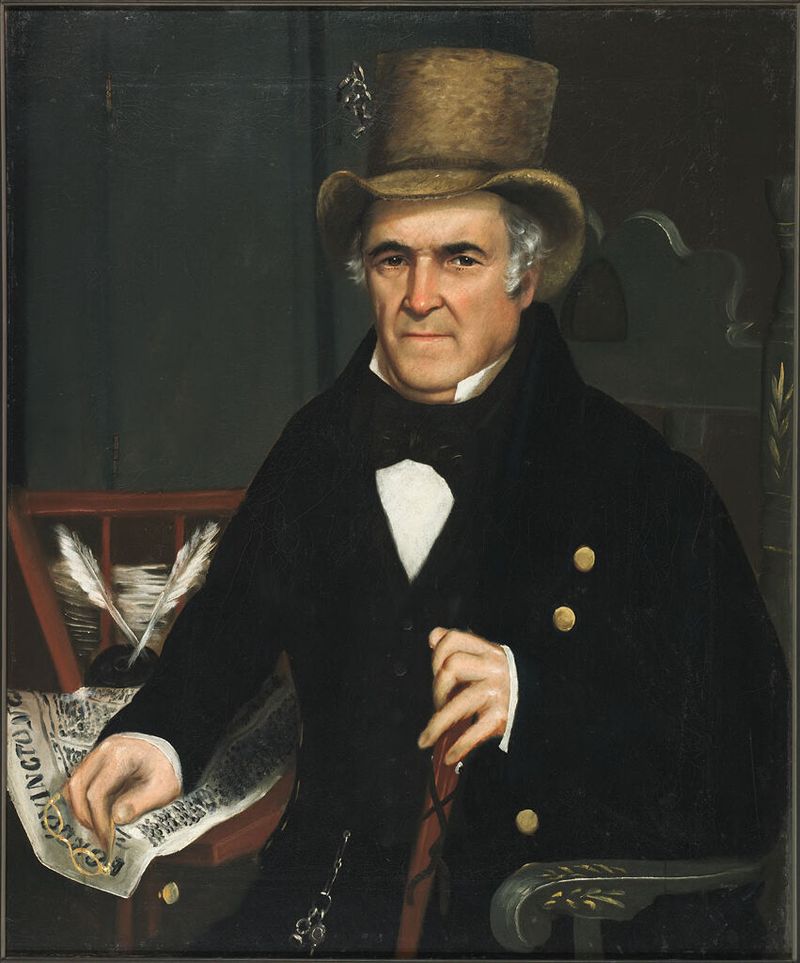
More Portrait Art
Browse all →
Las meninas
Diego Velázquez

Self-portrait with a Bandaged Ear and Pipe
Unidentified artist

Girl with a Pearl Earring
Johannes Vermeer

The Sampling Officials of the Amsterdam Drapers’ Guild, Known as ‘The Syndics’
Rembrandt van Rijn

The Hundred Guilder Print: the man seen on the back in the lower left corner
Rembrandt van Rijn

Portrait of Dr Gachet
Vincent van Gogh