Plaquette van de Merkelsche Tafelaufsatz — History & Facts
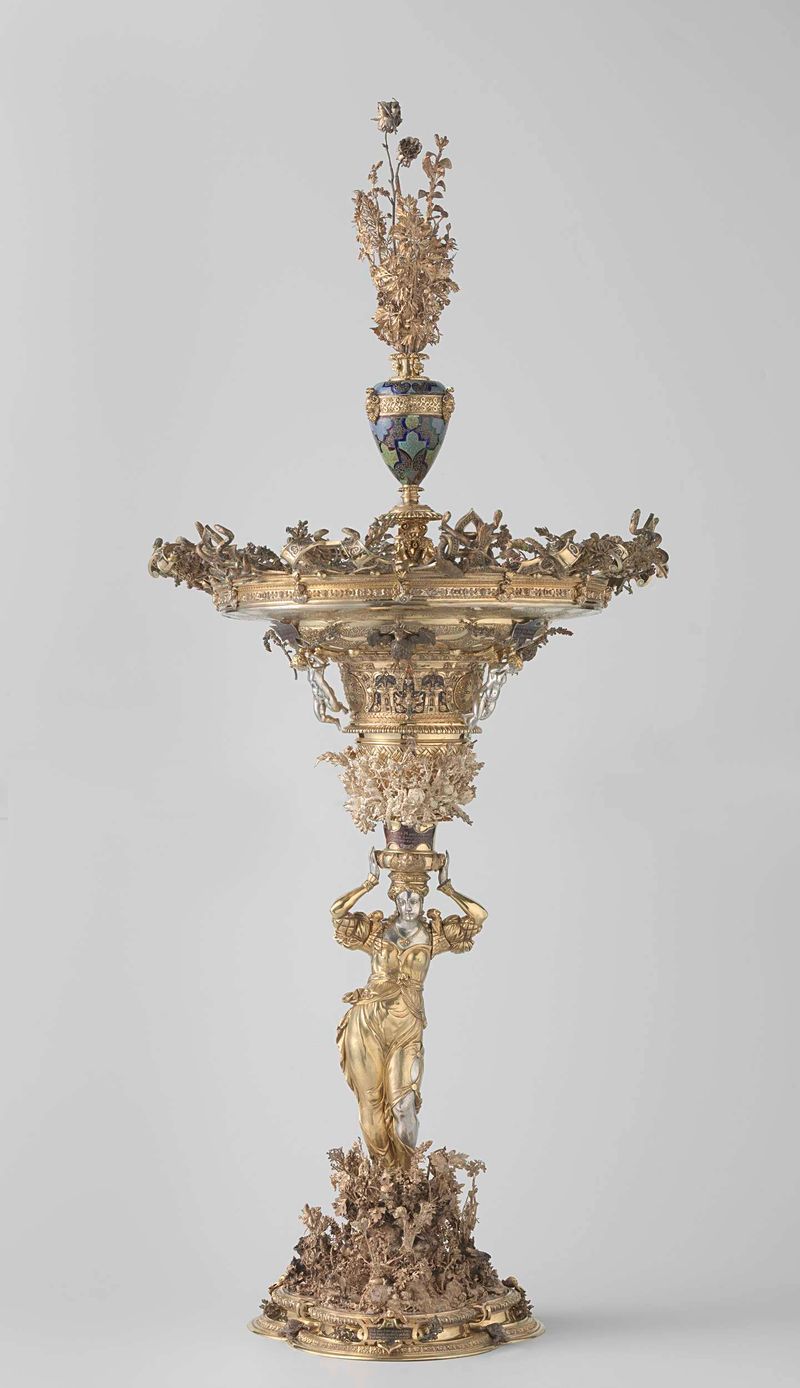
In Plaquette van de Merkelsche Tafelaufsatz, the delicate craftsmanship invites us to linger, yet a sense of yearning pervades the ornate details. Each curve and contour, while aesthetically pleasing, whispers of longing—a bittersweet reminder of transience and the weight of beauty itself. Begin by examining the intricate figures that dance across the surface. Look closely at the central motif, where a pair of figures are entwined in a timeless embrace.
Notice how the gilded finish catches the light, transforming shadows into glimmers that highlight the artistry of the piece. The deep relief allows for a tactile experience, beckoning you to trace the delicate lines with your fingers, embodying the interplay between sight and touch, echoing the fragility of desire. Beneath the opulence lies a deeper layer of meaning. The tension between the lavish gold and the mournful expressions on the figures' faces evokes a simultaneous celebration and lamentation of love.
Here, beauty becomes a vessel for unfulfilled dreams, as if the artist encapsulated both the joy of connection and the sorrow of inevitable separation. This duality invites introspection, calling forth reflections on our own relationships and the beauty that often hides pain. In 1549, Wenzel Jamnitzer crafted this masterpiece during a period of artistic innovation in the Renaissance. As a prominent goldsmith and engraver based in Nuremberg, he was deeply involved in the thriving art scene of the time, marked by both spiritual exploration and humanistic ideals.
The creation of this work coincided with a burgeoning appreciation for intricate designs in decorative arts, reflecting his status and the cultural currents that surrounded him.