
Portrait of a Gentleman — History & Facts
In Portrait of a Gentleman, the essence of chaos lies just beneath the surface of the meticulously crafted exterior. Here, the man’s stoic expression captures a moment suspended between calm and turmoil, reminding us of the complexities lurking in the human experience. Look closely at the gentleman's eyes, where an unsettling depth reveals both strength and vulnerability. Notice how the dark, rich colors envelop him, contrasting with the lighter hues that illuminate his figure, creating a tension between isolation and presence.
The texture of the fabric in his attire, rendered with precise brushwork, whispers tales of a life lived amidst societal upheaval, while the background fades into an ambiguous abstraction that hints at the chaos of his time. Beneath the surface, the painting reveals layers of emotional tension—a struggle between societal expectations and personal identity. The gentleman’s rigid posture suggests a conflict between duty and desire, while the shadows creeping around him symbolize the chaos of the world outside his controlled demeanor. This duality invites viewers to ponder their own internal battles, suggesting that behind every confident exterior lies a complex narrative. In 1806, during a period marked by political unrest and changing societal norms, the artist crafted this piece in a rapidly evolving artistic landscape.
Mitchell, influenced by the Romantic movement, sought to capture the essence of individual experience in a world fraught with uncertainty. The portrait stands as a testament not only to the subject but to the turbulent yet transformative era in which it was created.
More Portrait Art
Browse all →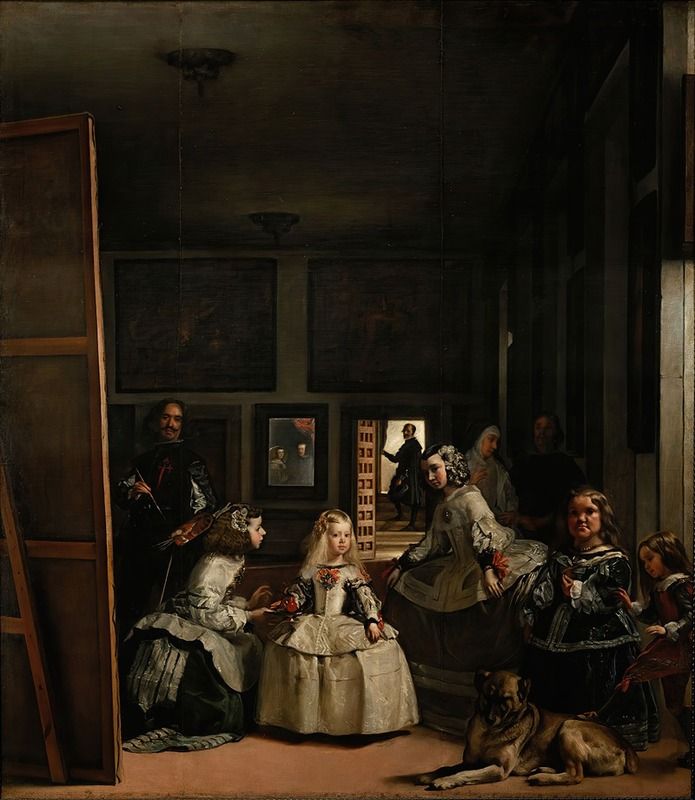
Las meninas
Diego Velázquez

Self-portrait with a Bandaged Ear and Pipe
Unidentified artist
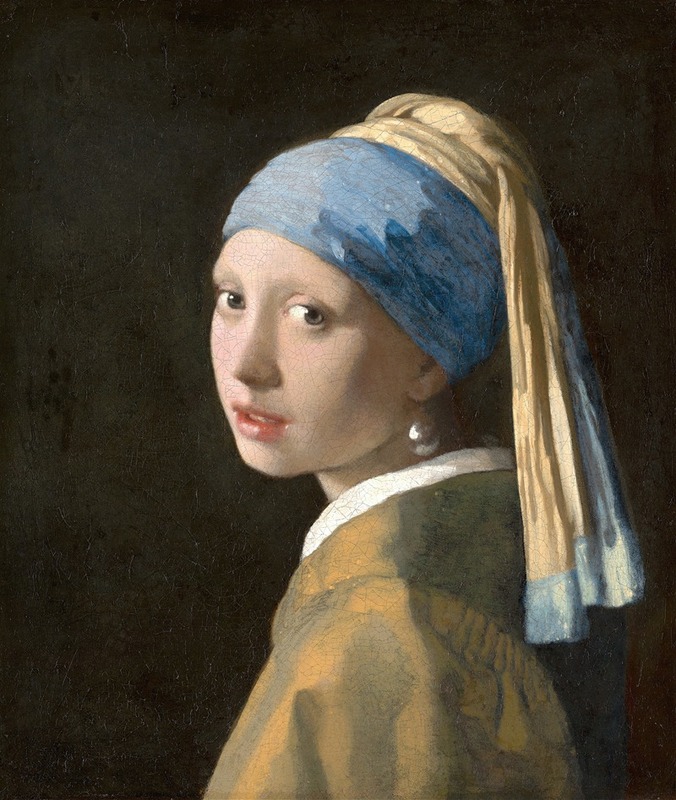
Girl with a Pearl Earring
Johannes Vermeer

The Sampling Officials of the Amsterdam Drapers’ Guild, Known as ‘The Syndics’
Rembrandt van Rijn

The Hundred Guilder Print: the man seen on the back in the lower left corner
Rembrandt van Rijn

Portrait of Dr Gachet
Vincent van Gogh