
Portrait of a Young Woman — History & Facts
This sentiment resonates deeply in the world of portraiture, where the delicate balance between reality and illusion often reveals hidden truths. Look to the left at the luminous face of the young woman, her soft expression captured in tender detail. The artist employs a muted palette—rich browns, gentle creams, and subtle greens—to frame her serene features, drawing the eye directly to her luminous skin and the glint in her eyes. Notice the play of light that caresses her cheek, almost as if it were an intimate whisper, while her dark, flowing hair adds a striking contrast, grounding her ethereal presence.
The composition carefully centers her, radiating a quiet confidence that invites contemplation. Delve deeper into the artwork, and you’ll find layers of meaning hidden beneath the surface. The delicate fabric of her attire echoes the turmoil of the era, as the late 17th century was marked by political and religious upheaval. Yet, this serene young woman seems untouched by chaos, embodying an ideal of tranquility amidst discord.
The subtle way she gazes outwards creates a connection with the viewer, inviting us to ponder what thoughts or dreams dwell within her mind, thus blurring the lines between the observer and the observed. Around 1690, when this portrait was created, Aert de Gelder was honing his craft in the Netherlands, influenced by the chiaroscuro techniques of his mentor, Rembrandt. This period was characterized by a burgeoning interest in individualism and the complexities of human emotion, reflecting both personal and collective experiences. In crafting such intimate representations, he was not just painting a likeness but also capturing the essence of a world in flux and the enduring human spirit.
More Artworks by Aert de Gelder
Browse all →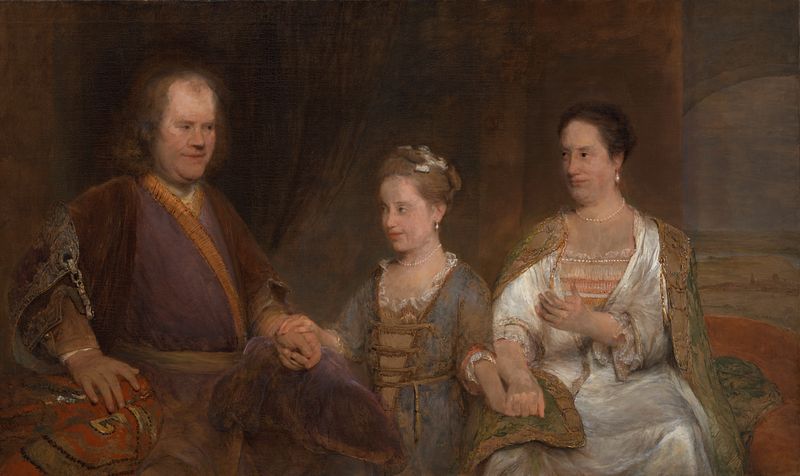
More Portrait Art
Browse all →
Las meninas
Diego Velázquez

Self-portrait with a Bandaged Ear and Pipe
Unidentified artist

Girl with a Pearl Earring
Johannes Vermeer

The Sampling Officials of the Amsterdam Drapers’ Guild, Known as ‘The Syndics’
Rembrandt van Rijn

The Hundred Guilder Print: the man seen on the back in the lower left corner
Rembrandt van Rijn

Portrait of Dr Gachet
Vincent van Gogh