
Portrait of a Young Woman — History & Facts
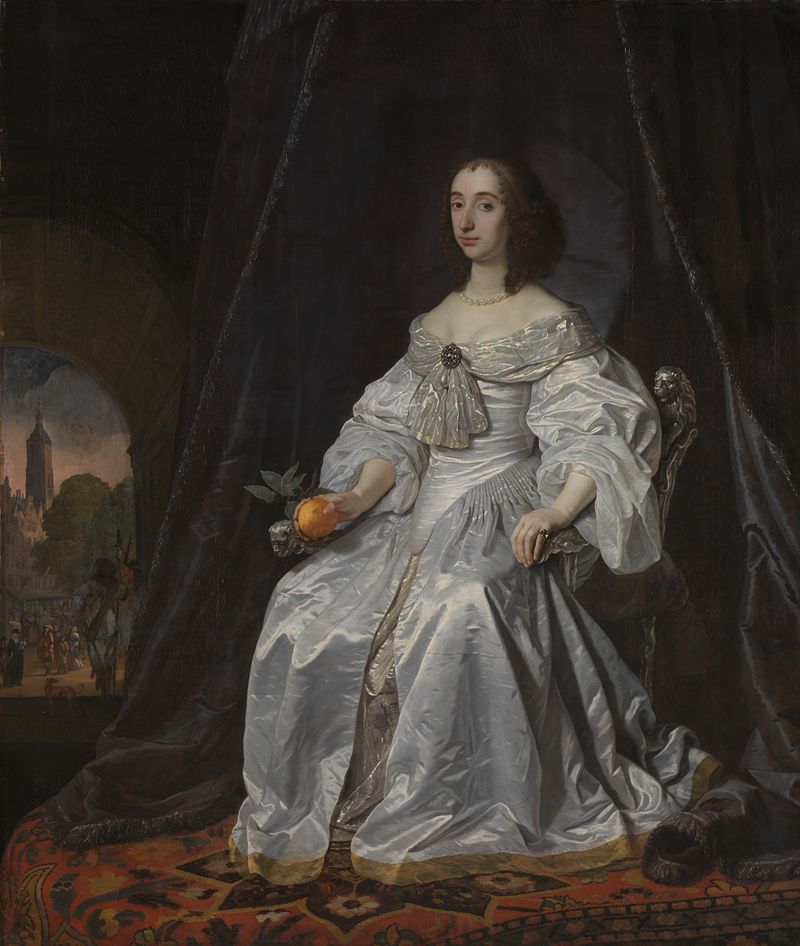
Can paint confess what words never could? In the stillness of Portrait of a Young Woman, the canvas breathes a truth often left unspoken. Look to the left at her delicately clasped hands, resting softly on a dark silk lap, a subtle gesture that invites contemplation. The artist employs a warm palette to illuminate her face, capturing a fleeting moment of introspective grace. Notice how the light dances across her features, accentuating the gentle curve of her cheek and the soft gloss of her dark hair, lending depth and a lifelike quality to her expression.
The meticulous attention to texture in the fabrics surrounding her adds another layer, inviting the viewer's gaze to linger. This portrait encapsulates the tension between youthful innocence and the weight of unexpressed thoughts. The young woman's direct gaze seems to challenge the observer, suggesting a narrative beyond the confines of the canvas. Her calm demeanor juxtaposed with the intricacies of her attire speaks to the societal expectations of femininity during the period, embodying both beauty and the silent power held within.
Each stroke of paint reveals layers of identity, reflecting the complexities of truth that often lie beneath the surface. Bartholomeus van der Helst painted this work around 1640, during a flourishing period of Dutch portraiture. At this time, he was gaining recognition for his ability to convey character and status through his subjects. The art world was evolving, as patrons increasingly sought not just likeness but the essence of the individual, a challenge that Van der Helst embraced in his meticulous approach, capturing the nuanced interplay of light and life.
More Artworks by Bartholomeus van der Helst
Browse all →

More Portrait Art
Browse all →
Las meninas
Diego Velázquez

Self-portrait with a Bandaged Ear and Pipe
Unidentified artist

Girl with a Pearl Earring
Johannes Vermeer

The Sampling Officials of the Amsterdam Drapers’ Guild, Known as ‘The Syndics’
Rembrandt van Rijn

The Hundred Guilder Print: the man seen on the back in the lower left corner
Rembrandt van Rijn

Portrait of Dr Gachet
Vincent van Gogh