
Portrait of Charlotte Long — History & Facts
This poignant reflection encapsulates the essence of human longing captured within the canvas, where the heart speaks louder than words ever could. The yearning in the eyes of the subject, a delicate portrait of Charlotte Long, reveals a narrative steeped in intimacy and unvoiced emotion. Look closely at Charlotte’s gaze, which draws you into a realm of unspoken thoughts and feelings. Notice how the artist has meticulously rendered the softness of her features, the gentle brushstrokes that create a luminous glow on her skin.
The warm hues of browns and ochres contrast sharply with the cool tones of her attire, positioning her as the focal point amid the muted background. The subtle play of light reflects not only her physical beauty but also an inner depth, inviting the viewer to ponder her story. Beneath the surface, the painting pulses with unfulfilled desires and hidden sorrows. The slight tilt of her head hints at a world beyond the frame, suggesting a longing for connection or understanding that transcends her stillness.
The choice of color and light serves as a buffer between her interior life and the viewer, creating an emotional tension that resonates long after the initial encounter. It is this duality—beauty entwined with melancholy—that defines Charlotte's existence within the portrait. Painted in the early 19th century, this work emerged during a period when portraiture was evolving, and artists were increasingly focused on individual expression. Engleheart, who worked in London, was influenced by both the Romantic movement and burgeoning notions of identity that were reshaping society.
In this context, his portrayal of Charlotte Long not only captures her likeness but also serves as a profound commentary on the complexities of human emotion and the silent narratives that shapes us all.
More Artworks by John Cox Dillman Engleheart
Browse all →


More Portrait Art
Browse all →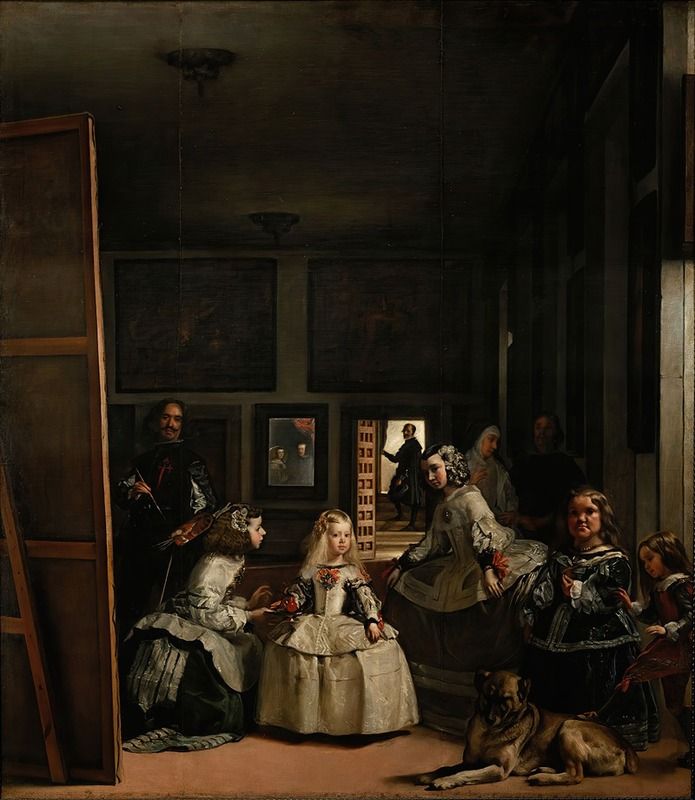
Las meninas
Diego Velázquez

Self-portrait with a Bandaged Ear and Pipe
Unidentified artist
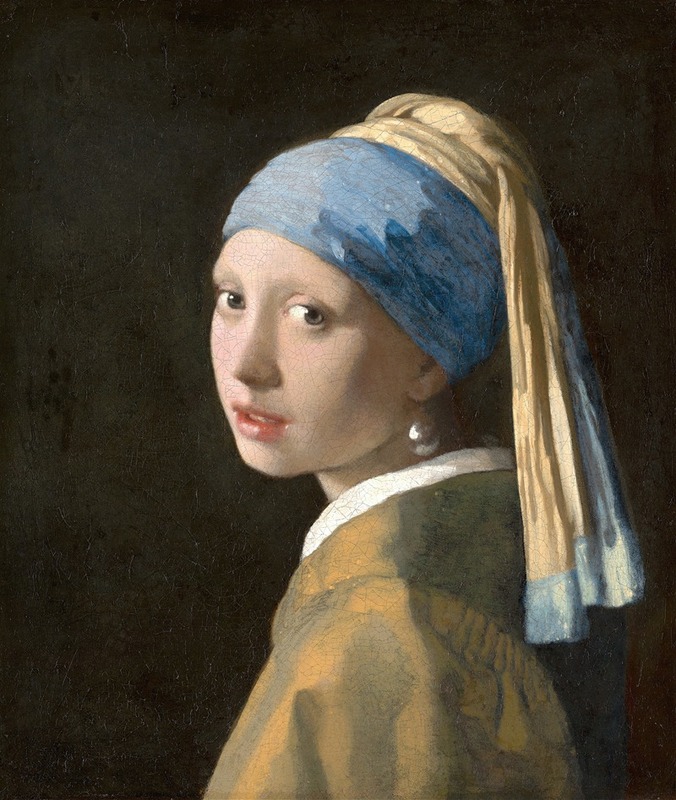
Girl with a Pearl Earring
Johannes Vermeer

The Sampling Officials of the Amsterdam Drapers’ Guild, Known as ‘The Syndics’
Rembrandt van Rijn

The Hundred Guilder Print: the man seen on the back in the lower left corner
Rembrandt van Rijn

Portrait of Dr Gachet
Vincent van Gogh