
Portrait of Rycklof van Goens, Governor-General of the Dutch East India Company — History & Facts
Can paint confess what words never could? In Portrait of Rycklof van Goens, the essence of divinity is captured in every brushstroke, revealing the profound depth of human experience and authority. Look to the left at the striking figure of Rycklof van Goens, his commanding presence accentuated by the rich textures of his attire. The deep blue and gold hues of his outfit contrast beautifully with the muted background, drawing our eyes towards the intricate details of his lace collar. Notice how the light seems to halo around him, illuminating his face and suggesting a sense of importance and gravitas.
The artist’s precise technique captures not only the physicality of the subject but also evokes a spiritual connection, as if van Goens were more than a man—perhaps a figure of divine authority. Delve deeper into the subtle interplay of symbols within the composition. The objects surrounding him—a globe and a map—speak to the vast dominion he oversees, while the slight furrowing of his brow hints at the weight of leadership. This tension between power and vulnerability creates a rich narrative that invites contemplation about the burdens of governance.
The painting suggests that the authority of a leader is not merely about dominion, but also the complexities of human emotion and moral responsibility. Created between 1750 and 1800, this work reflects a significant period in the life of its creator, a time marked by the expanding influence of the Dutch East India Company. Amidst the artistic movements of the Enlightenment, the artist navigated the transition from traditional portraiture to a more nuanced portrayal of individual character. In capturing van Goens, he not only recorded an important historical figure but also engaged with the evolving discourse surrounding power, identity, and the divine nature of leadership.
More Artworks by Martin Palin
Browse all →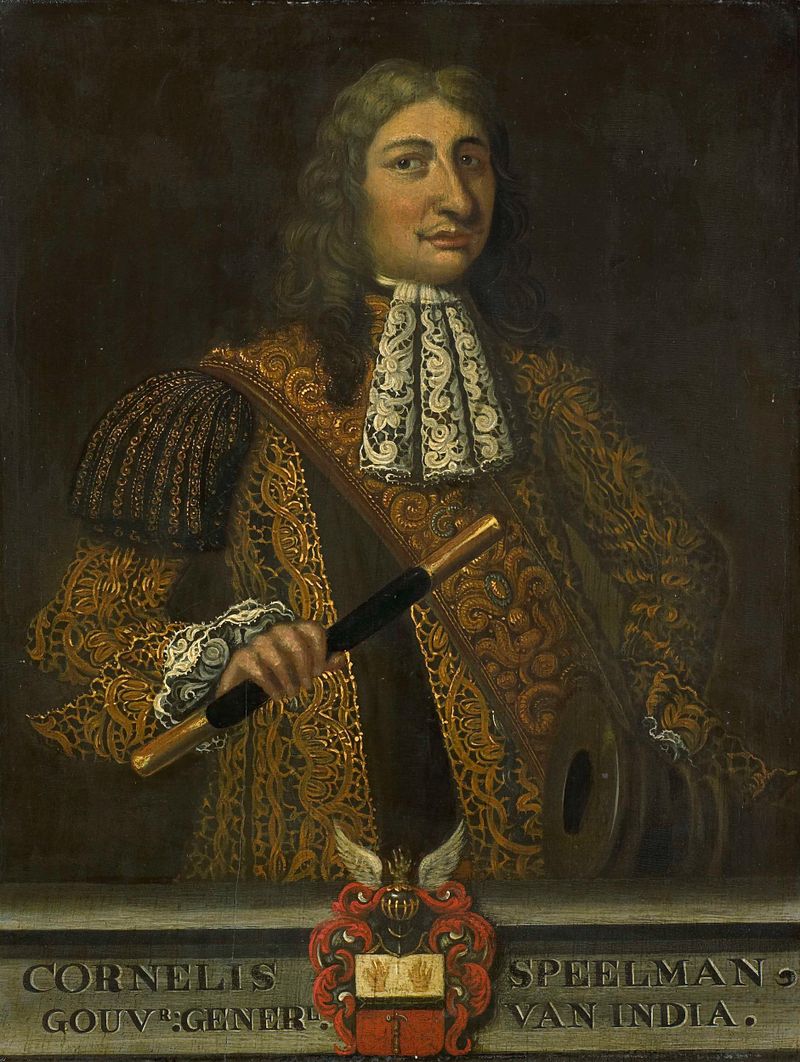
More Portrait Art
Browse all →
Las meninas
Diego Velázquez
Self-portrait with a Bandaged Ear and Pipe
Unidentified artist
Girl with a Pearl Earring
Johannes Vermeer

The Sampling Officials of the Amsterdam Drapers’ Guild, Known as ‘The Syndics’
Rembrandt van Rijn

The Hundred Guilder Print: the man seen on the back in the lower left corner
Rembrandt van Rijn

Portrait of Dr Gachet
Vincent van Gogh