
Portrait of Walter Senserff, Director of the Rotterdam Chamber of the Dutch East India Company, elected 1731 — History & Facts
Is this a mirror — or a memory? In Portrait of Walter Senserff, the duality of reflection and reality invites contemplation of power and identity. Look to the left at the commanding figure of Senserff, dressed resplendently in the garb befitting his high station. The meticulous brushwork captures the fine textures of his attire, while a soft, diffused light bathes his face, illuminating both his expression and the authority he wields. The background, rather subdued in color, enhances his presence, allowing the viewer's gaze to fixate on the piercing intensity of his eyes, which seem to hold stories untold. Yet beyond the surface lies a tapestry of emotional depth.
The delicate balance of light and shadow conveys a sense of duality; Senserff embodies the ambition of the Dutch East India Company while juxtaposed against the quiet vulnerability of his human experience. The folds of his clothing whisper of the weight of expectation, while his steadfast pose hints at the inner turmoil of leading in an age marked by colonial ambition and conflict. Each detail, from the intricate lace at his cuffs to the subtle shadows on his face, deepens the narrative of his life — a man caught between duty and desire. Jan Maurits Quinkhard created this portrait in the midst of his career from 1731 to 1772, a time when the Netherlands was navigating the complexities of its maritime empire.
The artist, notable for his precise rendering and psychological insight, captured not only the likeness of a prominent figure but also the ethos of an era defined by exploration and commerce. It was a period ripe with opportunity and challenge, reflecting the ambitions and anxieties of a nation on the brink of modernity.
More Artworks by Jan Maurits Quinkhard
Browse all →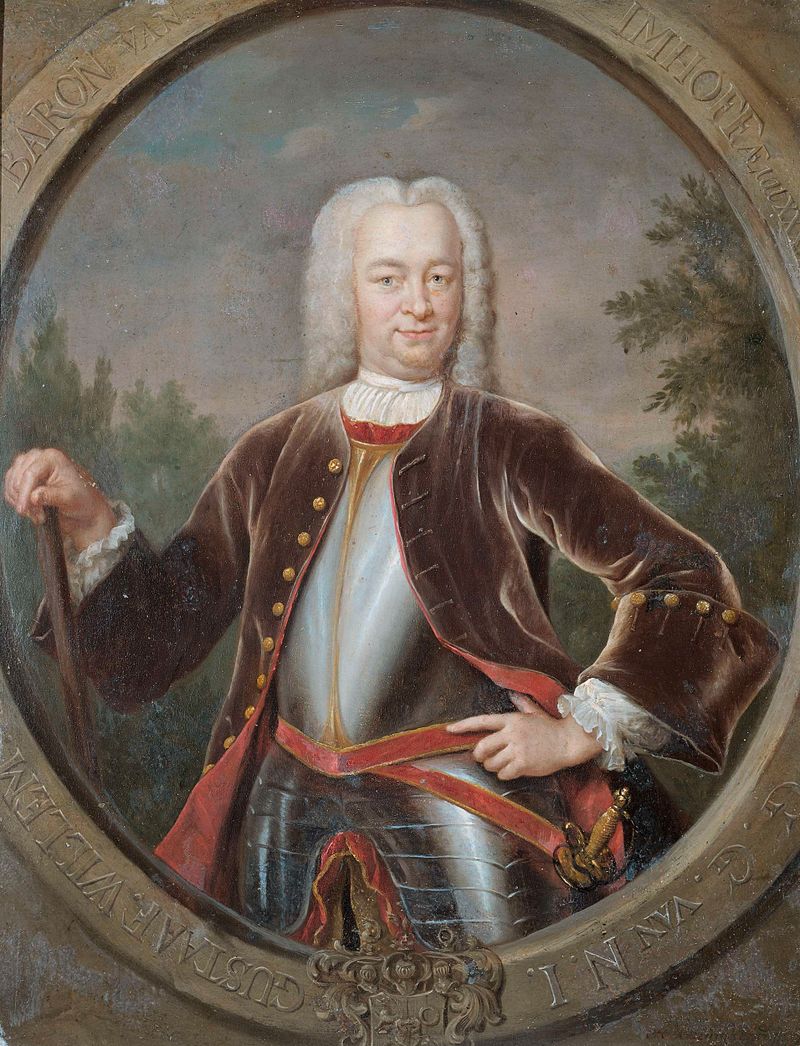
More Portrait Art
Browse all →
Las meninas
Diego Velázquez

Self-portrait with a Bandaged Ear and Pipe
Unidentified artist

Girl with a Pearl Earring
Johannes Vermeer

The Sampling Officials of the Amsterdam Drapers’ Guild, Known as ‘The Syndics’
Rembrandt van Rijn

The Hundred Guilder Print: the man seen on the back in the lower left corner
Rembrandt van Rijn

Portrait of Dr Gachet
Vincent van Gogh