Rheims — History & Facts
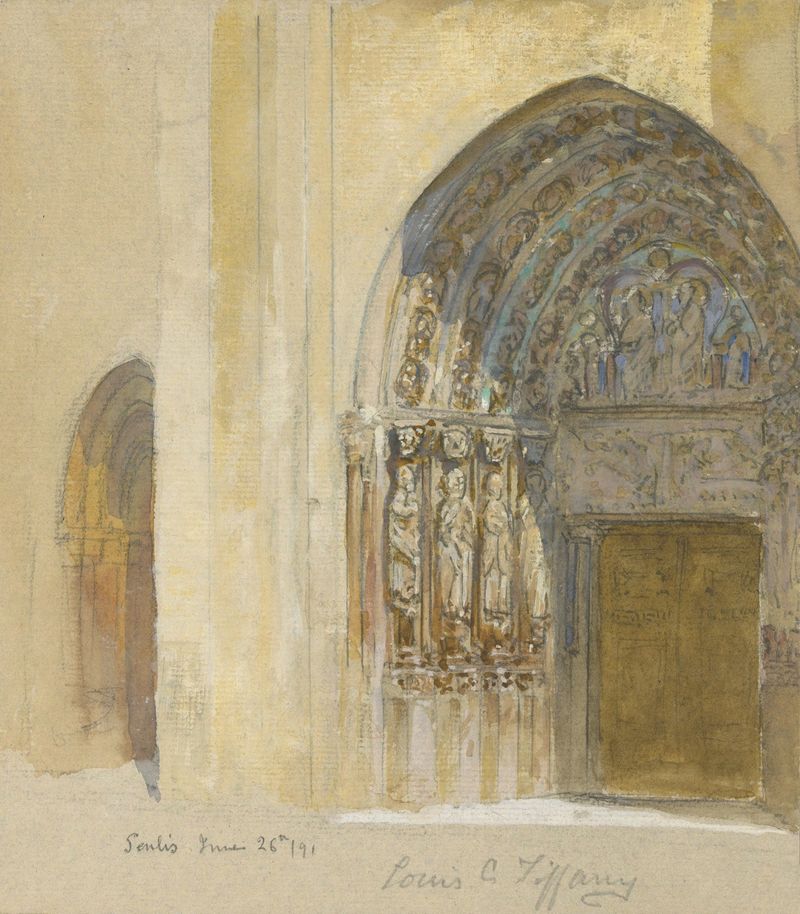
What if silence could speak through light? In the hands of a master, it becomes a powerful presence, weaving tales of beauty and betrayal in delicate hues. Focus your gaze on the mesmerizing interplay of color within the stained glass, where radiant shades of blue and gold intertwine like whispered secrets. Notice how the light falls upon each panel, illuminating intricate patterns that seem to pulse with emotion, capturing the fleeting moment of connection amidst the fractures of life. The craftsmanship invites you to trace the fine lines, revealing Tiffany's meticulous attention to detail and his innovative use of opalescent glass, creating a luminous atmosphere that feels both sacred and intimate. Yet, beneath the surface beauty lies a deeper tension, a narrative of longing and disillusionment.
The way certain elements seem to clash—bright, confident forms against darker, muted backgrounds—evokes a sense of betrayal, as if the light is hiding darker truths within its brilliance. This contrast hints at the complexity of relationships, suggesting that even in moments of stunning beauty, shadows linger, reminding us of the fragility of trust and connection. In the late 19th century, while creating Rheims, Tiffany navigated a dynamic art scene marked by the Arts and Crafts movement's ideals. Working in New York City, he sought to elevate decorative arts to the same status as fine art, profoundly influencing the use of glass in architecture and design.
This period of innovation and personal exploration set the stage for Tiffany’s groundbreaking approach, where light and color became his instruments to shape emotional narratives.