
Roskilde Cathedra — History & Facts
The canvas doesn’t lie — it simply waits. Betrayal lingers in the air, echoing through the spaces where trust once flourished. Look to the center of the composition, where the ornate cathedra stands, its intricate carvings a testament to both artistry and history. Notice how the light gently casts shadows over the rich textures, drawing your eye along the elegantly draped fabrics that surround the sacred seat.
The muted palette, infused with deep golds and soft browns, invokes a sense of reverence, yet hints at underlying tensions simmering just beneath the surface. As you delve deeper, observe the small figures depicted in the background, their expressions wrought with conflict and uncertainty. The juxtaposition of the cathedra’s grandeur against the unsettling emotions of the congregation suggests a fracture within the sacred space — a betrayal of faith or purpose. This tension is amplified by the way the figures are positioned, almost as if they are both drawn to and repelled by the cathedra, imbuing the moment with a palpable sense of hesitation and doubt. In 1841, Johann Karl Schultz painted Roskilde Cathedra while based in Denmark, a time when the nation was grappling with its identity amidst changing political landscapes.
Schultz, a key figure in the Danish Golden Age, was deeply influenced by the romantic ideals of his contemporaries, reflecting the complexities of human emotion in his works. The painting stands as a poignant commentary on the fragile nature of trust, resonating through the ages with its silent yet powerful narrative.
More Artworks by Johann Karl Schultz
Browse all →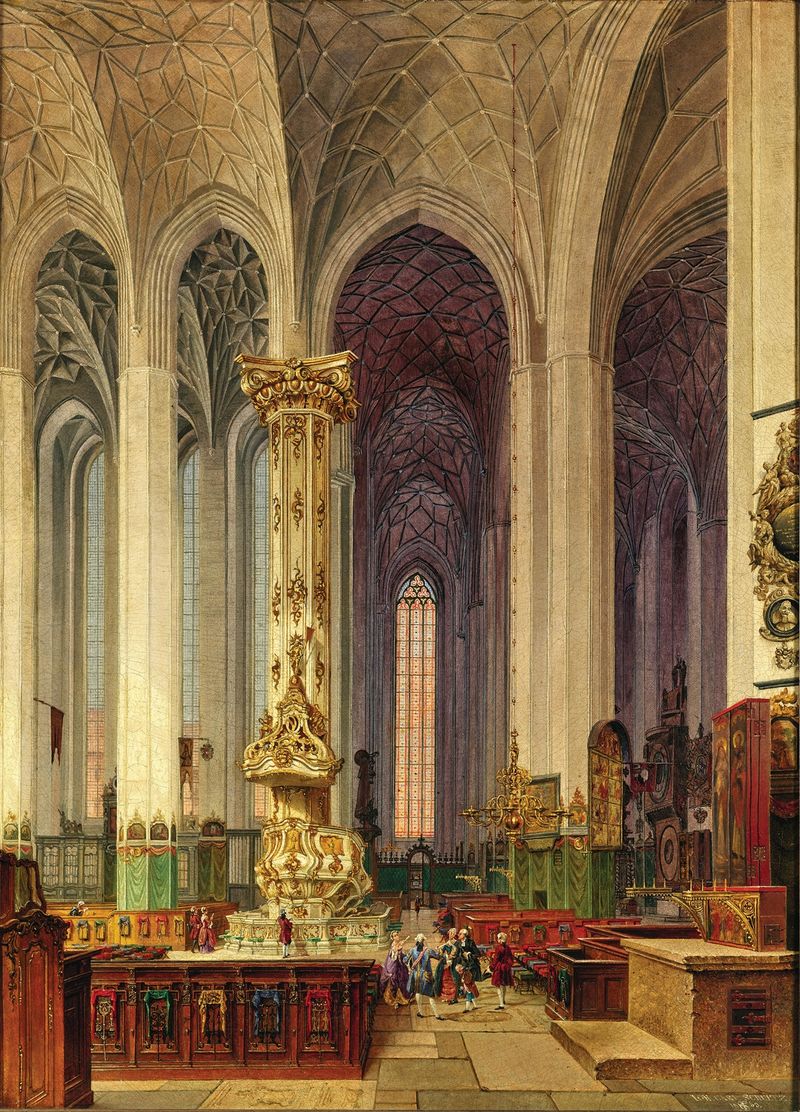
More Religious Art
Browse all →
The Return of the Prodigal Son
Rembrandt van Rijn

The Garden of Earthly Delights
El Bosco

Count Orgaz’ funeral
El Greco

The Hundred Guilder Print: the central piece with Christ preaching, the plate arched
Rembrandt van Rijn

The Descent from the Cross
Rogier van der Weyden

The return of the prodigal son
Rembrandt van Rijn