
Saint Agnes — History & Facts
Under the brush, chaos becomes grace. Time, a silent witness to the unfolding of sacred narratives, paints our understanding of faith and devotion. Focus on the serene expression of the young saint at the center of the composition, where her delicate features radiate a gentle resolve. Notice how the artist employs a muted palette of soft golds and muted blues, creating an ethereal atmosphere that envelops her.
The intricate details of her garments, adorned with ornamental patterns, draw the eye as they cascade gracefully to the floor, symbolizing both purity and the weight of her sacrifice. As you explore further, observe the juxtaposition between Agnes' calm demeanor and the ominous knife held nearby, a silent testament to her martyrdom. This contrast deepens the emotional tension, evoking both reverence and sorrow. Each element, from her halo to the delicate flowers at her feet, captures the duality of life and death, inviting contemplation of the deeply human struggle of faith against adversity. Ambrogio Lorenzetti painted this work around 1330 in Siena, a time when the Italian city-states were flourishing, and the Gothic style was at its height.
During this period, the artist sought to capture not just religious themes but also the complexities of human emotion and experience. This painting reflects the spiritual and artistic currents of the era, positioning Lorenzetti as a pivotal figure in the transition toward the Renaissance’s more human-centric approach to art.
More Artworks by Ambrogio Lorenzetti
Browse all →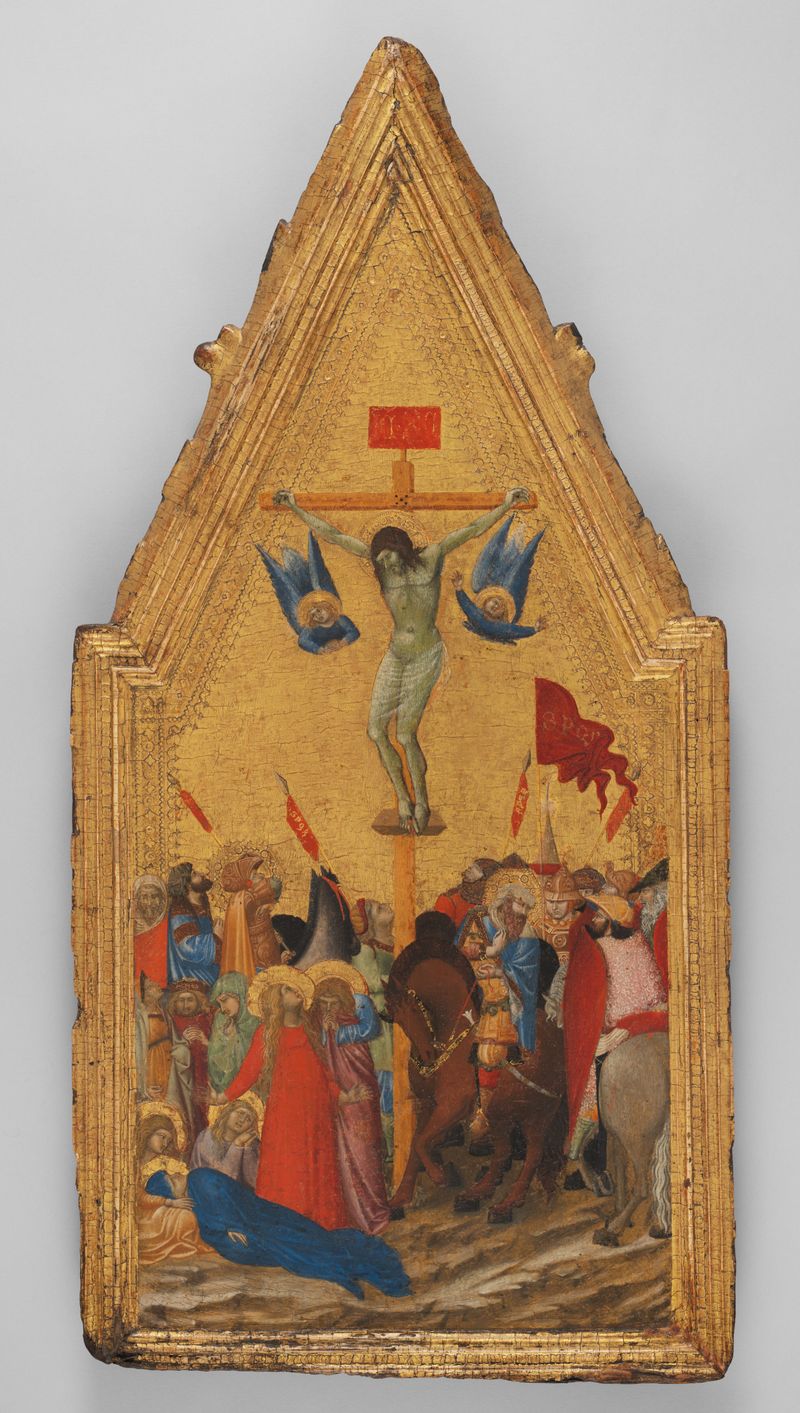
More Religious Art
Browse all →
The Return of the Prodigal Son
Rembrandt van Rijn

The Garden of Earthly Delights
El Bosco

Count Orgaz’ funeral
El Greco

The Hundred Guilder Print: the central piece with Christ preaching, the plate arched
Rembrandt van Rijn

The Descent from the Cross
Rogier van der Weyden

The return of the prodigal son
Rembrandt van Rijn