
Saint Jerome In His Study — History & Facts
Can paint confess what words never could? In Saint Jerome In His Study, the brushstrokes weave a tapestry of illusion that echoes the complexities of knowledge and solitude. Focus on the center of the composition, where Saint Jerome is enveloped by a soft, warm light that spills from a nearby window. His aged face, marked by contemplation, draws the viewer in, inviting you to ponder the weight of his studies. Notice how the meticulous details of the books and scrolls surround him, each object rendered with such precision that it almost feels as if they could be lifted from the canvas.
The rich hues of browns and golds not only create warmth but also enhance the solemnity of his intellectual endeavor, showcasing the artist’s deft handling of light and shadow. Beneath the surface, the painting reveals a tension between enlightenment and isolation. The scholar, surrounded by knowledge, is paradoxically alone, hinting at the internal struggle between the pursuit of wisdom and the yearning for companionship. The open books symbolize a dialogue with the past, while the stillness around him evokes a profound silence that amplifies the weight of his thoughts.
This duality reflects a deeper commentary on the artist's view of intellectual labor as both enlightening and isolating. In 1630, Hendrick van Steenwijck the Younger painted this work during a time when the Northern Renaissance was blossoming into a new phase of introspection and realism. The artist, known for his intricate still lifes and interior scenes, was influenced by the emerging Baroque style, which sought to capture emotion and drama with unprecedented realism. This period in his life marked a deep exploration of themes like solitude, knowledge, and the human experience, making this painting a poignant reflection of both personal and artistic evolution.
More Artworks by Hendrick van Steenwijck the Younger
Browse all →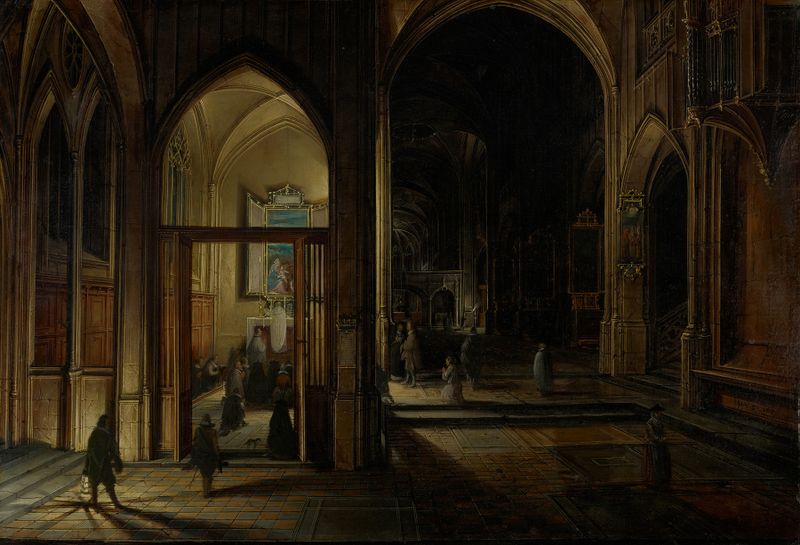

More Religious Art
Browse all →
The Return of the Prodigal Son
Rembrandt van Rijn

The Garden of Earthly Delights
El Bosco

Count Orgaz’ funeral
El Greco

The Hundred Guilder Print: the central piece with Christ preaching, the plate arched
Rembrandt van Rijn

The Descent from the Cross
Rogier van der Weyden

The return of the prodigal son
Rembrandt van Rijn