
Saint John the Evangelist and Saint James the Greater — History & Facts
What if silence could speak through light? The stillness of a moment, when the divine meets the earthly, holds the power to awaken the spirit within us. Look to the left at the serene face of Saint John, rendered with an ethereal glow that seems to transcend the canvas. His gaze is steadfast, drawn inward yet tinged with awareness, as if he carries a weight of wisdom. The careful detail of each fold in his robe reflects a mastery of texture, while soft, golden light bathes his figure, heightening the sacred atmosphere.
To the right, Saint James stands with a subtle dynamism, his posture slightly bent, as if caught in the act of listening to a divine whisper. The contrasting palette of deeper hues envelops him, grounding the ethereal light that envelops John. Beneath this tranquil surface lies a profound tension — the juxtaposition of the contemplative and the active. John's stillness speaks of introspection, while James embodies a readiness for action.
The relationship between the two figures reveals a dialogue between faith and purpose, suggesting that true enlightenment arises from both reflection and engagement with the world. Furthermore, the delicate rendering of their features hints at individual stories, inviting viewers to ponder their paths and the weight of their narratives. Bartholomäus Zeitblom painted this piece during the late 15th to early 16th century, a period marked by the transition from Gothic to Renaissance styles in Southern Germany. Working amidst the burgeoning interest in humanism and spirituality, he sought to capture a divine connection through his meticulous craftsmanship.
Zeitblom's art reflects the artistic evolution of his time, bridging the sacred and the human experience as he explored themes of devotion and understanding.
More Artworks by Bartholomäus Zeitblom
Browse all →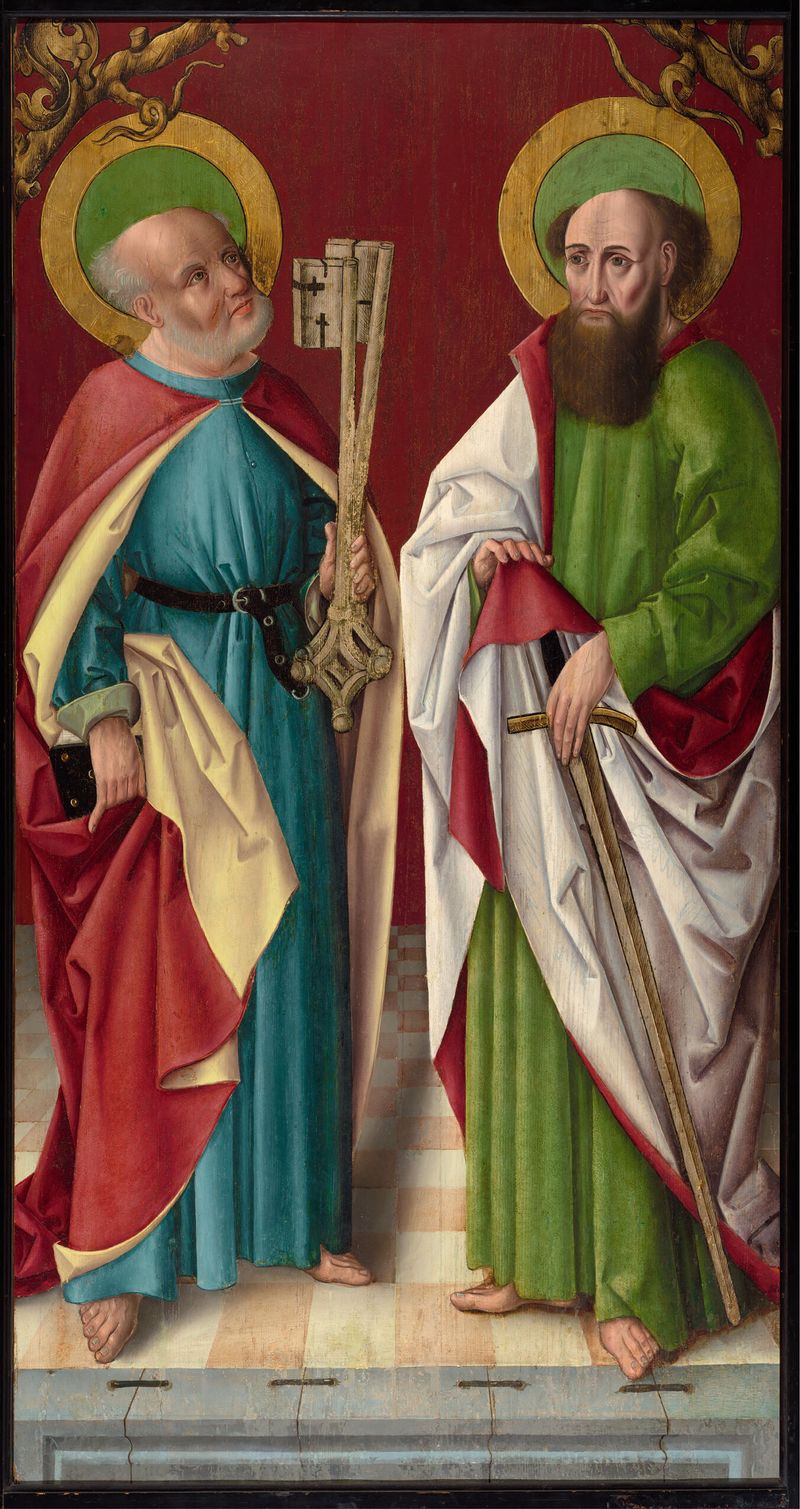
More Religious Art
Browse all →
The Return of the Prodigal Son
Rembrandt van Rijn

The Garden of Earthly Delights
El Bosco

Count Orgaz’ funeral
El Greco

The Hundred Guilder Print: the central piece with Christ preaching, the plate arched
Rembrandt van Rijn

The Descent from the Cross
Rogier van der Weyden

The return of the prodigal son
Rembrandt van Rijn