
Saint Joseph — History & Facts
Is this a mirror — or a memory? In Saint Joseph, the profound stillness captures a sense of inner turmoil, where the mundane meets the sacred, forcing us to confront the fragility of faith and reason. Look to the left at the thoughtful gaze of the figure, his brow slightly furrowed, hinting at an unending internal struggle. The light cascades gently over his weathered features, casting soft shadows that dance along the contours of his face, juxtaposing quiet reverence with the weight of responsibility. The muted palette of browns and ochres draws the eye, creating a harmonious atmosphere while also evoking a sense of somber introspection that permeates the canvas. Delve deeper into the folds of fabric draping his body, each crease symbolizing the passage of time and the burdens he carries.
Notice the juxtaposition of the saint's calm demeanor against the chaotic swirl of his thoughts, hinted at by the slight tilt of his head and clenched hands. This duality reflects the tension between piety and doubt, revealing the artist’s exploration of the thin line separating madness from divine inspiration. Philippe de Champaigne painted Saint Joseph around 1650 during a transformative period in his life, marked by personal loss and the shifting tides of religious fervor in Europe. Residing in Paris, he was influenced by the Counter-Reformation's call for a return to spiritual authenticity, and this work stands as a testament to his skill in merging the human condition with the divine narrative, all while echoing the broader philosophical questions of his time.
More Artworks by Philippe de Champaigne
Browse all →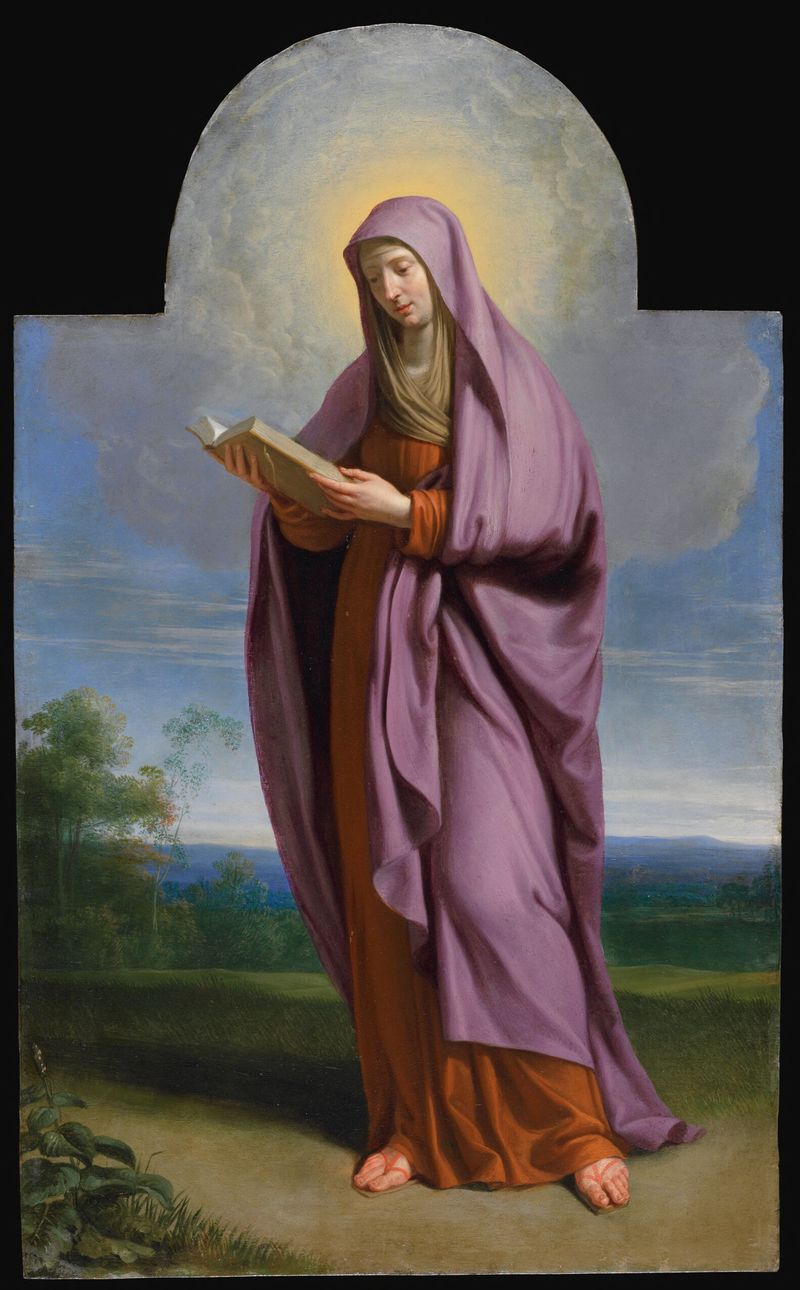
More Religious Art
Browse all →
The Return of the Prodigal Son
Rembrandt van Rijn

The Garden of Earthly Delights
El Bosco

Count Orgaz’ funeral
El Greco

The Hundred Guilder Print: the central piece with Christ preaching, the plate arched
Rembrandt van Rijn

The Descent from the Cross
Rogier van der Weyden

The return of the prodigal son
Rembrandt van Rijn