
Saint Sebastian and Saint Christopher — History & Facts
Could a single brushstroke hold eternity? In the delicate interplay of light and shadow, revelations emerge, whispering the stories of saints intertwined in their devotion. Look closely at the figures that dominate the composition—the muscular form of Saint Sebastian stands tall, arrows piercing his flesh, while Saint Christopher towers beside him, cradling a child. Notice how the warm, golden hues embrace their figures, contrasting with the cold steel of the arrows, invoking a profound sense of sacrifice and protection. The background, a soft blur of ethereal landscapes, serves to elevate their martyrdom to celestial heights, creating a transcendent space that invites contemplation. The emotional tension here rests in the duality of suffering and salvation.
Saint Sebastian’s serene expression in the face of his wounds suggests unwavering faith, while the gentle gaze of the child in Saint Christopher’s arms signifies hope and innocence. Together, they challenge the viewer to reflect on the power of selflessness amid adversity. The weight of their stories lies not just in their fates but in the stillness of this moment—where pain and grace coexist. Created in the 16th century, the artist emerged during a period rich with religious fervor and artistic innovation.
Influenced by the burgeoning Counter-Reformation, the work reflects a deep engagement with devotional themes and the complexities of faith. As the world around him evolved, this piece encapsulated a moment of both spiritual reflection and aesthetic mastery, revealing the enduring power of sacred narratives.
More Artworks by Master of the Life of Saint Agnes
Browse all →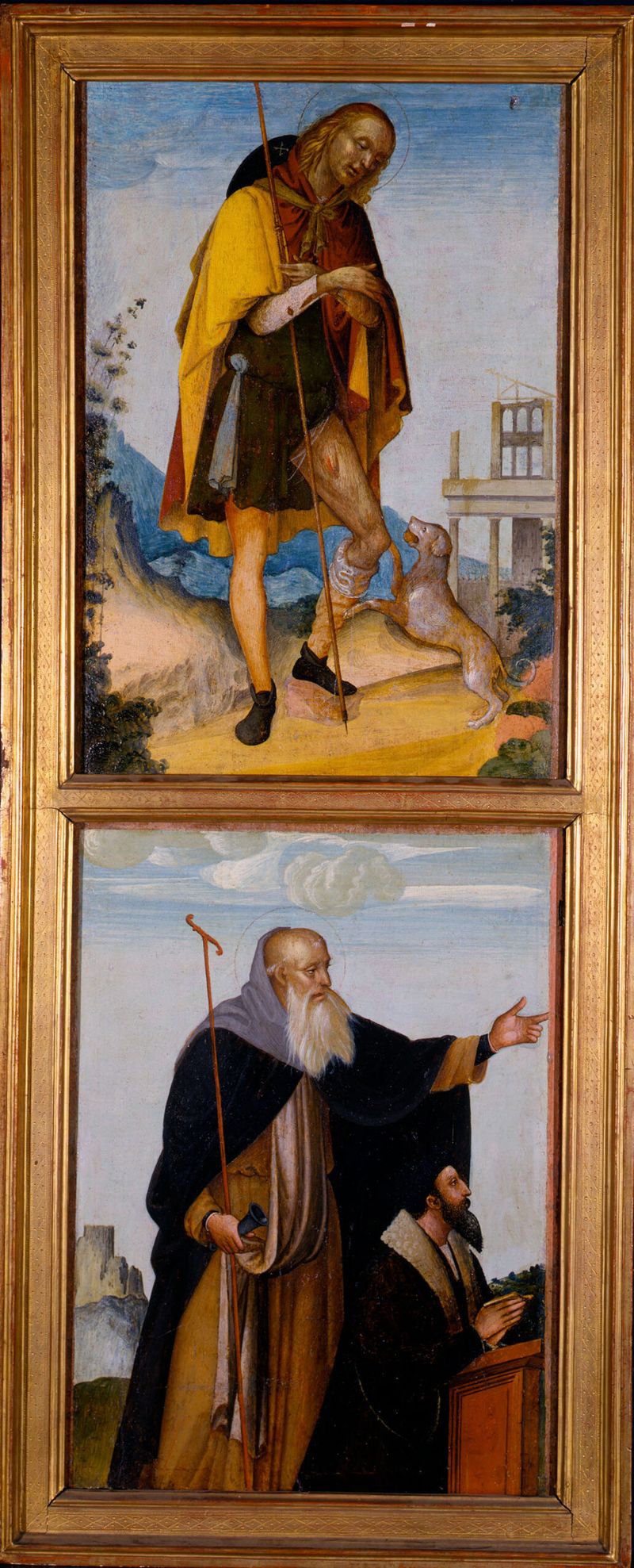
More Religious Art
Browse all →
The Return of the Prodigal Son
Rembrandt van Rijn

The Garden of Earthly Delights
El Bosco

Count Orgaz’ funeral
El Greco

The Hundred Guilder Print: the central piece with Christ preaching, the plate arched
Rembrandt van Rijn

The Descent from the Cross
Rogier van der Weyden

The return of the prodigal son
Rembrandt van Rijn