
Saints Augustine and Peter — History & Facts
Who listens when art speaks of silence? In Saints Augustine and Peter, a quiet reverence hangs in the air, echoing the weight of faith and devotion. Look to the left at Augustine, donned in rich, flowing robes that cascade down his figure, painted with meticulous detail. His gaze is directed upwards, embodying a spiritual quest. Notice how the light envelops both saints, illuminating their faces yet casting shadows that suggest a hidden depth.
The vibrant colors contrast sharply with the muted background, drawing the eye to their solemn expressions and the delicate gestures of their hands, which seem to speak volumes without uttering a word. The positioning of Augustine and Peter is not accidental; they stand in a juxtaposition of thought and action. Augustine, the thinker, rests with a book, symbolizing the weight of knowledge, while Peter, the apostle of action, is poised as if ready to lead. This duality highlights the tension between faith as understanding and faith as practice.
The use of gold leaf adds an ethereal quality, suggesting that their presence transcends mere earthly existence, inviting viewers to ponder the spiritual implications of their legacy. Painted around 1350, this work emerged during a time when Paolo Veneziano was a prominent figure in Venetian art. The city was thriving, serving as a crossroads for trade and cultural exchange. His focus on religious themes reflected the period's devotion while also showcasing a burgeoning individualistic style within the broader context of Gothic influences.
It was a time when art not only served the church but also began to resonate deeply with the personal beliefs of the viewers.
More Artworks by Paolo Veneziano
Browse all →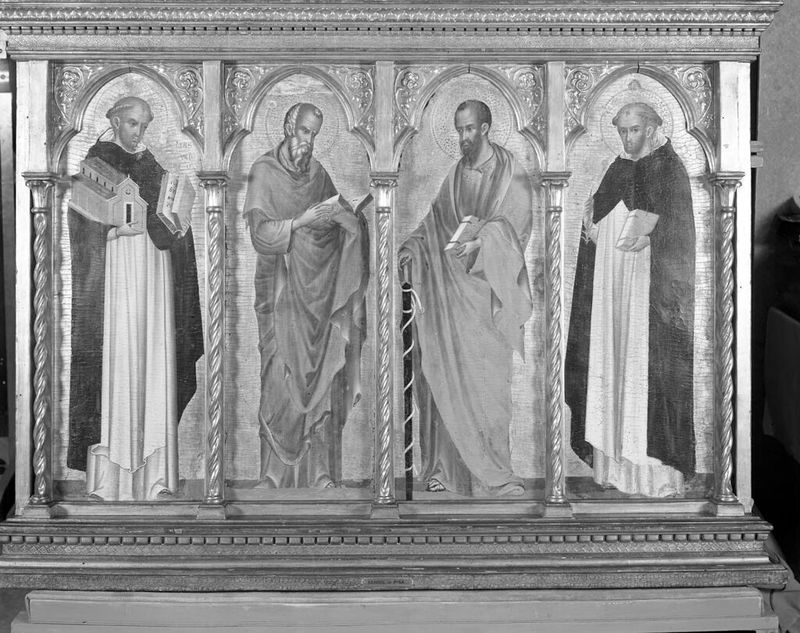
More Religious Art
Browse all →
The Return of the Prodigal Son
Rembrandt van Rijn

The Garden of Earthly Delights
El Bosco

Count Orgaz’ funeral
El Greco

The Hundred Guilder Print: the central piece with Christ preaching, the plate arched
Rembrandt van Rijn

The Descent from the Cross
Rogier van der Weyden

The return of the prodigal son
Rembrandt van Rijn