
Sculptuur (buste) van Faustina, Museo Vaticano — History & Facts
Can paint confess what words never could? Here, in the delicate contours of marble, innocence is captured in a way that transcends mere description, inviting the viewer into a quiet dialogue with the past. Look closely at the serene visage of Faustina; notice the soft curves of her cheeks and the gentle arch of her brow. The meticulous craftsmanship reveals a texture that seems alive, the light dancing across the polished surface to accentuate her features. Her gaze, both calm and contemplative, draws you in, compelling your attention to the subtleties of expression that convey both strength and vulnerability. Beneath the surface elegance lies a deeper narrative—one of duality.
The contrast between her youthful innocence and the historical weight of her identity hints at a complex interplay of power and fragility. The drapery around her shoulders, sculpted with precision, serves as both a barrier and a connection to her status, while the slight tilt of her head suggests a readiness to engage with the viewer, blurring the lines between the observer and the observed. In the mid-19th century, when this work was crafted, the artist was immersed in an era of neoclassical revival and Romantic idealism, finding a voice amidst the shifting tides of artistic expression. Working in the Vatican, at a time when classical themes were being reexamined, this piece reflects the cultural embrace of historical figures while echoing the artist's personal exploration of form and emotion through sculptural mastery.
More Artworks by Libreria Spithöver
Browse all →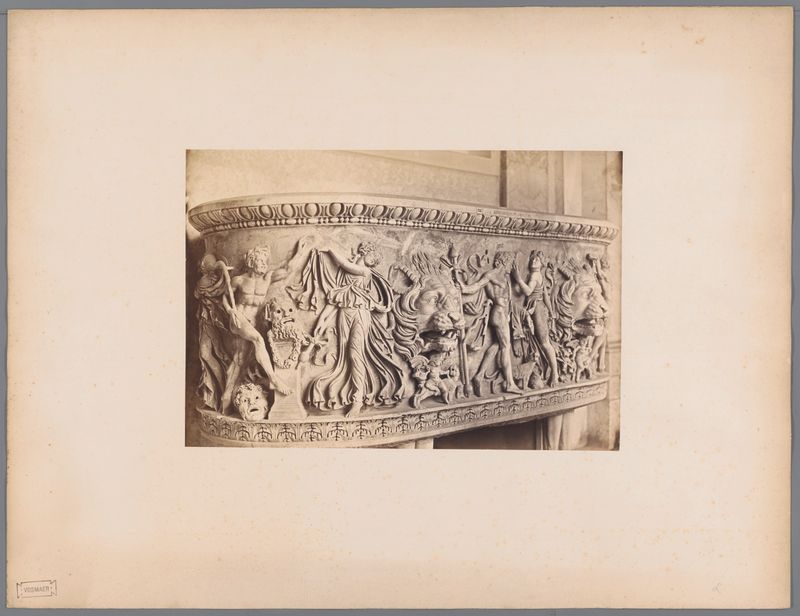
More Portrait Art
Browse all →
Las meninas
Diego Velázquez

Self-portrait with a Bandaged Ear and Pipe
Unidentified artist

Girl with a Pearl Earring
Johannes Vermeer

The Sampling Officials of the Amsterdam Drapers’ Guild, Known as ‘The Syndics’
Rembrandt van Rijn

The Hundred Guilder Print: the man seen on the back in the lower left corner
Rembrandt van Rijn

Portrait of Dr Gachet
Vincent van Gogh